Picnic - **
Based on the award-winning play by William Inge, director Joshua Logan's melodrama stars William Holden, Rosalind Russell, and Kim Novak in her breakout performance. Most of the film occurs over the course of one day in a small Kansas town, which is holding a Labor Day picnic. Visiting his old college friend Alan (Cliff Robertson), Hal Carter (Holden) arrives that morning and causes great unrest in some of the townspeople, among them Alan's girlfriend "Madge" Owens (Novak), her little sister Millie (Susan Strasberg), a local school teacher (Russell), and her boyfriend (Arthur O'Connell). The whole situation is complicated, but Carter leaves his mark on these citizens in a short period of time. Despite a promising premise, this misses the mark, as the characters are so unbalanced and the drama so overblown and forced that the edgy material feels too contrived and grating by today's standards. Though I can see why it received a Best Picture nomination, it's lost some of the impact it must've had in the 1950s.
The film received Oscar nominations for Best Picture, Best Director, Best Supporting Actor (Arthur O'Connell), Best Art Direction (Color), Best Film Editing, and Best Score (Dramatic/Comedy). It won awards for Best Art Direction (Color) and Best Film Editing.
Trivia: For his dance scenes, William Holden received an additional $8,000 as a stuntman fee.
Auntie Mame - **1/2
Rosalind Russell gives an Oscar-nominated performance as Mame, a wealthy socialite living life as frivolously as possible in the 1920s. When her brother dies, she takes her nephew Patrick (Jan Handzlik/Roger Smith) in, opening his world to art, drink mixing, lavish parties, life, and other adventures. The film consists primarily of scenes depicting Mame's wild lifestyle, but she manages to teach her nephew a few lessons on the way. (Whether or not they're essential ones is another matter.) Through the years that pass, Patrick's future is managed - as much as it can be - by his father's will executor. Patrick's questionable upbringing comes to a head when he brings his girlfriend home to meet Mame. While the film has its problems, Russell is perfect for the lead role, even if the film is excessively farcical. Really, at 143 minutes, it's too much. The Academy liked the film enough to give it a Best Picture nod, but it got in at the expense of more deserving films.
The film received Oscar nominations for Best Picture, Best Actress, Best Supporting Actress (Peggy Cass), Best Art Direction, Best Cinematography (Color), and Best Film Editing. It did not win any awards.
Trivia: Russell and Cass received Tony recognition for their stage performances before reprising their roles in the film.
Showing posts with label Double Feature. Show all posts
Double Feature: Picnic (1955) and Auntie Mame (1958)
Thursday, February 7, 2013
Labels:
1955,
1958,
Academy Awards,
Auntie Mame,
Best Picture,
Double Feature,
Oscars,
Picnic
Double Feature: Separate Tables (1958) & M*A*S*H (1970)
Thursday, January 24, 2013
Separate Tables - ****
Featuring the talents of Deborah Kerr, Rita Hayworth, David Niven, Burt Lancaster, and Wendy Hiller, this Oscar-winning drama is based on Terence Rattigan's play, which follows the residents of a British beachside resort. At the forefront are a retired major (Niven), a timid woman (Kerr), her mother (Gladys Cooper), a charming alcoholic (Lancaster), his ex-wife (Hayworth), and the manager (Hiller), among other residents. When a scandal arises with the major, the majority of the household must decide what to do with him, while other conflicts arise between them. However, the alcoholic, his ex-wife, and the manager are caught in a love triangle that must end one way or the other. As a result, several relationships are tested, and the past must be dragged up if these pressing matters are ever to be settled. With such a fine group of classic actors and the juicy melodrama, it's no surprise this received a deserved Best Picture nomination.
The film received Oscar nominations for Best Picture, Best Actor (Niven), Best Actress (Kerr), Best Supporting Actress (Hiller), Best Adapted Screenplay, Best Cinematography (B&W), and Best Dramatic/Comedy Score. Niven and Hiller won Oscars for their performances.
Trivia: Niven's performance is under 16 minutes long, making it the shortest Best Actor Oscar-winning performance. Anthony Hopkins has the second shortest for his performance in The Silence of the Lambs, but it's only seconds longer than Niven's work.
M*A*S*H - ****
Robert Altman's famous wartime satire not only won an Oscar, but it also inspired the Emmy-winning TV series that lasted 11 seasons. Set during the Korean War, the film is about the staff of a hospital and the outlandish things that happen in their military service. There are many hijinks in the film, from a fake funeral to a comical football game. Among the excellent ensemble cast, Donald Sutherland and Elliott Gould are hilarious as medical officers Hawkeye Pierce and Trapper John McIntyre. Witty, irreverent, and ludicrous, this is a very enjoyable film that is deserving of its Oscar pedigree. I've seen a few episodes on television over the years, but I can't say I'm a fan of the series. The film, on the other hand, I loved. Either way, I'm glad the Academy Awards honored this wonderful comedy, as they don't often do.
The film received Oscar nominations for Best Picture, Best Director, Best Supporting Actress (Sally Kellerman), Best Adapted Screenplay, and Best Film Editing. Ring Lardner, Jr. won an Oscar for writing the screenplay.
Trivia: Though it won an Oscar, most of Ring Lardner, Jr.'s original screenplay didn't make the final cut of the film (to the chagrin of the writer).
Follow my progress to see every Best Picture Oscar nominee here.
Featuring the talents of Deborah Kerr, Rita Hayworth, David Niven, Burt Lancaster, and Wendy Hiller, this Oscar-winning drama is based on Terence Rattigan's play, which follows the residents of a British beachside resort. At the forefront are a retired major (Niven), a timid woman (Kerr), her mother (Gladys Cooper), a charming alcoholic (Lancaster), his ex-wife (Hayworth), and the manager (Hiller), among other residents. When a scandal arises with the major, the majority of the household must decide what to do with him, while other conflicts arise between them. However, the alcoholic, his ex-wife, and the manager are caught in a love triangle that must end one way or the other. As a result, several relationships are tested, and the past must be dragged up if these pressing matters are ever to be settled. With such a fine group of classic actors and the juicy melodrama, it's no surprise this received a deserved Best Picture nomination.
The film received Oscar nominations for Best Picture, Best Actor (Niven), Best Actress (Kerr), Best Supporting Actress (Hiller), Best Adapted Screenplay, Best Cinematography (B&W), and Best Dramatic/Comedy Score. Niven and Hiller won Oscars for their performances.
Trivia: Niven's performance is under 16 minutes long, making it the shortest Best Actor Oscar-winning performance. Anthony Hopkins has the second shortest for his performance in The Silence of the Lambs, but it's only seconds longer than Niven's work.
M*A*S*H - ****
Robert Altman's famous wartime satire not only won an Oscar, but it also inspired the Emmy-winning TV series that lasted 11 seasons. Set during the Korean War, the film is about the staff of a hospital and the outlandish things that happen in their military service. There are many hijinks in the film, from a fake funeral to a comical football game. Among the excellent ensemble cast, Donald Sutherland and Elliott Gould are hilarious as medical officers Hawkeye Pierce and Trapper John McIntyre. Witty, irreverent, and ludicrous, this is a very enjoyable film that is deserving of its Oscar pedigree. I've seen a few episodes on television over the years, but I can't say I'm a fan of the series. The film, on the other hand, I loved. Either way, I'm glad the Academy Awards honored this wonderful comedy, as they don't often do.
The film received Oscar nominations for Best Picture, Best Director, Best Supporting Actress (Sally Kellerman), Best Adapted Screenplay, and Best Film Editing. Ring Lardner, Jr. won an Oscar for writing the screenplay.
Trivia: Though it won an Oscar, most of Ring Lardner, Jr.'s original screenplay didn't make the final cut of the film (to the chagrin of the writer).
Follow my progress to see every Best Picture Oscar nominee here.
Labels:
1958,
1970,
Academy Awards,
Best Picture,
Double Feature,
M*A*S*H,
Oscars,
Separate Tables
Double Feature: Twelve O'Clock High (1949) & Witness for the Prosecution (1957)
Wednesday, November 28, 2012
Twelve O'Clock High - ****
The film received nominations for Best Picture, Best Actor, Best Supporting Actor (Dean Jagger), and Best Sound. It won Oscars for Jagger and the 20th Century-Fox sound department.
Witness for the Prosecution - ****
In this classic World War II drama, Gregory Peck plays General Frank Savage, who is assigned to the 918th Heavy Bombardment Group, after the previous commander becomes unable to lead his troops. This flying outfit specializes in daytime bombing, which was unheard of at the time. When he takes charge of the unit, Savage is a tough leader, and the flyers under his command don't take to his less than genial demeanor. Savage's goal is to get the men working efficiently, pushing them to achieve results in the field and become a more productive outfit. To do this, he will have to win the men over with the help of a crafty officer (Dean Jagger), the ex-commander (Gary Merrill), and the mens' elected representative (Robert Patten). The group slowly improves, but an important final mission could prove disastrous for Savage, as he and his men are tested beyond in the heat of battle.
The film received nominations for Best Picture, Best Actor, Best Supporting Actor (Dean Jagger), and Best Sound. It won Oscars for Jagger and the 20th Century-Fox sound department.
Trivia: This film is still shown in leadership training sessions for the Navy and Air Force, as well as civilian courses.
Witness for the Prosecution - ****
Billy Wilder's 1957 film features Charles Laughton, Tyrone Power, and Marlene Dietrich in solid performances. Based on Agatha Christie's short story and play, the film is one of the best courtroom dramas ever made. Laughton is Sir Wilfred Roberts, a barrister with a heart condition and no room for exciting cases. When Leonard Vole (Power) presents his case of being wrongfully accused for murder, Roberts takes the case, to the chagrin of his strict nurse (Elsa Lancaster). The trial begins, and everything is going as planned. Complications arise when Vole's wife (Dietrich) takes the stand. What follows is the stuff spoilers are made of. In lieu of giving it away, there are twists and turns that lead to a surprising (to me, at least), upbeat ending. It's rarely mentioned with Wilder's best films, but it's another great film from the celebrated director.
Though the film did not win any Oscars, it received nominations for Best Picture, Best Director, Best Actor (Charles Laughton), Best Supporting Actress (Elsa Lancaster), Best Film Editing, and Best Sound.
Trivia: This is one of three films Wilder directed in 1957 - the others being Love in the Afternoon and The Spirit of St. Louis.
Labels:
1949,
1957,
Academy Awards,
Best Picture,
Double Feature,
Oscars,
Twelve O'Clock High,
Witness for the Prosecution
Double Feature: Blossoms in the Dust (1941) & The Ox-Bow Incident (1943)
Wednesday, September 26, 2012
Blossoms in the Dust:
The film received nominations for Best Picture, Best Actress, Best Art Direction (Color), and Best Cinematography (Color). It deservedly won Best Art Direction (Color).
The Ox-Bow Incident:
This classic western stars Henry Fonda as a visiting cowboy named Gil who gets mixed up in the murder of a local farmer. When the news comes through, he and his friend join the posse, which will track down the three men who stole some of the deceased's cattle and killed him. Once they find the men, the story really turns on its head. The three men appear to be innocent, claiming they bought the cattle from the farmer and that he was alive when they left him. Although this is possible, it isn't believed by most of the posse because the three men have the man's cattle, his gun, and no bill of sale. How can either side prove their case? The posse must decide what to do with the men, as both sides argue back and forth and amongst themselves. On a side note, this would make a great double feature with 12 Angry Men.
The film received a single nomination for Best Picture. Though it had no shot at beating Casablanca, it's a very worthy nominee that benefited from the Academy's ten-film lineup.
Trivia: Both films feature Marc Lawrence in a small, but pivotal, role.
Greer Garson teams up with Walter Pidgeon in their first of many pairings, as Edna Gladney and her husband Sam. After losing their child, Edna starts a nursery for children with working mothers, which she runs from home while Sam runs his wheat mill. She feels fulfilled caring for these children now that she hasn't a child of her own. When they go bankrupt and lose the mill, Edna operates a small adoption service, finding unwanted orphans new homes with respectable families. Unfortunately, she is forced out of her establishment for legal reasons and must start from scratch to acquire better facilities. It is here that she is inspired to pursue legal action against the "illegitimate" label that orphans must face, placing shame on them for their entire lives. While she pursues this, she continues to care for the orphans, trying to give them better homes and better lives in the process.
The film received nominations for Best Picture, Best Actress, Best Art Direction (Color), and Best Cinematography (Color). It deservedly won Best Art Direction (Color).
The Ox-Bow Incident:
This classic western stars Henry Fonda as a visiting cowboy named Gil who gets mixed up in the murder of a local farmer. When the news comes through, he and his friend join the posse, which will track down the three men who stole some of the deceased's cattle and killed him. Once they find the men, the story really turns on its head. The three men appear to be innocent, claiming they bought the cattle from the farmer and that he was alive when they left him. Although this is possible, it isn't believed by most of the posse because the three men have the man's cattle, his gun, and no bill of sale. How can either side prove their case? The posse must decide what to do with the men, as both sides argue back and forth and amongst themselves. On a side note, this would make a great double feature with 12 Angry Men.
The film received a single nomination for Best Picture. Though it had no shot at beating Casablanca, it's a very worthy nominee that benefited from the Academy's ten-film lineup.
Trivia: Both films feature Marc Lawrence in a small, but pivotal, role.
Labels:
1941,
1943,
Academy Awards,
Best Picture,
Blossoms in the Dust,
Double Feature,
Oscars,
The Ox-Bow Incident
Double Feature: A Touch of Class (1973) & The Goodbye Girl (1977)
Thursday, September 13, 2012
A Touch of Class:
This lighthearted film features Glenda Jackson in an Oscar-winning performance as a fashion designer who gets involved with a married man (George Segal). Having met in London, he invites her to vacation with him in Spain, which she agrees to for the physical aspects of their relationship. However, his producer friend is meeting his wife and kids in Spain, causing all sorts of problems with their plan for a secret getaway. After getting back to London, the pair continue to see each other, even renting a flat to use for their rendezvouses. All of the hustle and bustle of their affair takes it toll on them, and they must decide whether to keep seeing each other, or go their separate ways.
The film received nominations for Best Picture, Best Actress, Best Original Screenplay, Best Original Score, and Best Original Song. Glenda Jackson's win for Best Actress was her second Oscar win (after one for 1970's Women in Love).
The Goodbye Girl:
Written by playwright Neil Simon, this romantic comedy stars Richard Dreyfuss in his own Oscar-winning performance as Elliot, an actor who's just moved to New York City. His new apartment, it turns out, was sublet by his friend, who ran out on Paula (Marsha Mason) and her daughter Lucy (Quinn Cummings). Under the circumstances, Elliot agrees to let them live there, even though he is the rightful owner of the place. He's charming and funny, but has his share of quirks. While he practices for the role of Richard III, Paula tries to get back into dancing and Lucy takes a liking to Elliot. She even tries to sway her mother into liking him, which Paula can't help but do. But Paula's heart has been broken, and she has to find out if Elliot is like the others, or if he will stay with her and Lucy.
The film received nominations for Best Picture, Best Actor, Best Actress, Best Supporting Actress (Cummings), and Best Original Screenplay. This was actually one of two Best Picture nominees directed by Herbert Ross that year, the other being The Turning Point.
This lighthearted film features Glenda Jackson in an Oscar-winning performance as a fashion designer who gets involved with a married man (George Segal). Having met in London, he invites her to vacation with him in Spain, which she agrees to for the physical aspects of their relationship. However, his producer friend is meeting his wife and kids in Spain, causing all sorts of problems with their plan for a secret getaway. After getting back to London, the pair continue to see each other, even renting a flat to use for their rendezvouses. All of the hustle and bustle of their affair takes it toll on them, and they must decide whether to keep seeing each other, or go their separate ways.
The film received nominations for Best Picture, Best Actress, Best Original Screenplay, Best Original Score, and Best Original Song. Glenda Jackson's win for Best Actress was her second Oscar win (after one for 1970's Women in Love).
The Goodbye Girl:
Written by playwright Neil Simon, this romantic comedy stars Richard Dreyfuss in his own Oscar-winning performance as Elliot, an actor who's just moved to New York City. His new apartment, it turns out, was sublet by his friend, who ran out on Paula (Marsha Mason) and her daughter Lucy (Quinn Cummings). Under the circumstances, Elliot agrees to let them live there, even though he is the rightful owner of the place. He's charming and funny, but has his share of quirks. While he practices for the role of Richard III, Paula tries to get back into dancing and Lucy takes a liking to Elliot. She even tries to sway her mother into liking him, which Paula can't help but do. But Paula's heart has been broken, and she has to find out if Elliot is like the others, or if he will stay with her and Lucy.
The film received nominations for Best Picture, Best Actor, Best Actress, Best Supporting Actress (Cummings), and Best Original Screenplay. This was actually one of two Best Picture nominees directed by Herbert Ross that year, the other being The Turning Point.
Labels:
1973,
1977,
A Touch of Class,
Academy Awards,
Best Picture,
Double Feature,
Oscars,
The Goodbye Girl
Double Feature: Kiss of the Spider Woman (1985) & The Prince of Tides (1991)
Monday, August 20, 2012
Kiss of the Spider Woman:
This adaptation features an Oscar-winning performance by William Hurt as a gay man named Luis Malina, who shares a cell with political activist Valentin Arregui (Raul Julia) in a Brazilian prison. To pass the time, Luis describes a German movie he loves in great detail, and he even nurses Valentin back to health when he is poisoned. However, Luis is trying to get information out of his fellow inmate in order to secure an early release. But Luis falls in love with the man. In the meantime, Valentin learns to trust him, which creates a problem for Luis: whether to aid his new friend or betray him.
The film received nominations for Best Picture, Best Director (Hector Babenco), Best Actor (Hurt), and Best Adapted Screenplay. With the film's only win, Hurt does give a good performance, but Julia deserved a nomination as well.
The Prince of Tides:
When his sister attempts suicide again, southerner Tom Wingo (Nick Nolte) visits New York City to meet with her psychiatrist, Dr. Lowenstein (Barbara Streisand). Together, they try to discover the root of his sister's depression, and their relationship becomes both personal and professional in the process. Both have troublesome marriages and both turn to each other for a brief period of happiness away from their disappointing lives. Though the film feels slightly dated, the performances and the score are above par for this kind of material.
The film received nominations for Best Picture, Best Actor, Best Supporting Actress (Kate Nelligan), Best Adapted Screenplay, Best Art Direction, Best Cinematography, and Best Original Score. Although the film did not win anything, the 7 nominations it received were, arguably, reward enough.
This adaptation features an Oscar-winning performance by William Hurt as a gay man named Luis Malina, who shares a cell with political activist Valentin Arregui (Raul Julia) in a Brazilian prison. To pass the time, Luis describes a German movie he loves in great detail, and he even nurses Valentin back to health when he is poisoned. However, Luis is trying to get information out of his fellow inmate in order to secure an early release. But Luis falls in love with the man. In the meantime, Valentin learns to trust him, which creates a problem for Luis: whether to aid his new friend or betray him.
The film received nominations for Best Picture, Best Director (Hector Babenco), Best Actor (Hurt), and Best Adapted Screenplay. With the film's only win, Hurt does give a good performance, but Julia deserved a nomination as well.
The Prince of Tides:
When his sister attempts suicide again, southerner Tom Wingo (Nick Nolte) visits New York City to meet with her psychiatrist, Dr. Lowenstein (Barbara Streisand). Together, they try to discover the root of his sister's depression, and their relationship becomes both personal and professional in the process. Both have troublesome marriages and both turn to each other for a brief period of happiness away from their disappointing lives. Though the film feels slightly dated, the performances and the score are above par for this kind of material.
The film received nominations for Best Picture, Best Actor, Best Supporting Actress (Kate Nelligan), Best Adapted Screenplay, Best Art Direction, Best Cinematography, and Best Original Score. Although the film did not win anything, the 7 nominations it received were, arguably, reward enough.
Labels:
1985,
1991,
Academy Awards,
Best Picture,
Double Feature,
Kiss of the Spider Woman,
Oscars,
The Prince of Tides
Double Feature: Heaven Can Wait (1978) and The Accidental Tourist (1988)
Monday, July 30, 2012
Note: Out of the 496 films nominated for the Best Picture Oscar, I'm down to 148 left to see.
Heaven Can Wait:
The Accidental Tourist:
Heaven Can Wait:
When he is prematurely sent to Heaven, quarterback Joe Pendleton (Warren Beatty) is forced to inhabit the body of a recently-deceased millionaire. He meets idealist Betty Logan (Julie Christie), falls in love with her, and buys a football team in an attempt to play in the Super Bowl. But he must leave the body, as per the deal he made, and inhabit another - a football player's. As a quarterback once again at the end of the film, he must play until the game is over and try to get Betty back in the guise of a complete stranger. This film is so likable that it's easy to see why the Academy honored it.
The film received nominations for Best Picture, Best Director, Best Actor, Best Supporting Actor (Jack Warden), Best Supporting Actress (Dyan Cannon), Best Adapted Screenplay, Best Art Direction, Best Cinematography, and Best Original Score. It took home one statuette for Best Art Direction.
The Accidental Tourist:
Lawrence Kasdan's adaptation of a noted bestseller features William Hurt as Macon Leary, a travel guide author. After his wife Sarah (Kathleen Turner) divorces him, he meets Muriel Pritchett (Geena Davis), a dog carer/trainer, as he leaves his dog at a kennel so that he can go away for work. Of course, he is reluctantly taken in by the woman and her son when he returns, and he grows to love them. Then his wife shows up to reconcile their marriage upon the finality of their divorce. Will he choose to go back to his wife or start a new one with Muriel? You probably know the answer, but it doesn't change the enjoyable aspects of the film. A.M.P.A.S. likes movies that go down easy, and this one certainly does.
The film received nominations for Best Picture, Best Supporting Actress (Davis), Best Adapted Screenplay, and Best Original Score. Davis won a deserved Oscar for her scene-stealing performance.
Labels:
1978,
1988,
Academy Awards,
Best Picture,
Double Feature,
Heaven Can Wait,
Oscars,
The Accidental Tourist
Double Feature: Alice Adams (1935) and Shane (1953)
Monday, July 2, 2012
Alice Adams:
Shane:
Katharine Hepburn headlines as the titular character of George Stevens' comedy of socially-challenging proportions. As the daughter of a working man, she cannot present herself as frivolously as the other girls in town, and she is quite the scandal for it. Her world is shaken up when she must deal with the scandal of a new-found romance with the upstanding Arthur (Fred MacMurray) and the problem of her social position.
The film received only two nominations for Best Picture and Best Actress. It lost both of them, but Hepburn was very deserving of a what would have been her second Oscar at the time. The supporting cast was also passed over sadly.
Shane:
George Stevens' celebrated western (what range he had) features a roaming stranger (Ladd) who helps a terrorized family restore peace to their valley. Under the heel of an aged cattleman, the entire community is plagued with fear as he attempts to drive them out, even hiring a gunslinger (Palance) to intimidate them. Shane, a semi-retired gunman, must fight to keep the peace and take a final stand for his friends.
The film received nominations for Best Picture, Best Director, Best Supporting Actor (De Wilde), Best Supporting Actor (Palance), Best Screenplay, & Best Cinematography (Color). Loyal Griggs took home his (and the film's) only Oscar for Best Cinematography.
Labels:
1935,
1953,
Academy Awards,
Alice Adams,
Best Picture,
Double Feature,
Oscars,
Shane
Double Feature: Libeled Lady (1936) and Jezebel (1938)
Thursday, June 21, 2012
Libeled Lady:
Jezebel:
Jack Conway's star-loaded screwball comedy is loaded with talent, featuring William Powell, Myrna Loy, Spencer Tracy, and Jean Harlow. The film pits Powell vs. Loy as an ex-reporter and his tabloid target, with Tracy as a newspaper editor and Harlow as his loyal fiance. Although the film is not a canonical classic, it is an enjoyable feature with a few laughs and a fine cast.
The film received a single nomination for Best Picture, while other classic films like Modern Times and My Man Godfrey were unfortunately snubbed in the Best Picture category. It lost its only nomination to a better film (The Great Ziegfeld, which also stars Powell and Loy), but I would recommend it to classic movie fans.
Jezebel:
Bette Davis gives an Oscar-winning performance as Julie, a spoiled Southern girl, in William Wyler's classic melodrama. After driving away her beloved (Henry Fonda), Julie is forced to shed her pride and sense of entitlement, humbling herself as she strives to regain his love. Davis, not surprisingly, gives one of her best performances in this movie.
The film received nominations for Best Picture, Best Actress, Best Supporting Actress (Fay Bainter), Best Cinematography, and Best Music (Scoring). Again, Davis won for her performance, as did Fay Bainter, but the film lost in its three other categories.
Labels:
1936,
1938,
Academy Awards,
Best Picture,
Double Feature,
Jezebel,
Libeled Lady,
Oscars
Double Feature: Love Affair (1939) and Wuthering Heights (1939)
Monday, June 4, 2012
Love Affair:
Wuthering Heights:
Better known as 1957's remake An Affair to Remember, this heartbreaking melodrama features Irene Dunne and Charles Boyer as lovers who meet on a cruise and agree to meet again, only to have their meeting spoiled. The love story is no epic (88 minutes), but it doesn't have to be. This is an underseen classic romance with great performances. While it is not one of 1939's best films, it is no wonder that this received a Best Picture nomination in a year of ten nominees.
The film received nominations for Best Picture, Best Actress, Best Supporting Actress (M. Ouspenskaya), Best Writing (Story), Best Art Direction, and Best Original Song. Though it did not win anything, the Best Picture nomination was arguably consolation enough, given that better films like Only Angels Have Wings, Gunga Din, The Roaring Twenties, and The Hunchback of Notre Dame were not nominated for Best Picture.
Wuthering Heights:
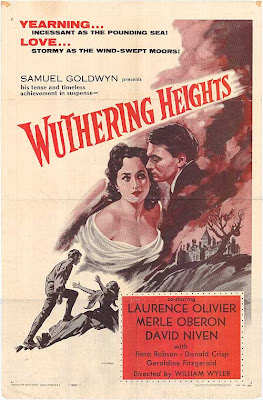
This classic from 1939 is a wonderful adaptation of Emily Bronte's famous literary work. Laurence Olivier and Merle Oberon are magnificent as Heathcliff the poor stable boy and Cathy - his wealthy adopted sister. With a love story that has endured many cinematic versions, the film rivals the sweeping romance of Scarlett and Rhett in Gone with the Wind. William Wyler's film is one of the very best that 1939 has to offer, and it very much deserved its Best Picture nomination.
The film received nominations for Best Picture, Best Director, Best Actor, Best Supporting Actress (G. Fitzgerald), Best Writing (Screenplay), Best Art Direction, Best Cinematography (B&W), and Best Original Score. It did not win Best Picture, but it did win cinematographer Gregg Toland (Citizen Kane) his only Oscar.
Labels:
1939,
Academy Awards,
Best Picture,
Double Feature,
Love Affair,
Oscars,
Wuthering Heights
Double Feature: Johnny Belinda (1948) and Lilies of the Field (1963)
Sunday, December 18, 2011
Johnny Belinda:
In this Oscar-winning drama, a young doctor (Lew Ayres) teaches Jane Wyman's deaf/mute character Belinda to use sign language. However, things fall apart when Belinda winds up pregnant and becomes the town scandal.
The film received nominations for Best Picture, Best Director, Best Actor, Best Actress, Best Supporting Actor (Charles Bickford), Best Supporting Actress (Agnes Moorehead), Best Screenplay, Best Art Direction, Best Cinematography, Best Film Editing, Best Score (Drama or Comedy), and Best Sound. Though Wyman deserved her Best Actress Oscar, Olivia de Havilland did give a better performance in The Snake Pit that year.
Lilies of the Field:
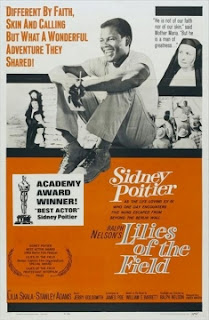
Sidney Poitier gives an Oscar-winning performance in this comedy-drama about a simple African-American man who helps build a chapel for a group of German nuns. Through his efforts, the locals pull together to complete the chapel, ensuring a sanctuary for future generations.
The film received nominations for Best Picture, Best Actor, Best Supporting Actress (Lilia Skala), Best Adapted Screenplay, and Best Cinematography. While the film is slightly dated, Poitier is very charismatic in this performance and deserved his Academy Award.
In this Oscar-winning drama, a young doctor (Lew Ayres) teaches Jane Wyman's deaf/mute character Belinda to use sign language. However, things fall apart when Belinda winds up pregnant and becomes the town scandal.
The film received nominations for Best Picture, Best Director, Best Actor, Best Actress, Best Supporting Actor (Charles Bickford), Best Supporting Actress (Agnes Moorehead), Best Screenplay, Best Art Direction, Best Cinematography, Best Film Editing, Best Score (Drama or Comedy), and Best Sound. Though Wyman deserved her Best Actress Oscar, Olivia de Havilland did give a better performance in The Snake Pit that year.
Lilies of the Field:
Sidney Poitier gives an Oscar-winning performance in this comedy-drama about a simple African-American man who helps build a chapel for a group of German nuns. Through his efforts, the locals pull together to complete the chapel, ensuring a sanctuary for future generations.
The film received nominations for Best Picture, Best Actor, Best Supporting Actress (Lilia Skala), Best Adapted Screenplay, and Best Cinematography. While the film is slightly dated, Poitier is very charismatic in this performance and deserved his Academy Award.
Labels:
1948,
1963,
Academy Awards,
Best Picture,
Double Feature,
Johnny Belinda,
Lilies of the Field,
Oscars
Double Feature: Quiz Show (1994) and Shine (1996)
Thursday, November 17, 2011
Quiz Show:
This 1994 film is based on the Twenty One quiz show scandals of the 1950s involving contestants Charles Van Doren (Ralph Fiennes) and Herb Stempel (John Turturro). On a hunch, lawyer Richard Goodwin (Rob Morrow) investigates and unearths details of behind-the-scenes tampering by NBC producers, who were subsequently made to testify at congressional hearings.
The film received nominations for Best Picture, Best Director, Best Supporting Actor (Paul Scofield), and Best Adapted Screenplay. Though mostly forgotten, the film is a charming Best Picture nominee.
Shine:
In this modest biopic, Geoffrey Rush stars as David Helfgott, a talented but troubled pianist. Taught to play by his father, David rises and falls in popularity in his native Australia, suffering a mental breakdown and living in institutions before a small resurgence at a local diner.
The film received nominations for Best Picture, Best Director, Best Actor, Best Supporting Actor (Armin Mueller-Stahl), Best Original Screenplay, Best Film Editing, and Best Original Dramatic Score. While the film did not deserve that much recognition, it is hard to argue against Rush's Best Actor Oscar win.
This 1994 film is based on the Twenty One quiz show scandals of the 1950s involving contestants Charles Van Doren (Ralph Fiennes) and Herb Stempel (John Turturro). On a hunch, lawyer Richard Goodwin (Rob Morrow) investigates and unearths details of behind-the-scenes tampering by NBC producers, who were subsequently made to testify at congressional hearings.
The film received nominations for Best Picture, Best Director, Best Supporting Actor (Paul Scofield), and Best Adapted Screenplay. Though mostly forgotten, the film is a charming Best Picture nominee.
Shine:
In this modest biopic, Geoffrey Rush stars as David Helfgott, a talented but troubled pianist. Taught to play by his father, David rises and falls in popularity in his native Australia, suffering a mental breakdown and living in institutions before a small resurgence at a local diner.
The film received nominations for Best Picture, Best Director, Best Actor, Best Supporting Actor (Armin Mueller-Stahl), Best Original Screenplay, Best Film Editing, and Best Original Dramatic Score. While the film did not deserve that much recognition, it is hard to argue against Rush's Best Actor Oscar win.
Labels:
1994,
1996,
Academy Awards,
Best Picture,
Double Feature,
Oscars,
Quiz Show,
Shine
Double Feature: Midnight Express (1978) and Breaking Away (1979)
Wednesday, November 2, 2011
Midnight Express:
In this true-story film directed by Alan Parker, Brad Davis stars as Billy Hayes, who was imprisoned in a Turkish prison from 1970 to 1975. Though their is controversy over the events portrayed in the film, it does remain an effective political thriller from a great decade in American cinema.
The film received nominations for Best Picture, Best Director, Best Supporting Actor (John Hurt), Best Adapted Screenplay, Best Film Editing, and Best Original Score. Oliver Stone won his first Oscar for the film's screenplay, and Giorgio Moroder's synthetic score was also honored with a win.
Breaking Away:
Peter Yates' 1979 film is another true-story film, chronicling the "cutters" (townies) of Bloomington, Indiana and their cycling victory at the Little 500. While it is light and comedic, the film does hold up as a great sports movie and a worthy Best Picture nominee.
The film received nominations for Best Picture, Best Actor, Best Supporting Actress (Barbara Barrie), Best Original Screenplay, and Best Original Song Score and Its Adaptation or Best Adaptation Score. Aside from winning Best Original Screenplay, it is slightly disappointing that Paul Dooley didn't get a Best Supporting Actor nomination.
In this true-story film directed by Alan Parker, Brad Davis stars as Billy Hayes, who was imprisoned in a Turkish prison from 1970 to 1975. Though their is controversy over the events portrayed in the film, it does remain an effective political thriller from a great decade in American cinema.
The film received nominations for Best Picture, Best Director, Best Supporting Actor (John Hurt), Best Adapted Screenplay, Best Film Editing, and Best Original Score. Oliver Stone won his first Oscar for the film's screenplay, and Giorgio Moroder's synthetic score was also honored with a win.
Breaking Away:
Peter Yates' 1979 film is another true-story film, chronicling the "cutters" (townies) of Bloomington, Indiana and their cycling victory at the Little 500. While it is light and comedic, the film does hold up as a great sports movie and a worthy Best Picture nominee.
The film received nominations for Best Picture, Best Actor, Best Supporting Actress (Barbara Barrie), Best Original Screenplay, and Best Original Song Score and Its Adaptation or Best Adaptation Score. Aside from winning Best Original Screenplay, it is slightly disappointing that Paul Dooley didn't get a Best Supporting Actor nomination.
Labels:
1978,
1979,
Academy Awards,
Best Picture,
Breaking Away,
Double Feature,
Midnight Express,
Oscars
Double Feature: Gaslight (1944) and Since You Went Away (1944)
Wednesday, October 19, 2011
Gaslight:
Charles Boyer and Ingrid Bergman star in the George Cukor's 1944 version of Gaslight. As a woman being driven into insanity, Bergman is sublime, and Boyer is well-suited as her treacherous husband. Joseph Cotten and Angela Lansbury also give fine supporting performances.
The film received nominations for Best Picture, Best Actor, Best Actress, Best Supporting Actress (Lansbury), Best Screenplay, Best Art Direction, and Best Cinematography. Fittingly, Bergman won her first Oscar, and the film won a second Oscar for Best Art Direction.
Since You Went Away:
As a product of producer David O. Selznick, this 1944 wartime drama stars Claudette Colbert as a housewife whose husband has gone to fight overseas, leaving her with their two daughters (Jennifer Jones and Shirley Temple). It is an enjoyable, sentimental film, akin to films like Mrs. Miniver, and also stars Joseph Cotten.
The film received nominations for Best Picture, Best Actress, Best Supporting Actor (Monty Woolley), Best Supporting Actress (Jones), Best Art Direction, Best Cinematography, Best Film Editing, Best Score (Drama or Comedy), and Best Special Effects. Despite its nine nominations, Joseph Cotten was unfortunately overlooked for a Best Supporting Actor nom.
Charles Boyer and Ingrid Bergman star in the George Cukor's 1944 version of Gaslight. As a woman being driven into insanity, Bergman is sublime, and Boyer is well-suited as her treacherous husband. Joseph Cotten and Angela Lansbury also give fine supporting performances.
The film received nominations for Best Picture, Best Actor, Best Actress, Best Supporting Actress (Lansbury), Best Screenplay, Best Art Direction, and Best Cinematography. Fittingly, Bergman won her first Oscar, and the film won a second Oscar for Best Art Direction.
Since You Went Away:
As a product of producer David O. Selznick, this 1944 wartime drama stars Claudette Colbert as a housewife whose husband has gone to fight overseas, leaving her with their two daughters (Jennifer Jones and Shirley Temple). It is an enjoyable, sentimental film, akin to films like Mrs. Miniver, and also stars Joseph Cotten.
The film received nominations for Best Picture, Best Actress, Best Supporting Actor (Monty Woolley), Best Supporting Actress (Jones), Best Art Direction, Best Cinematography, Best Film Editing, Best Score (Drama or Comedy), and Best Special Effects. Despite its nine nominations, Joseph Cotten was unfortunately overlooked for a Best Supporting Actor nom.
Labels:
1944,
Academy Awards,
Best Picture,
Double Feature,
Gaslight,
Oscars,
Since You Went Away
Double Feature: Friendly Persuasion (1956) and The Nun's Story (1959)
Thursday, October 13, 2011
Friendly Persuasion:
Gary Cooper and Dorothy Maguire headline this William Wyler-directed story of a Quaker family dealing with the onslaught of the Civil War in rural Indiana. The cast is wonderfully-suited for the material, and Wyler turns in yet another great (Best Picture-nominated) film.
The film received nominations for Best Picture, Best Director, Best Supporting Actor (Anthony Perkins), Best Adapted Screenplay, Best Original Song ("Friendly Persuasion (Thee I Love)"), and Best Sound. This a very worthy Best Picture nominee, and it's just a shame that Cooper and Maguire weren't nominated for their work.
The Nun's Story:
Interestingly, this 1959 period piece was directed by William Wyler's chief competitor: Fred Zinnemann. The film is a bloated spectale starring Audrey Hepburn as a woman who becomes a nun to work in medicine and struggles for years to become a good nun.
The film received nominations for Best Picture, Best Director, Best Actress, Best Adapted Screenplay, Best Cinematography, Best Film Editing, Best Score (Drama or Comedy), and Best Sound. Though the film is not one of the best Oscar movies, it does feature good performances from Hepburn and the wrongfully-snubbed Peter Finch.
Gary Cooper and Dorothy Maguire headline this William Wyler-directed story of a Quaker family dealing with the onslaught of the Civil War in rural Indiana. The cast is wonderfully-suited for the material, and Wyler turns in yet another great (Best Picture-nominated) film.
The film received nominations for Best Picture, Best Director, Best Supporting Actor (Anthony Perkins), Best Adapted Screenplay, Best Original Song ("Friendly Persuasion (Thee I Love)"), and Best Sound. This a very worthy Best Picture nominee, and it's just a shame that Cooper and Maguire weren't nominated for their work.
The Nun's Story:
Interestingly, this 1959 period piece was directed by William Wyler's chief competitor: Fred Zinnemann. The film is a bloated spectale starring Audrey Hepburn as a woman who becomes a nun to work in medicine and struggles for years to become a good nun.
The film received nominations for Best Picture, Best Director, Best Actress, Best Adapted Screenplay, Best Cinematography, Best Film Editing, Best Score (Drama or Comedy), and Best Sound. Though the film is not one of the best Oscar movies, it does feature good performances from Hepburn and the wrongfully-snubbed Peter Finch.
Labels:
1956,
1959,
Academy Awards,
Best Picture,
Double Feature,
Friendly Persuasion,
Oscars,
The Nun's Story
Double Feature: Coming Home (1978) and Missing (1982)
Friday, September 30, 2011
Coming Home:
In Oscar-winning performances, Jon Voight and Jane Fonda headline this controversial 1978 drama about the effects of the Vietnam war on veterans. Bruce Dern also gives a fine performance in this terrific Best Picture nominee.
The film received nominations for Best Picture, Best Director, Best Actor, Best Actress, Best Supporting Actor (Dern), Best Supporting Actress (Milford), Best Original Screenplay, and Best Film Editing. It was worthy of all of them, and the film still holds up today.
Missing:
Jack Lemmon and Sissy Spacek star as a father and daughter-in-law in search of their son/husband in this 1982 drama. Costa-Gavras (and Donald Stewart) won an Oscar for the film's screenplay, arguably as a reward for his superior Z (1969 Best Picture nominee).
The film received nominations for Best Picture, Best Actor, Best Actress, and Best Adapted Screenplay. Since the film is an intriguing politically-charged work, it fits well within the standards of the Oscars and is in the league of a great many films nominated in the 1970s.
In Oscar-winning performances, Jon Voight and Jane Fonda headline this controversial 1978 drama about the effects of the Vietnam war on veterans. Bruce Dern also gives a fine performance in this terrific Best Picture nominee.
The film received nominations for Best Picture, Best Director, Best Actor, Best Actress, Best Supporting Actor (Dern), Best Supporting Actress (Milford), Best Original Screenplay, and Best Film Editing. It was worthy of all of them, and the film still holds up today.
Missing:
Jack Lemmon and Sissy Spacek star as a father and daughter-in-law in search of their son/husband in this 1982 drama. Costa-Gavras (and Donald Stewart) won an Oscar for the film's screenplay, arguably as a reward for his superior Z (1969 Best Picture nominee).
The film received nominations for Best Picture, Best Actor, Best Actress, and Best Adapted Screenplay. Since the film is an intriguing politically-charged work, it fits well within the standards of the Oscars and is in the league of a great many films nominated in the 1970s.
Labels:
1978,
1982,
Academy Awards,
Best Picture,
Coming Home,
Double Feature,
Missing,
Oscars
Double Feature: King Solomon's Mines (1950) and Julius Caesar (1953)
Monday, September 26, 2011
King Solomon's Mines:
Deborah Kerr and Stewart Granger star in this Technicolor adaptation of Allan Quatermain's quest to find a woman's husband who went looking for the mysterious diamond mines of King Solomon. Though it is dated, it is easy to see why an adventure film like this got nominated for Best Picture amidst films like All About Eve and Sunset Boulevard.
The film received nominations for Best Picture, Best Cinematography (Color), and Best Film Editing. Though it won for the latter two nominations, the Best Picture nomination could have been given to something like Harvey or The Third Man.
Julius Caesar:
This rendering of Shakespeare's tragedy features solid performances from James Mason (as Brutus), Marlon Brando (as Mark Antony), and John Gielgud (as Cassius). Director Joseph L. Mankiewicz allows the material (and what material!) to speak for itself, and Miklos Rozsa's score complements it nicely.
The film received nominations for Best Picture, Best Actor (Brando), Best Art Direction (B&W), Best Cinematography (B&W), and Best Score (Dramatic or Comedy Picture). Though Brando is good, Mason and Gielgud deserved to be nominated along with him.
Deborah Kerr and Stewart Granger star in this Technicolor adaptation of Allan Quatermain's quest to find a woman's husband who went looking for the mysterious diamond mines of King Solomon. Though it is dated, it is easy to see why an adventure film like this got nominated for Best Picture amidst films like All About Eve and Sunset Boulevard.
The film received nominations for Best Picture, Best Cinematography (Color), and Best Film Editing. Though it won for the latter two nominations, the Best Picture nomination could have been given to something like Harvey or The Third Man.
Julius Caesar:
This rendering of Shakespeare's tragedy features solid performances from James Mason (as Brutus), Marlon Brando (as Mark Antony), and John Gielgud (as Cassius). Director Joseph L. Mankiewicz allows the material (and what material!) to speak for itself, and Miklos Rozsa's score complements it nicely.
The film received nominations for Best Picture, Best Actor (Brando), Best Art Direction (B&W), Best Cinematography (B&W), and Best Score (Dramatic or Comedy Picture). Though Brando is good, Mason and Gielgud deserved to be nominated along with him.
Labels:
1950,
1953,
Academy Awards,
Best Picture,
Double Feature,
Julius Caesar,
King Solomons Mines,
Oscars
Double Feature: Of Mice and Men (1939) and Goodbye, Mr. Chips (1939)
Wednesday, September 21, 2011
As I'm trying to see every Best Picture nominee ever made, I watched two 1939 entries for the first time this week.
Of Mice and Men:
This gem features Burgess Meredith and Lon Chaney Jr. as two labor workers in the rural American south in the Great Depression. Both give great performances in a worthy Best Picture nominee that more classic movie fans should see, if they haven't already.
The film received nominations for Best Picture, Best Original Score, Best Scoring, and Best Sound. However, it definitely deserved additional nominations for Meredith (Best Actor) and Chaney Jr. (Best Supporting Actor).
Goodbye, Mr. Chips:
This beloved classic is just that: a wonderful, emotionally-satisfying piece about a boarding school teacher. Robert Donat is sublime in an Oscar-winning performance, and the film arguably deserved the Best Picture prize.
The film received nominations for Best Picture, Best Director, Best Actor, Best Actress, Best Screenplay, Best Film Editing, and Best Sound. Of course, Greer Garson's leading performance was supporting, and the film could have been nominated for Best Art Direction.
Of Mice and Men:
This gem features Burgess Meredith and Lon Chaney Jr. as two labor workers in the rural American south in the Great Depression. Both give great performances in a worthy Best Picture nominee that more classic movie fans should see, if they haven't already.
The film received nominations for Best Picture, Best Original Score, Best Scoring, and Best Sound. However, it definitely deserved additional nominations for Meredith (Best Actor) and Chaney Jr. (Best Supporting Actor).
Goodbye, Mr. Chips:
This beloved classic is just that: a wonderful, emotionally-satisfying piece about a boarding school teacher. Robert Donat is sublime in an Oscar-winning performance, and the film arguably deserved the Best Picture prize.
The film received nominations for Best Picture, Best Director, Best Actor, Best Actress, Best Screenplay, Best Film Editing, and Best Sound. Of course, Greer Garson's leading performance was supporting, and the film could have been nominated for Best Art Direction.
Labels:
1939,
Academy Awards,
Best Picture,
Double Feature,
Goodbye Mr. Chips,
Of Mice and Men,
Oscars
Classic Double Feature on a Saturday: Retrospective Lives
Saturday, June 18, 2011
A double dose of early deaths followed by life stories in this week's Classic Double Feature!
First: The Killers - 1946
Featuring - Burt Lancaster, Ava Gardner, Edmond O'Brien
Second: Citizen Kane - 1941
Featuring - Orson Welles, Joseph Cotton, Agnes Moorehead
Theme: Sometimes you only understand the pitfalls of a man's life until after he's lived it.
Noteworthy Accolades:
13 Oscar Nominations - Nine for Citizen Kane (1 Win - Best Writing, Original Screenplay), Four for The Killers
I'm Still Standing Award - Despite being the focal point of overrated rants by roughly 50% of bloggers, Citizen Kane still remains widely considered one of the greatest films ever made. In other words, nana boo boo :P.
Is it steamy in here? - Burt Lancaster and Ava Gardner just standing next to one another would melt glaciers.
Univarn's Ratings:
The Killers - 8.00/10
Citizen Kane - 10/10
First: The Killers - 1946
Featuring - Burt Lancaster, Ava Gardner, Edmond O'Brien
Second: Citizen Kane - 1941
Featuring - Orson Welles, Joseph Cotton, Agnes Moorehead
Theme: Sometimes you only understand the pitfalls of a man's life until after he's lived it.
Noteworthy Accolades:
13 Oscar Nominations - Nine for Citizen Kane (1 Win - Best Writing, Original Screenplay), Four for The Killers
I'm Still Standing Award - Despite being the focal point of overrated rants by roughly 50% of bloggers, Citizen Kane still remains widely considered one of the greatest films ever made. In other words, nana boo boo :P.
Is it steamy in here? - Burt Lancaster and Ava Gardner just standing next to one another would melt glaciers.
Univarn's Ratings:
The Killers - 8.00/10
Citizen Kane - 10/10
Classic Double Feature on a Saturday: Cornfield Edition
Saturday, June 4, 2011
Alright, technically this is a cheat because only one of them really deserves the title classic, but the combo points are simply too high to pass up:
First: Signs - 2002
Featuring - Mel Gibson, Joaquin Phoenix, Rory Culkin, and Abigail Breslin
Second: Field of Dreams - 1989
Featuring - Kevin Costner, Amy Madigan, James Earl Jones, Ray Liotta, Timothy Busfield and Burt Lancaster
Theme: If you want to avoid crazy shit happening at your house - never mix baseball and cornfields; they're the juncture for the supernatural.
Noteworthy Accolades:
Three Oscar Nominations - Field of Dreams (Best Music, Original Score; Best Picture; Best Writing, Adapted Screenplay)
Insanely Awesome James Earl Jones Speech - No, I'm not kidding, it is insanely awesome. So awesome in fact, if the film crew didn't start their own clap the second they stopped rolling, they should all be put in cinematic jail.
Most Awesome Invasion Tactic - Nothing quite like building your invasion plans on a map system that's only valuable a third of the year and only available in a small percentage of the global climate. Damn you seasons! We keep having to redraw the maps over and over again. No wonder we ended up invading Pennsylvania three hundred years too late!
Univarn's Ratings:
Signs - 6.50/10
Field of Dreams - 8.25/10
Enjoy.
First: Signs - 2002
Featuring - Mel Gibson, Joaquin Phoenix, Rory Culkin, and Abigail Breslin
Second: Field of Dreams - 1989
Featuring - Kevin Costner, Amy Madigan, James Earl Jones, Ray Liotta, Timothy Busfield and Burt Lancaster
Theme: If you want to avoid crazy shit happening at your house - never mix baseball and cornfields; they're the juncture for the supernatural.
Noteworthy Accolades:
Three Oscar Nominations - Field of Dreams (Best Music, Original Score; Best Picture; Best Writing, Adapted Screenplay)
Insanely Awesome James Earl Jones Speech - No, I'm not kidding, it is insanely awesome. So awesome in fact, if the film crew didn't start their own clap the second they stopped rolling, they should all be put in cinematic jail.
Most Awesome Invasion Tactic - Nothing quite like building your invasion plans on a map system that's only valuable a third of the year and only available in a small percentage of the global climate. Damn you seasons! We keep having to redraw the maps over and over again. No wonder we ended up invading Pennsylvania three hundred years too late!
Univarn's Ratings:
Signs - 6.50/10
Field of Dreams - 8.25/10
Enjoy.
Subscribe to:
Posts (Atom)


.jpg)