Pages

Powered by Blogger.
Showing posts with label 1944. Show all posts

043. Kismet

Thursday, January 31, 2013

043. (30 Jan) Kismet (1944, William Dieterle) 18


I have a decidedly low tolerance for these '40s forays into exoticism, full of tanned white actors and soundstages that all run together. Especially odd is how Kismet is about as dull as an adventure in a foreign land gets. Marlene Dietrich occasionally breathes life into this, like during an endless dance sequence, but she's not given much to do. The cinematography is vibrant and the score tries to make this more rousing than it is; those are both worthy Oscar nominations. The nods for art direction and sound are totally unnecessary.

Cover Girl (1944) vs. Pal Joey (1957)

Thursday, September 6, 2012


Both of these classic musicals feature bombshell Rita Hayworth. Find out the winner after the cut. (SPOILERS)

 
Cover Girl
The rap sheet.
Cover Girl has a 90% rating on RottenTomatoes.com. It received 5 Oscar nominations, and won for Best Musical Score. Pal Joey has a 75% rating on RottenTomatoes.com. It received 4 Oscar nominations, and Frank Sinatra won a Golden Globe for his performance.
Winner: Cover Girl

The setup.
In Pal Joey, a night club singer (Sinatra) falls in love with a chorus girl (Kim Novak), but he must deal with the jealousy of his new club's benefactor (Hayworth). In Cover Girl, a chorus girl (Hayworth) becomes an overnight sensation as a cover girl, when her boyfriend and fellow performer (Gene Kelly) is against it.
Winner: Pal Joey

Pal Joey
The execution.
Both films have various musical numbers and flashy costumes. Cover Girl has a bit more stylish flare, with a scene where Gene Kelly dances with himself. Seriously, there are two Gene Kellys dancing! Pal Joey has more likable characters and better pacing. It's the longer film, but it goes by a lot quicker.
Winner: Pal Joey

The ending.
In Pal Joey, the singer and the chorus girl walk down the street, planning their new stage act as soon-to-be Mr. and Mrs. In Cover Girl, the chorus girl runs out on her big shot fiancé at their wedding, and she goes back to her old boyfriend.
Winner: Pal Joey

The wild card:
Cover Girl has a scene-stealing performance from Phil Silvers as Hayworth's and Kelly's best friend. Along with better songs, Pal Joey has this little fella below.
"Fluffy" from Pal Joey
Winner: Pal Joey

Pal Joey
Winner: Pal Joey beats Cover Girl 4-1

Ratings: Cover Girl - **1/2, Pal Joey - ****

079. The Fighting Lady

Tuesday, March 6, 2012

079. (05 Mar) The Fighting Lady (1944, Edward Steichen) 69


Encapsulating how war is mundane, stressful waiting punctuated by breathless action, The Fighting Lady gives an incredibly clear sense of life on board an aircraft carrier. The photography is rather ingenious; every time pilots start shooting, the camera flicks on. That Technicolor photography is breathtaking. Perhaps the most involving bit here is when a bomb ignites after a pilot lands, spraying the deck with molten metal. It's hard not to be in awe of the mix of excitement in terror in such moments.

068. Voice in the Wind

Sunday, February 26, 2012

067. (26 Feb) Voice in the Wind (1944, Arthur Ripley) 25


A test case, I suppose, of whether or not a film can sustain on endless scenes of piano playing or listening. Unsurprisingly, it can't. If Voice in the Wind's structure was well-ordered and the melodrama played more sincerely, there might be something to laud here. As it stands, it's rather exhaustingly awful.

The Original Score nomination makes sense. At the film's center is a pianist who plays rousing, if forgettable melodies. The music lacks a memorable theme. It also isn't helpful that this underscores an outright dull film. The Sound nomination is actively bad; the film consists almost entirely of pounding music and poorly recorded dialogue.

Double Feature: Gaslight (1944) and Since You Went Away (1944)

Wednesday, October 19, 2011

Gaslight:

Charles Boyer and Ingrid Bergman star in the George Cukor's 1944 version of Gaslight. As a woman being driven into insanity, Bergman is sublime, and Boyer is well-suited as her treacherous husband. Joseph Cotten and Angela Lansbury also give fine supporting performances.

The film received nominations for Best Picture, Best Actor, Best Actress, Best Supporting Actress (Lansbury), Best Screenplay, Best Art Direction, and Best Cinematography. Fittingly, Bergman won her first Oscar, and the film won a second Oscar for Best Art Direction.

Since You Went Away:

As a product of producer David O. Selznick, this 1944 wartime drama stars Claudette Colbert as a housewife whose husband has gone to fight overseas, leaving her with their two daughters (Jennifer Jones and Shirley Temple). It is an enjoyable, sentimental film, akin to films like Mrs. Miniver, and also stars Joseph Cotten.

The film received nominations for Best Picture, Best Actress, Best Supporting Actor (Monty Woolley), Best Supporting Actress (Jones), Best Art Direction, Best Cinematography, Best Film Editing, Best Score (Drama or Comedy), and Best Special Effects. Despite its nine nominations, Joseph Cotten was unfortunately overlooked for a Best Supporting Actor nom.

The Final Conclusion - Best Actress 1944

Friday, April 1, 2011

1944


So the much anticipated ranking is:

Many might disagree with me but I think that Bette Davis was fantastic in Mr. Skeffington. Her over-the-top acting, her insane and brave choices all worked well with me. Even after I finished watchin the movie, I was under the effect of Bette's great performance. Although it's not her best work, it's worth watching.

I can say that I was so pleasantly surprised and impressed by this performance of the wonderful Greer Garson. Although she did not blow me away totally, I was utterly mesmerized by her unique presence and talent. Garson illuminates the screen with her radiant self and charisma and she creates a wonderful performance as Susie Parkington.


Although Claudette didn't have the screentime and the screenplay on her side, she still managed to deliver a very emotional and loveable performance as Mrs. Anne Hilton. Claudette's acting is not too sentimental and she's quite heartwrenching occasionally. Had she been given more, she would have been more fantastic (and won the Oscar).

Ingrid Bergman gives a fabulous, extremely memorable performance as Paula a terrified woman on the edge of a total nervous breakdown. Although this is not the type of Bergman's performance that I love obsessedly, I would feel ashamed if I didn't praise her for this work of hers as much as I can. Ingrid's portrayal of this woman is brilliant and really haunting.

But I had to chose Stanwyck's diabolique performance as Phyllis Dietrichson. Stanwyck's performance as the manipulative, irresistable Phyllis Dietrichson is just pitch-perfect. From what I've seen this is absolutely the best work of this silver screen goddess who always blows me away with her wonderful presence and radiant talent. Breathtaking achievement

So I can proudly announce
that my winner is...
Barbara Stanwyck
in
Double Indemnity
Barbara hid a gun in case I picked someone else

Final thoughts: I so needed this year, especially after the awful 1957. All these five women gave fantastic performances and they all would have made worthy winner (except for maybe Bette). I said in my review about Ingrid Bergman that my #1 pick will be a difficult choice. It wasn't to tell the truth. After a while, it was very clear that I would give it to Barbara that scene behind the door is the most significant reason. I mean how could a scene be more brilliant. Ingrid is a great second. I loved Colbert more than it seemed from my review, I think. Garson, poor Garson is fourth once again even though I so loved her. Bette was the obvious fifth, she was the weakest one of this line up (as if I can ever use the word weak in a sentence with this year). Still, the best year so far, I really loved it. And it was great that I was able to cover it first. I usually don't care about it but now I wanted to be the first quite badly. :)


The ranking of the reviewed years:

  1. 1944
  2. 1969
  3. 1974
  4. 1989
  5. 1959
  6. 1964
  7. 1939
  8. 1977
  9. 2010
  10. 2009
  11. 1980
  12. 1941
  13. 1963
  14. 1966
  15. 1973
  16. 1990
  17. 1978
  18. 1954
  19. 1948
  20. 2002
  21. 1957
  22. 1940
  23. 1998
About the next year: I got requests, but I'm doing the next year because I'm really interested in it. It seems to be a great year and all the movies are available, right now. So I give clues:
  • Comedy, THE box-office hit, period pieces
What do you think?

Ingrid Bergman in Gaslight

Thursday, March 31, 2011

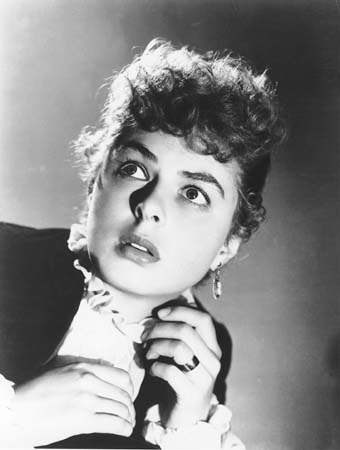
Ingrid Bergman received her second Oscar nomination for playin Paula Alquist Anton in George Cukor's Best Picture nominated movie, Gaslight. It was pretty sure, in my opinion, that Ingrid Bergman would win her first Oscar in 1944. She had just lost the previous year to her good friend Jennifer Jones, she didn't get nominated for Casablanca plus she had a very Oscary role. I think her win was inevitable though not an easy one as Barbara Stanwyck must have given her some tough competition.


I used to be a great fan of Gaslight. Now, I'm not even though I really liked it this time, too. It's a very entertaining psychological thriller, which has a lot of suspense though it's not even close to Hitchcock despite the fact that mistake this movie for Notorious (in which Bergman gives her best performance besides Autumn Sonata). I think George Cukor could have received an Oscar nomination as his direction was quite great. Charles Boyer deserved the nomination though I wouldn't give him a win. I really love Angela Lansbury and the thought that she did not get the Oscar for The Manchurian Candidate makes me sick (she was the victim of a category fraud of Patty Duke). Still, she doesn't do much in Gaslight.


Ingrid Bergman is an actress who is so underappreciated nowadays and many say that she's too obvious as an actress. In addition to the fact that I hate the term "obvious actress", I think it's really untrue. Ingrid Bergman was a fantastic performer who relied completely on her emotions (like Anna Magnani but in a different way). She may not calculate her teardrops per second like Meryl Streep does but Ingrid always has such an effect on me. Even in her most hated performances (For Whom the Bell Tolls and Joan of Arc) there's something that I really admire.


The same thing is the case with Ingrid's performance as Paula Alquist Anton in Gaslight. However, this is not a typical Ingrid Bergman performance that I love. Or to pu it more accurately: this is not what I love Ingrid Bergman for. I actually prefer her works made in the seventies and the sixties to her movies in the fourties. That has nothing to do with Gaslight as it's really a fantastic achievement of hers.


The role of Paula seems to be tailor made for Ingrid Bergman as she's typically a quietly suffering woman that Bergman could play so well (although her casting nowadays seems obvious, she wasn't the first choice to play Paula). Paula starts out as a very naive young girl who falls for a man she barely knows. She seems to be haunted by the memory of her dead aunt and every time she's mentioned (or even London), Palua begins to sob or she has a terrified expression on her face. Bergman so amazingly showed the effects of this traumatic even on Paula. Every expression on her face is just perfect. She could have ruined Paula very easily but somehow, she was able to keep the right balance.


However, the most curcial thing about this movie was the great co-operation between the lead actors. Bergman's chemistry with Charles Boyer is just excellent. They work so well together, their scenes, their interactions are so brilliant. They really had to support each other as neither of the roles was really active and they mostly had to react to each other. It's mostly Boyer who takes the initiative but Bergman is also flawless in their scenes. Ingrid is just wonderful at reacting to the mental torture that she suffers. There's a mindblowing scene where they go to The Tower of London and they are looking at the crown jewels. Charles Boyer's diabolique presence is the polar opposite of Ingrid's angelic innocence and therefore they are so great together.


However, Ingrid is the greatest when Boyer says that they will go the the theatre and Ingrid starts dancing and then Boyer interrupts her. That instant change on Ingrid's face from fierce exhiliration to shock and horror is the work of a genious: it comes so much from Ingrid's great instincts and it's terrifying in its unexpectedness. Paula is gradually losing her mind and we feel that Ingrid goes deeper and deeper into Paula's head. Also, Ingrid is quite brilliant in the scenes with Angela Lansbury. Paula is terrified of her own maid and the fear Ingrid shows towards this girl is so chilling. Plus, Ingrid also has great chemistry with Joseph Cotten though their scenes are not the best ones of the movie and they feel a bit too "Hollywood" to me.


So, I must say that my choice is not going to be an easy one. Ingrid Bergman gives a fabulous, extremely memorable performance as Paula a terrified woman on the edge of a total nervous breakdown. Although this is not the type of Bergman's performance that I love obsessedly, I would feel ashamed if I didn't praise her for this work of hers as much as I can. Ingrid's portrayal of this woman is brilliant and really haunting.
No official predictions now! Making The Final Conclusion will be the toughest one ever and I still feel bad for the ones I won't make my winner. Oh, it's gonna be tough but a lot of fun, I'm sure. :) So, the results come tomorrow.


What do you think?

Bette Davis in Mr. Skeffington


Bette Davis received her seventh/eighth Best Actress nomination for playing Fanny Trellis in the movie Mr. Skeffington. 1944 is a very interesting year where I'm totally uncertain how the voting might have been. That fourth spot is the one that makes me really think. It was definitely between Greer Garson and Bette Davis. I guess, in the end, that they probably went with Bette as Greer was a very recent Oscar winner (though Bette had two) and Bette's movie was bigger and flashier than Greer's.

That doesn't mean that Mr. Skeffington was better than Mrs. Parking. Not at all. Mr. Skeffington could have been an amazing movie had the filmmakers realised that less is more sometimes. What I mean is that the movie wants to talk about the first half of the 20th century and it somehow becomes very shallow. It doesn't get a real depth and the story becomes boring after a while. Still, the performances are quite good: Claude Rains was excellent in the first half and he would get my Best Supporting Actor vote if it wasn't for Barry Fitzgerald. I really felt sorry for his character. He got all that hate from Fanny's brother. But why did he exactly hate Job? Job was actually very decent with that criminal. I guess the fact that he was called 'Job' had a lot to do with that.

Bette Davis was pretty much the (melo)drama queen. She's considered a real icon and (by many) the first lady of the American cinema. And yes, she was such a huge talent. Nobody could play those teary-eyed or vicious and bitchy characters more naturally than she did. These are the two characters she often played but quite usually, these types were mixed. That's when she got her Oscar nominations and that's what the case is with Mr. Skeffington. Fanny Trellis doesn't fall into both categories. Fanny is a very vain and quite conceited character who also has a hidden (extremely deep inside), sensitive self who quite rarely appears.

This performance of Bette is considered (by many) to be the weakest one of her Oscar nominated roles. I really disagree even though I might just understand the complaints against it. It's true that it's not even close to The Little Foxes and it's a billion miles away from All About Eve (but honestly, it rarely gets better than her in All About Eve). I would say that Fanny Trellis was not the most difficult and showy role of Bette.

First of all, I really felt that Bette Davis added very much depth to this character. Fanny is, above all, extremely vain. She always cares about the outside, how she looks, how her house looks, how her family life looks. Although Fanny enjoys all the money (or fortune) she gets from Job, I don't think that she's as greedy as Regina Giddens from The Little Foxes. Unlike Regina, Fanny doesn't covet constantly, she just feels that she's entitled to a fortune because she's Fanny Trellis, an idol, a noble lady and just Fanny. Bette showed Fanny's worries about her looks, her youth and her beauty and added small hints about what's going to happen in the end. In the end, it's so tragic and Bette's performance makes it even more heart-wrenching.

I think most people miss the great lines from Bette in this movie. It's true that she doesn't get to deliver many sarcastic one-liners but this character is still quite much fun. Although Fanny's not exactly bitchy, she's extremely proud and Bette always underlines this with her performance. It's interesting that Bette chose such a high-pitched voice for Fanny. Just like with Natalie Portman in Black Swan, the annoying voice served the character perfectly and it did not bother me at all.

I would say that Bette's best scene in this movie is the one where she confronts her brother after the wedding (and the weird honeymoon) with Job. There's so much emotion and tension there and I loved how Bette handled that scene. She was quite over-the-top but strangely, it all worked for me. Just like when Fanny learns some sad news. Bette got across Fanny's sorrow extremely well.

I would also have to mention the way Bette (and Fanny :D) plays with the men that are after Fanny. Bette is quite playful in those scenes and I loved that she added very much humor. It was really great to see her feel so easily in front of the camera.

So, to sum up, many might disagree with me but I think that Bette Davis was fantastic in Mr. Skeffington. Her over-the-top acting, her insane and brave choices all worked well with me. Even after I finished watchin the movie, I was under the effect of Bette's great performance. Although it's not her best work, it's worth watching.

As I said, I love doing this year so it's very painful to say that you have to give your final predictions now. :(

Ingrid's profile comes in a couple of hours but you have to wait until tomorrow for The Final Conclusion since I really have a lot to think about. The stronger year, the more difficult ranking.

Barbara Stanwyck in Double Indemnity

Saturday, March 26, 2011


Barbara Stanwyck received her third unsuccessful nomination for playing Phyllis Diethrichson, a manipulative femme fatale in Billy Wilder's Double Indemnity. Poor, poor Barbara. I'm really sorry that despite being a great star and an icon, she never won a comptetitive Oscar. She got closest to winning the award with this role of hers. I think she would have won it, hadn't Ingrid lost the previous year to Jennifer Jones (if Ingrid had been nominated for Casablanca as she should have been). Barbara had to make do with an Honorary Oscar and a couple of Emmys instead. Still, she's one of the greatest that has ever been.

Double Indemnity is just a terrific movie like almost everything that Billy Wilder did. That guy was such a genious. He always used to say that the most important thing of a good movie is a great screenplay. And he was so right. Although I prefer Wilder's comedies, his 40s works are also really terrific. Fred MacMurray gives an excellent performance in the lead and I really think that he should have been nominated for Best Actor. Edward G. Robinson is also terrific in his supporting role and he's a real scene stealer in this one (too).

Barbara Stanwyck is really becoming one of my absolute favorite actresses. She had such a unique presence, a brilliant voice and a shining talent. Although she's nowadays mostly remembered by the general public for playing matriarchs in 80s soaps, her movies are also quite legendary. And probably the two most famous roles she ever played were in The Lady Eve and Double Indemnity. These were the landmarks in her rich career and one just cannot say anything bad about these ones. It always feels awkward to criticise iconic performances as you feel really bad about why you dislike something that some go crazy for.

However, such a thing doesn't come to my mind when I think about Barbara Stanwyck as Phyllis Dietrichson as not only is her performance, in my humble opinion, fantastic but it's also one of the best works of this excellent lady. If you ask me, Barbara Stanwyck is a bit unlikely femme fatale. She's not as distant (or as mindblowingly beautiful) as Lauren Bacall or Gene Tierney. Barbara is much more easy-going and yet she has the very mysterious and very seductive nature that the above mentioned ladies have/had. Phyllis is a very manipulative but irresistable woman who can control and manipulate men extremely easily and even the audience. When we first see her as Phyllis she wears only a towel and she's presumably naked under it. This makes her so desirable in the very first scene of hers that it really manipulates the audience. Phyllis is an immoral, greedy woman who's as she puts "rotten to the heart". She basically wants to kill her husband to get insurance money and she manipulates a man who eventually makes a plan and commits the murder.

This is one of those performances when the performer benefits from the excellently written character who has great lines and scenes. That's what won Supporting Actor Oscars to three men who played villains in the very recent years. However, Barbara is so different as her performance doesn't rely only on delivering the great lines well (or simply the character) but she also adds real depth to this woman. Or to put it more accurately, she adds no depth to this character but intead she shows us that this woman has no depth, only emptiness and greed. Stanwyck plays so many tricks with the audience, which really could have been too forced and they could have made the performance too perplexing but she knew exactly when to stop. This is clearly visible in the very(intentionally) melodramatic scenes where Phyllis is complaining about her distant, aggressive husband. Her stories are really unlikely and they probably lack any real basis but we can't help believing them.

Stanwyck has some really intense and unforgettable scenes where she really shows all her talent. I think the most brilliant scene of her performance (and the movie) is where she's hiding behind the door when Fred MacMurray is talking to the suspicious Edward G. Robinson. Stanwyck brilliantly matched scared with cool-headed. She's both firm and desperate. It's a terrificly acted (and directed moment), full of suspense and it really blew me away. Her very last scene with her teary-eyed confession (probably also a lie) is also just unbelievably great. SPOILER! First, she cold-bloodedly shoots her lover and then she drops the gun and falls in love (!) with her. She is seemingly terrfied and she somehow knows that she's going to die but she hysterically hugs the man she loves. SPOILER OFF! It's an unlikely, yet terrific moment that really blows you away.

From her entry through her scenes at the shop with her sunglasses on until the unlikely, teary ending, Barbara Stanwyck's performance as the manipulative, irresistable Phyllis Dietrichson is just pitch-perfect. I'm not saying anything for sure but from what I've seen this is absolutely the best work of this silver screen goddess who always blows me away with her wonderful presence and radiant talent. Breathtaking achievement that naturally gets

What do you think?

Claudette Colbert in Since You Went Away

Friday, March 25, 2011


Claudette Colbert received her third and last Best Actress nomination for playing Mrs. Anne Hilton in Since You Went Away. I'm quite sure that Colbert was the third likeliest to win the Oscar as she played in a very actual Selznick movie that got a Best Picture nom, too. I think she had more chance than Davis and Garson because she won the Oscar 10 years before (sooner) than them, plus Mrs. Parkington and Mr. Skeffington were not nominated for Best Picture.

Since You Went Away is a movie that was seemingly inteded to win many Oscars. David O. Selznick was well-known for making long, epic, baity movies and yet Since You Went Away is much more modest than, say, Gone with the Wind. Still, it's very long and it's full of dramatic elements plus there's the Mrs. Miniver factor in it. It's less of a propaganda movie, though and yet it's weaker than that one. Max Steiner won the Oscar for this one and it's a bit awkward that he lost for Gone with the Wind and won for this one. Jennifer Jones is fine in this role though she seems to be just reprising the role of St. Bernadette here. Still, it was a deserved nomination in a weak field. Monty Wooley is quite fine and he might have deserved to be nominated, too.

Claudette Colbert is an actress whom I really don't know. I had only seen It Happened One Night before Since You Went Away and she really impressed me in that one, so I was really looking forward to seeing her again. Vicious gossip columnist Hedda Hopper always spoke about her very fondly (quite a rare thing) and I think I understand why. Claudette's French elegance is combined with so much dignity and that's such a lucky combination. She seems to have had so much dedication to deliver great performances. She's not only beautiful but also has a very uncanny presence. When I see a performer with great presence, I always feel something in my bones. When I see Claudette, it's like eating some really delicious chocolate, which you don't eat up at once but save it so that it lasts longer.

The role of Mrs. Anne Hilton screamed Mrs. Miniver to me so much when I read the synopsis of the story. A strong mother who tries to hold her family together druing WWII. Still, it's so much different. Mrs. Miniver seems to be like a saint who's inaccesible and angelic. She's the perfect person, who keeps her composure even in the toughest situation. Anne Hilton is, however, much more fragile and human. This is not about comparing the performance. It's strictly about the characters. We see Mrs. Hilton's flaws (she even admits them) and even a bit of her laziness. She is used to living this very American and comfortable lifestyle and she doesn't really want to give up and yet she has to make some sacrifices.

The first scenes are the highlights of Colbert's whole performance. They are quite heartbreaking and extremely haunting. It's a really sad scene where she looks at the photo of her husband who went to the war. The whole thing becomes very human and also quite sad. When the movie started, I thought that she would totally blow me away in the end. Unfortunately, she didn't.

That's not her fault really and yet it affects her whole performance. The thing is that this movie is not Claudette's. The most impotant character is by far, Jennifer Jones'. Although Jones was nominated in the supporting category, she has about twice as much screentime as Colbert and sometimes her story-lines overshadow Claudette's. Unfortunately, I might add as I think that Claudette was much better and she had the more interesting character. I think it had much to do with the fact that Selznick really wanted to make Jones a big star (he did succeed, to a degree) and therefore she was given the huge scenes, not Colbert. Too bad, because as I said, Colbert is much more impressive.

Although Claudette doesn't have enough screentime and opportunities, she still manages to become quite great. Her chemistry with Joseph Cotten is just excellent, plus she's very believable as the ordinary mother and wife without becoming annoying. Although Anne is a likeable character, Claudette doesn't make her a saint and therefore she becomes much more realistic.

Fortunately, in the end, Claudette is in the spotlight again. The end of her performance really matches the beginning's greatness and I was quite relieved that she wouldn't leave me unimpressed. The scene when she's looking at her Christmas present is simply breathtaking. Claudette found the good balance there so well and she did not go over-the-top. It's a very emotional moment and I really loved it.

So, to sum up, this is great work by Claudette Colbert. Although she didn't have the screentime and the screenplay on her sider, she still managed to deliver a very emotional and loveable performance as Mrs. Anne Hilton. Claudette's acting is not too sentimental and she's quite heartwrenching occasionally. Had she been given more, she would have been fantastic (and won the Oscar). But this way, she's "just" extremely great.
First I wanted to give her a very strong 4 but I compared her to the ladies who got 4s but she was way better, better even than some of the 4.5 ladies, so... :D

And I must add: I LOVE DOING THIS YEAR! So far, it has been full of present surprises. And there's Bette, Ingrid and Barbara still left. LOVE IT! LOVE IT! LOVE IT! :)

Greer Garson in Mrs. Parkington

Thursday, March 24, 2011


Greer Garson received her fifth Best Actress nomination for playing the title role of the movie Mrs. Parkington. Thinking about the competition in 1944 is not very easy. Ingrid's win was pretty settled as she lost the previous year, had a huge role. I imagine that Greer was quite probably fourth or fifth because although she was the major Oscar favorite, she had much more successful movies for which she lost. So, she didn't have much of a chance of winning.

Mrs. Parkington is almost NEVER talked about and the things that I've read weren't that positive. Therefore, I was prepared for a very boring movie. I felt that something like Blossoms in the Dust would be just fine. And boy, I was so surprised when I was watching it. The story is so gripping and absorbing, the movie is minimally sentimental and predictable. The whole thing is really enjoyable and entertaining. It's a hard-to-find movie but it's worth waiting for it, I think. I think the actors give quite good performances. Although Agnes Moorehead's accent is a bit too much (she was no Meryl Streep at accents, to put it kindly), she's actually quite good and she just might have deserved the nomination.

Greer Garson was such an interesting actress. In many ways, she's like Deborah Kerr. Quiet, dignified and subtle. However, Greer is somehow very natural and she's not artificial like Kerr. Greer Garson was the best at playing strong women in a very 40s sense and yet her acting style doesn't seem dated at all. I'm sure some disagree with me but I always admire Greer's talent even though none of her performances blew me away yet. Still, I always love that she radiates the screen with her presence. The Academy also fell in love with her. She was very much like Meryl Streep in the 80s. They nominated her for everything as she was an actress at the peak of her career and she just couldn't do wrong.

In Mrs. Parkington, Greer Garson plays Susie 'Sparrow' Parkington, a woman who becomes a rich wife and a matriarch of a famous family. And she's simply wonderful as Susie. When I read the title, I thought this would be Mrs. Miniver part 11 but it really isn't. Although Mrs. Parkington and Mrs. Miniver have got a lot in common, they are quite different characters and Greer approached them very differently. There's much more lightness and humor in Susie and Greer seems to be enjoying this part much more. I always saw that she was doing it with real joy and she just loved it. This kind of affection/dedication always pays off and it really impressed me.

As I said, Greer had this very subtle and dignified acting style, which cannot really copied. She has this luminous presence that becomes so absorbing after a while and it really makes even the most shallow roles very interesting. Whenever Greer got to play a well-written character who actually had some depth, Greer could do miracles with it. Even when she has an extremely sentimental movie like Blossoms in the Dust, she's able to create something utterly wonderful with it. I think it's the word wonderful that fits Greer the best. I often associate gold with this expression and Greer Garson was pure gold, a true treasure of cinema.

For some of the performance, Greer has very heavy make-up as she has to play an 84-year-old. She's not ridiculous at all, though. On the contrary, she handles these scenes with the elderly Susie the best. There's so much wisdom and love in her eyes and you can just spot the experience and kindness inside Susie. Greer made all these great qualities look very natural and they don't seem to be forced at all. Again, it's so wonderful.

Susie goes through a major transformation throughout the movie and Greer's just excellent at showing all these changes in her. I was so happy that it did not have the "Am rich but inside I'm jus' a country girl" mentality because thatcan give me creeps sometimes. Everything is very realistic in this performance and there wasn't a single moment when I thought that it was overly sentimental. Greer also perfectly found the balance between the drama and the comedy in this character. Plus, Greer's legendary chemistry with Walter Pidgeon is really great in this movie. One just keeps wondering why they weren't married in real life. :)

So, after all, I can say that I was so pleasantly surprised and impressed by this performance of the wonderful Greer Garson. Although she did not blow me away totally, I was utterly mesmerized by her unique presence and talent. Garson illuminates the screen with her radiant self and charisma and she creates a wonderful performance as Susie Parkington. Excellent work, which should be much more frequently talked about.

Wow, Greer was just great! If you want to have a great time, watch Mrs. Parkington here.

What do you think?

The Next Year

1944


So the nominees were:
  • Ingrid Bergman in Gaslight
  • Claudette Colbert in Since You Went Away
  • Bette Davis in Mr. Skeffington
  • Greer Garson in Mrs. Parkington
  • Barbara Stanwyck in Double Indemnity
I can't wait to see all of the performances. It's going to be a tough battle between Bergman and Stanwyck and I haven't even seen the others who might just outdo both of them. Oh, so exciting! :)

What do you think? The predicting contest is on.

Meet Me in St. Louis (1944) **1/2

Thursday, March 10, 2011

meet-me-in-st-louis-uk-movie-poster-1944

(This article is from guest contributor The Lady Eve and first appeared at http://classic-film-tv.blogspot.com/.  The rating in the title is my own.)

One of the most charming and potent portrayals of Americana to ever grace the screen, Meet Me in St. Louis tugs at the heartstrings as powerfully today as it did 65 years ago when it was first crafted by MGM's "Freed Unit" and released in 1944.

judy and trolley[1]The film's wondrous perfection is the work of producer Arthur Freed, director Vincente Minnelli, a bravura ensemble cast, an ace artistic and technical team, songwriters Ralph Blane and Hugh Martin and...Technicolor.
This is one of my all-time favorites...
Meet Me in St. Louis was adapted from a series of reminiscences by Sally Benson that first appeared in The New Yorker in early 1942. Told from the perspective of five-year-old 'Tootie' Smith, Benson's memory pieces, though rich in warmth and humor, were light on plot and conflict. A more defined storyline was developed, the characters were strengthened and 17-year-old Esther Smith (played by Judy Garland) became the pivotal character. The story evolved into a "year in the life" of an idealized American family and was comprised of vignettes set in each of the four seasons with its dramatic climax, a family crisis, set at Christmastime.


The Smith family home at 5135 Kensington Avenue was the film's central interior and Minnelli made the decision to build a continuous set with interconnecting rooms, just like an a actual house. He reportedly wanted the entire picture to have the look of a painting by Thomas Eakins (1844 - 1916, above is his Baby at Play) and art director Preston Ames' assignment was to recreate a St. Louis neighborhood, circa 1904, as evocatively as possible. Ames did so spectacularly, creating a full block of Kensington Avenue (at a cost of $200,000) on Metro's back lot.


Focused on the film's visual look and intent on accurate period detail, Minnelli supervised every aspect of set and production design. He brought in top Broadway set decorator Lemuel Ayres and, in addition, spent time with Sally Benson who described to him every feature of her girlhood home in St. Louis. To handle costume design, he turned to Irene Sharaff, another recent Broadway-to-Hollywood transplant. Sharaff researched the historic era carefully, even using a 1904 Sears & Roebuck catalog as a reference.


Minnelli and cinematographer George Folsey, a master of fluid camera work, took such pains with the film's colors and textures that many scenes do resemble period paintings. This was the first MGM film to be fully shot in Technicolor, and Folsey and Minnelli proved to be adept at the use of color, even managing to capture subtle changes in seasonal light.


The songwriting team of Ralph Blane and Hugh Martin composed three very special songs for Judy Garland: "The Boy Next Door," "The Trolley Song," and "Have Yourself a Merry Little Christmas." Each became a standard in Garland's later repertoire and "Have Yourself a Merry Little Christmas" remains a holiday classic today. To add more period flavor, Blane and Martin also reworked popular tunes from the turn of the century - "Meet Me in St. Louis," "Skip to My Lou" and "Under the Bamboo Tree." Up to this time, most films had music inserted arbitrarily, but the songs in Meet Me in St. Louis were integrated into the action and dialogue to help advance the plot.
With such meticulous preparation and skilled collaboration, Vincente Minnelli's genius for utilizing and showcasing light, color, form and movement was able to soar.


Meet Me in St. Louis was an immediate hit, the highest grossing film of 1944. It turned out to be just the tonic a country at war needed to lift its spirits. The film firmly established Minnelli's reputation as a top director, provided Judy Garland with a solid push to the next plateau of her career and toward her ultimate status as a legend, and it ushered in a golden age of Hollywood musicals.


There is much to love about Meet Me in St. Louis. For me its charm is that, though nostalgic, the sentiment isn't heavy-handed. The film beguiles gently, taking one on a fanciful, many-faceted trip back...into a golden epoch. The turn of the century in America is depicted as a languid time before the World Wars and the Great Depression, an era when multi-generational families lived under the same roof...when mothers made vats of ketchup every summer in large, window-filled kitchens...when horse-drawn ice wagons regularly clattered down neighborhood streets...and when a young lady might easily fall in love with and dream of marrying a boy who lived right next door...


As Esther Smith, Judy Garland glows as the film's heart and soul. She is at her best - wistful and endearing, spunky and warm, her voice at an early peak.


Margaret O'Brien, as the high-spirited young 'Tootie,' adds a delightful dimension of childhood mischief and carries the imaginative Halloween sequence almost entirely on her own. She takes another precocious star turn during the climactic Christmas scenes with Judy Garland.
Leon Ames blusters as the bombastic but good-hearted family patriarch, Alonzo Smith. Mary Astor effortlessly inhabits the genteel yet womanly 'Mrs. Anna Smith.' Lucille Bremer is winning as Esther's demure older sister, Rose. Harry Davenport shines as crusty but lovable 'Grandpa' Smith.

Marjorie judy and margaretMain adds spice as the cantankerous maid, Katie. Tom Drake is affecting as awkwardly appealing 'boy next door' John Truett. Very fine in fleeting roles are Chill Wills as Mr. Neely and a young June Lockhart as Lucille Ballard.


As I write, an image of Judy Garland drifts through my mind...it's a wintry night...she and Margaret O'Brien lean together, framed by a bedroom window...and Judy sings...

Have yourself a merry little Christmas,
Let your heart be light,
From now on
Our troubles will be out of sight.
Have yourself a merry little Christmas,
Make the Yule-tide gay,
From now on
Our troubles will be miles away.
Here we are as in olden days,
Happy golden days of yore,
Faithful friends who are dear to us
Gather near to us once more.
Through the years
We all will be together,
If the Fates allow,
Hang a shining star upon the highest bough
And have yourself a merry little Christmas now.

Murder, My Sweet (1944) **1/2

Monday, June 28, 2010

murder_my_sweet

To say that sweet songster Dick Powell was cast against type in this 1944 Edward Dmytryk film would be an understatement. Powell was best known for his light comedic abilities and his crooning voice, which he exhibited in films such as the Gold Diggers series, 42nd Street, and In the Navy. Gritty was not an adjective often used to describe his performances before Murder, My Sweet (which is also known as Farewell My Lovely in England). Yet, gritty is exactly what he delivered as detective Philip Marlowe.

Kim Newman writes in 1001 Movies You Must See Before You Die that “no other film so perfectly encapsulates the pleasures of film noir, as director Edward Dmytryk deploys shadows, rain, drug-induced hallucinations (‘a black pool opened up’), and sudden bursts of violence within a cobweb of plot traps, slimy master crooks, worthless femme fatales, gorilla-brained thugs, weary cops, and quack doctors.” Her assessment is quite correct, as this film is one of the darkest and wryest film noirs I have ever seen.

mms03 The story begins with a police interrogation of private detective Philip Marlowe (Powell). When we first see Marlowe his eyes are wrapped in bandages and he’s trying to shake himself out of a drug-induced haze. Berated by accusations and questions from Lieutenant Randall (Don Douglas) about a string of murders, Marlowe recounts (via flashback) a sordid story that only Raymond Chandler could write. murder-my-sweet It all started when a man aptly named Moose Malone (Mike Mazurki) hired him to find a redhead named Velma. Moose had lost touch with Velma, as he’d spent the last eight years in prison—reason number one to turn the case down. They travel to a nightclub called Florian’s, where Velma used to work, but no one even recalls knowing her.

mms05 Later, Marlowe pays a visit to Jessie Florian’s (Esther Howard) house to question her about Velma. A lush, Jessie denies ever having known Velma. When describing Mrs. Florian to the police Marlowe says, “She was a charming middle-aged lady with a face like a bucket of mud. I gave her a drink. She was a gal who'd take a drink, if she had to knock you down to get the bottle.” Mrs. Florian soon changes her tune when Marlowe finds a photo of Velma hidden in a filing cabinet. Jessie goes from not knowing Velma, to saying that the girl is dead. When Marlowe mentions that he’s working for Moose, Jessie becomes visibly upset but doesn’t share any information with him. As soon as Marlowe leaves, she makes a frantic phone call which Marlowe views from outside—reason number two to turn the case down.

Back at his office Marlowe meets a new client: “Pretty Boy” Lindsay Marriott (Douglas Walton). He needs Marlowe to go to a secluded canyon with him to deliver a ransom for stolen jewels. Really, you took this case, too? While attending to this job, Marlowe is knocked out—not a surprise, I’m sure. When he awakens he finds a woman standing over him. After she promptly runs away he also finds “Pretty Boy” dead in the car. When the police arrive, Lieutenant Randall is incredulous about Marlowe’s story. Then, showing Grade-A police work, he warns Marlowe to stay clear of another suspect named Jules Amthor (Otto Kruger), a quack doctor.

lfyah Perhaps Marlowe should just stay away from his office, because on his next visit there he is greeted by a woman pretending to be a reporter. In reality she’s Ann Grayle (Ann Shirley) and she’s looking for her stepmother’s stolen jade necklace. Wanting to meet the stepmother, Marlowe has Ann take him to the family house. Once inside the sprawling estate, Marlowe doesn’t need a picture drawn for him: Mr. Grayle (Miles Mander) Murder, My Sweet 04 is an old man and his wife, Helen (Claire Trevor), is a bright, young thing. Evidently Mrs. Grayle was robbed at gunpoint for her $100,000 necklace and “Pretty Boy” (a close personal friend, of course) was asked to pay the ransom. Marlowe starts to see a connection when Mrs. Grayle tells him that “Pretty Boy” was a patient of Jules Amthor. Oh, and guess who shows up for a visit just about this time: Amthor.

Stepmother and stepdaughter don’t like one another—not difficult to see as Mrs. Grayle could be Ms. Grayle’s slightly older sister. Ann Shirley plays her character like a slightly-sexed up librarian. By far the best role of her career, it was also her last, a child actor since infancy she retired at the ripe old age of 26. It is interesting to me that her last role would have “mommy-issues” since she herself had the mother from hell. Anyway, both women vie to hire Marlowe to track down the necklace. In the meantime, mms01 Marlowe meets up with Moose again, who is working with Amthor, and they go to Amthor’s apartment. Once there, Marlowe accuses the “doctor” of cooking up a blackmail scheme with Marriott and then getting rid of his partner. When he sees that Marlowe doesn’t have the necklace, he knocks the detective unconscious and then proceeds to lock him up in a room and pump him full of drugs.

After escaping, Marlowe pretty much falls down a flight of stairs and finds a gun in another doctor’s office and then stumbles out into the street where he meets Moose. After telling Moose that Amthor is the key to finding Velma, Marlowe 45_MurderMySweet02 is helped into a cab, which he takes to Ann’s apartment. Once there, he tells Ann that he knows she was the woman he saw in the canyon. She admits being there and taking Marlowe’s card off Marriott’s dead body, but she didn’t kill anybody. When they go to her father’s house they find him perturbed by the news that Marriott had been living in his beach house without his knowing it—Mrs. Grayle, however, did know. Feeling like a cuckolded husband, Mr. Grayle asks Marlowe to drop the case. But Marlowe must clear his name and so he and Ann take a trip to the beach house. Things turn romantic between the slightly-less librarian-esque Ann and Marlowe and they share a kiss, but she thinks he’s just after information. While they are arguing Helen appears and the two women trade insults—I specifically remember hearing the words murder-my-sweet-1gold digger and something about a slip showing before an insulted Ann stormed out. Now our cheating wife is left with Marlowe to confess her infidelities (evidently there’d been many) and that she was indeed being blackmailed by her analyst, Dr. Amthor—can anyone say malpractice? Exhibiting her skill in infidelity, Helen kisses Marlowe and asks him to help her get rid of Amthor by luring him to the beach house the next evening. He agrees.

When Marlowe goes to speak with Amthor, he finds the doctor with a snapped neck. He also finds a signed photo of Velma on a desk just as Moose appears in the room—Big hands, small neck…you do the math. Moose claims that the woman in the photo is not his Velma. Marlowe, however, promises to reunite Moose with his Velma and takes him to the beach house and has him hide outside. Inside the house, Marlowe finds Helen with the necklace—surprise, she had staged the robbery. Oh, but Marlowe has his own surprise when he calls her Velma and informs her that she killed Marriott when he tumblr_ky1mbyXLCD1qzx0x7o1_500 refused to kill the detective. Evidently she didn’t want to be found and had learned from Mrs. Florian’s drunken call that Moose and Marlowe were looking for her. Had it not been for Ann stumbling on the scene in the canyon, she would have killed him, too. Surprise—Helen has a gun and she shows it to Marlowe. Ah, but the cavalry has arrived—Mr. Grayle and Ann emerge just as Marlowe is about to say hello to Helen’s little friend. Mr. Grayle promptly shoots his wife, which brings Moose rushing into the house to find his Velma dead. When Moose comes after Mr. Grayle, Marlowe steps between them and when the gun goes off he is blinded. All he can hear is gunshots. Who made it out alive? Well, obviously Ann did because Lieutenant Randall tells him that she has corroborated everything he said—except of course, that both Moose and Mr. Grayle were dead, since he couldn’t see that part of the melee. Murder, My Sweet 07 In one of the stranger film noir endings (a happy ending?), Marlowe is being guided out of the police station by Randall and he keeps talking about how sweet a girl Ann is without knowing she is right behind him. When he’s put in a cab she joins him. And, putting the clues together, namely the smell of her perfume, he gives her a kiss.

Dick Powell is stellar as wry detective Marlowe. The wisecracks that emerge from his mouth are laugh out loud funny. For example, when discussing Mr. Florian, he says: “He died in 1940, in the middle of a glass of beer. His wife Jessie finished it for him.” Another strangely funny scene is when he plays hopscotch at the Grayle mansion on the marbled floor. I also enjoyed watching him use Cupid’s derrière to light a match. Powell plays Marlowe with the right combination of street-smart toughness and wicked mischievousness. In my opinion, his Marlowe is the most balanced of all that have graced the silver screen.

I often wonder what happened to Marlowe and Ann. Did he later learn that after her father killed Moose that she then killed him so she could inherit everything and have Marlowe as well? I mean, that would have been the more appropriate ending for a film of this sort. She’s the one who said she hated men and she didn’t seem overly upset that her father has just been killed. Yet, she’s smooching it up in the back of a cab not long after a triple homicide? I’m just saying…


Blogger news

Blogroll

Most Reading