Picnic - **
Based on the award-winning play by William Inge, director Joshua Logan's melodrama stars William Holden, Rosalind Russell, and Kim Novak in her breakout performance. Most of the film occurs over the course of one day in a small Kansas town, which is holding a Labor Day picnic. Visiting his old college friend Alan (Cliff Robertson), Hal Carter (Holden) arrives that morning and causes great unrest in some of the townspeople, among them Alan's girlfriend "Madge" Owens (Novak), her little sister Millie (Susan Strasberg), a local school teacher (Russell), and her boyfriend (Arthur O'Connell). The whole situation is complicated, but Carter leaves his mark on these citizens in a short period of time. Despite a promising premise, this misses the mark, as the characters are so unbalanced and the drama so overblown and forced that the edgy material feels too contrived and grating by today's standards. Though I can see why it received a Best Picture nomination, it's lost some of the impact it must've had in the 1950s.
The film received Oscar nominations for Best Picture, Best Director, Best Supporting Actor (Arthur O'Connell), Best Art Direction (Color), Best Film Editing, and Best Score (Dramatic/Comedy). It won awards for Best Art Direction (Color) and Best Film Editing.
Trivia: For his dance scenes, William Holden received an additional $8,000 as a stuntman fee.
Auntie Mame - **1/2
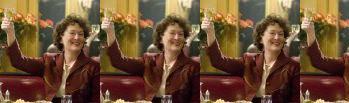
Rosalind Russell gives an Oscar-nominated performance as Mame, a wealthy socialite living life as frivolously as possible in the 1920s. When her brother dies, she takes her nephew Patrick (Jan Handzlik/Roger Smith) in, opening his world to art, drink mixing, lavish parties, life, and other adventures. The film consists primarily of scenes depicting Mame's wild lifestyle, but she manages to teach her nephew a few lessons on the way. (Whether or not they're essential ones is another matter.) Through the years that pass, Patrick's future is managed - as much as it can be - by his father's will executor. Patrick's questionable upbringing comes to a head when he brings his girlfriend home to meet Mame. While the film has its problems, Russell is perfect for the lead role, even if the film is excessively farcical. Really, at 143 minutes, it's too much. The Academy liked the film enough to give it a Best Picture nod, but it got in at the expense of more deserving films.
The film received Oscar nominations for Best Picture, Best Actress, Best Supporting Actress (Peggy Cass), Best Art Direction, Best Cinematography (Color), and Best Film Editing. It did not win any awards.
Trivia: Russell and Cass received Tony recognition for their stage performances before reprising their roles in the film.
Showing posts with label 1958. Show all posts
Double Feature: Picnic (1955) and Auntie Mame (1958)
Thursday, February 7, 2013
Labels:
1955,
1958,
Academy Awards,
Auntie Mame,
Best Picture,
Double Feature,
Oscars,
Picnic
Double Feature: Separate Tables (1958) & M*A*S*H (1970)
Thursday, January 24, 2013
Separate Tables - ****
Featuring the talents of Deborah Kerr, Rita Hayworth, David Niven, Burt Lancaster, and Wendy Hiller, this Oscar-winning drama is based on Terence Rattigan's play, which follows the residents of a British beachside resort. At the forefront are a retired major (Niven), a timid woman (Kerr), her mother (Gladys Cooper), a charming alcoholic (Lancaster), his ex-wife (Hayworth), and the manager (Hiller), among other residents. When a scandal arises with the major, the majority of the household must decide what to do with him, while other conflicts arise between them. However, the alcoholic, his ex-wife, and the manager are caught in a love triangle that must end one way or the other. As a result, several relationships are tested, and the past must be dragged up if these pressing matters are ever to be settled. With such a fine group of classic actors and the juicy melodrama, it's no surprise this received a deserved Best Picture nomination.
The film received Oscar nominations for Best Picture, Best Actor (Niven), Best Actress (Kerr), Best Supporting Actress (Hiller), Best Adapted Screenplay, Best Cinematography (B&W), and Best Dramatic/Comedy Score. Niven and Hiller won Oscars for their performances.
Trivia: Niven's performance is under 16 minutes long, making it the shortest Best Actor Oscar-winning performance. Anthony Hopkins has the second shortest for his performance in The Silence of the Lambs, but it's only seconds longer than Niven's work.
M*A*S*H - ****
Robert Altman's famous wartime satire not only won an Oscar, but it also inspired the Emmy-winning TV series that lasted 11 seasons. Set during the Korean War, the film is about the staff of a hospital and the outlandish things that happen in their military service. There are many hijinks in the film, from a fake funeral to a comical football game. Among the excellent ensemble cast, Donald Sutherland and Elliott Gould are hilarious as medical officers Hawkeye Pierce and Trapper John McIntyre. Witty, irreverent, and ludicrous, this is a very enjoyable film that is deserving of its Oscar pedigree. I've seen a few episodes on television over the years, but I can't say I'm a fan of the series. The film, on the other hand, I loved. Either way, I'm glad the Academy Awards honored this wonderful comedy, as they don't often do.
The film received Oscar nominations for Best Picture, Best Director, Best Supporting Actress (Sally Kellerman), Best Adapted Screenplay, and Best Film Editing. Ring Lardner, Jr. won an Oscar for writing the screenplay.
Trivia: Though it won an Oscar, most of Ring Lardner, Jr.'s original screenplay didn't make the final cut of the film (to the chagrin of the writer).
Follow my progress to see every Best Picture Oscar nominee here.
Featuring the talents of Deborah Kerr, Rita Hayworth, David Niven, Burt Lancaster, and Wendy Hiller, this Oscar-winning drama is based on Terence Rattigan's play, which follows the residents of a British beachside resort. At the forefront are a retired major (Niven), a timid woman (Kerr), her mother (Gladys Cooper), a charming alcoholic (Lancaster), his ex-wife (Hayworth), and the manager (Hiller), among other residents. When a scandal arises with the major, the majority of the household must decide what to do with him, while other conflicts arise between them. However, the alcoholic, his ex-wife, and the manager are caught in a love triangle that must end one way or the other. As a result, several relationships are tested, and the past must be dragged up if these pressing matters are ever to be settled. With such a fine group of classic actors and the juicy melodrama, it's no surprise this received a deserved Best Picture nomination.
The film received Oscar nominations for Best Picture, Best Actor (Niven), Best Actress (Kerr), Best Supporting Actress (Hiller), Best Adapted Screenplay, Best Cinematography (B&W), and Best Dramatic/Comedy Score. Niven and Hiller won Oscars for their performances.
Trivia: Niven's performance is under 16 minutes long, making it the shortest Best Actor Oscar-winning performance. Anthony Hopkins has the second shortest for his performance in The Silence of the Lambs, but it's only seconds longer than Niven's work.
M*A*S*H - ****
Robert Altman's famous wartime satire not only won an Oscar, but it also inspired the Emmy-winning TV series that lasted 11 seasons. Set during the Korean War, the film is about the staff of a hospital and the outlandish things that happen in their military service. There are many hijinks in the film, from a fake funeral to a comical football game. Among the excellent ensemble cast, Donald Sutherland and Elliott Gould are hilarious as medical officers Hawkeye Pierce and Trapper John McIntyre. Witty, irreverent, and ludicrous, this is a very enjoyable film that is deserving of its Oscar pedigree. I've seen a few episodes on television over the years, but I can't say I'm a fan of the series. The film, on the other hand, I loved. Either way, I'm glad the Academy Awards honored this wonderful comedy, as they don't often do.
The film received Oscar nominations for Best Picture, Best Director, Best Supporting Actress (Sally Kellerman), Best Adapted Screenplay, and Best Film Editing. Ring Lardner, Jr. won an Oscar for writing the screenplay.
Trivia: Though it won an Oscar, most of Ring Lardner, Jr.'s original screenplay didn't make the final cut of the film (to the chagrin of the writer).
Follow my progress to see every Best Picture Oscar nominee here.
Labels:
1958,
1970,
Academy Awards,
Best Picture,
Double Feature,
M*A*S*H,
Oscars,
Separate Tables
132. Horror of Dracula
Sunday, July 8, 2012
132. (07 Jul) Horror of Dracula (1958, Terence Fisher) 63
Fisher's Dracula feels well ahead of its time, brimming with eerie atmosphere almost immediately. However, this version seems oddly truncated. Because there's little build-up before the scares are doled out, the film lacks tension overall. It doesn't help that the vampires are so easily foiled; when Dracula's burnt to a crisp in the final reel, it feels by the numbers enough to make the ending anticlimactic. Still, Fisher's crafted an intelligent, expensive-looking horror movie that lives up to a large fraction of its potential.
The Bridge on the River Kwai
Friday, April 6, 2012
The Bridge on the River Kwai, 1957
Directed by David Lean
Nominated for 8 Oscars, Won 7
Up Against: Peyton Place, Sayonara, 12 Angry Men, Witness for the Prosecution
Sorry for the hiatus, friends! It's crunch time at school as I write my final exams and finish up my college education in 2 weeks! But I found a little free time to watch a long movie. So here we go!
The Bridge On the River Kwai is set in WWII. It's the story of British soldiers who surrended to the Japanese army and are now in a prisoner of war camp in Burma. When the Japanese Colonel Saito commands that all the British prisoners ("not soldiers!") participate in building a bridge over the River Kwai, which would be an addition to the Burma-Siam railway and help advance the war by feeding the Japanese soldiers. He commands that the Officers are also expected to participate in the manual labor. Captain Nicholson flat-out refuses. The Geneva Convention (which he pulls out a copy of) states that Officers should not be used for manual labor in POW camps. Saito uses the Geneva Convention against him and slaps him with it, and puts him in a tin hut ("the oven") where he sits for days and weeks until Saito, who knows he will have to commit hari-kari (ritual suicide) if he fails to build the bridge in time, realizes he needs Nicholson and his officers to help boost the working pace of the prisoners, who are not working quickly at all. After this, Nicholson takes on this project obsessively. He and other officers take over the bridge project, moving it down stream after they realize the original bridge is in a very bad location, as it's too muddy. Clipton, a military doctor, suggests that others may think they are committing treason, and aiding the enemy by building this bridge as best they can, but Nicholson insists they are setting an example. And he does it for his own pride, forgetting the larger picture that they are, in fact, helping the Japanese, and hurting their own side. Additionally, we get the story of an American soldier named Shears, who, by a miracle, escapes the camp and is enlisted by the British Army (after spending time in a medical center to recover) to return to the camp to blow the bridge up with several men, and we see their journey into the jungle, with Asian women aiding them, in their plans to attack.
This movie is an interesting one. It's so different from all the other WWII movies I've seen. It's not action packed nor is it bloody or violent. It had an interesting message. And it's quite a unique story. Colonel Nicholson is played by the brilliant Alec Guinness. It's a war epic of a different kind. While the story was drawn it, it never felt too long or boring. Interestingly I was kind of enraptured in the story, having no bloody clue how anything would end.
Colonel Nicholson, from my perspective, was a bit of a crazy guy. He was rigid and an old-school soldier. He believed in integrity, and for standing up for what is right. When approached about escape plans, he uttered that they shouldn't because they had surrendered so technically they would be breaking some sort of war/prisoner rules, even though they all knew they would die in this camp.
And then we have Colonel Saito. He is just as rigid and stubborn. He refuses to cave into Nicholson's requests, and the two are constantly going head-to-head, and both are quite mad. Saito insists all the officers work. He is to commit suicide if this bridge fails or isn't complete on time. And that scares him. We also see a scene of Saito weeping privately after Nicholson and his Officers take over the project, in which he was directly in charge of. He is ashamed.
This plot becomes ever complex as we realize what building this bridge means, and how much pride Nicholson takes in it. We feel so many mixed feelings as Shear and the 3 other soldiers arrive to blow up the bridge and the ammunition train.
Alec Guinness is fantastic in the role, and rightly won an Oscar for it. Japanese actor, Sessue Hayakawa, who played Saito, was also nominated, though did not win. The 2 had fantastic adversary chemistry, and were fantastic enemies who come to understand each other in a way. They were fantastic in their respective mad characters.
Additionally, this cinematography was fantastic. There were some great shots, and it showed off the jungle landscape so well, and really hit all the right spots. The costumes were great, and it overall had a great look. The music was used very sparsely, but what we did hear was very good too. Honestly, there's not much to complain about in this movie. I can't really think of much at all. WWII have been incredibly overdone in the past 75ish years since it concluded, with stories about German soldiers, British soldiers, Americans, Canadians, etc, etc. And while this story did include British and Americans, it took a look at the Japanese soldiers, and the name Hitler was not uttered once. Nor was Germany spoken about.
The movie was an interesting look at 2 different people, who were, at the same time, quite similar. Saito comes from a country where you cannot dishonor your family. You should kill yourself rather than bring shame. He strives for excellence so as to not bring shame, and to appear great. Conversely, Nicholson does not come from a country that upholds honor in the same way, though he comes from an Upper Class society (being a colonel), and wants to uphold the laws and regulations that his society holds up. Both want to maintain their reputations and neither will break. But eventually both do.
The ending is so interesting, and really made me think. I won't spoil it for you, as it's so unique. But it made me think, what's more important: your personal pride and accomplishments, or the country you're fighting for and the pride and duties to your army? I'll leave it there.
Thinking I was going to find this movie boring, I was surprised when I actually loved it. My 3 choices of movies were Braveheart and The Best Years of our Lives (both war movies, the latter also about WWII soldiers), I was glad I chose this one. It was a thought-provoking and truly epic masterpiece. It was never too long, too boring, or cliche. It struck things in all the right places, and made for an interesting and insightful watch into a different aspect of WWII. Something other than Hitler.
8/10
Directed by David Lean
Nominated for 8 Oscars, Won 7
Up Against: Peyton Place, Sayonara, 12 Angry Men, Witness for the Prosecution
Sorry for the hiatus, friends! It's crunch time at school as I write my final exams and finish up my college education in 2 weeks! But I found a little free time to watch a long movie. So here we go!
The Bridge On the River Kwai is set in WWII. It's the story of British soldiers who surrended to the Japanese army and are now in a prisoner of war camp in Burma. When the Japanese Colonel Saito commands that all the British prisoners ("not soldiers!") participate in building a bridge over the River Kwai, which would be an addition to the Burma-Siam railway and help advance the war by feeding the Japanese soldiers. He commands that the Officers are also expected to participate in the manual labor. Captain Nicholson flat-out refuses. The Geneva Convention (which he pulls out a copy of) states that Officers should not be used for manual labor in POW camps. Saito uses the Geneva Convention against him and slaps him with it, and puts him in a tin hut ("the oven") where he sits for days and weeks until Saito, who knows he will have to commit hari-kari (ritual suicide) if he fails to build the bridge in time, realizes he needs Nicholson and his officers to help boost the working pace of the prisoners, who are not working quickly at all. After this, Nicholson takes on this project obsessively. He and other officers take over the bridge project, moving it down stream after they realize the original bridge is in a very bad location, as it's too muddy. Clipton, a military doctor, suggests that others may think they are committing treason, and aiding the enemy by building this bridge as best they can, but Nicholson insists they are setting an example. And he does it for his own pride, forgetting the larger picture that they are, in fact, helping the Japanese, and hurting their own side. Additionally, we get the story of an American soldier named Shears, who, by a miracle, escapes the camp and is enlisted by the British Army (after spending time in a medical center to recover) to return to the camp to blow the bridge up with several men, and we see their journey into the jungle, with Asian women aiding them, in their plans to attack.
This movie is an interesting one. It's so different from all the other WWII movies I've seen. It's not action packed nor is it bloody or violent. It had an interesting message. And it's quite a unique story. Colonel Nicholson is played by the brilliant Alec Guinness. It's a war epic of a different kind. While the story was drawn it, it never felt too long or boring. Interestingly I was kind of enraptured in the story, having no bloody clue how anything would end.
Colonel Nicholson, from my perspective, was a bit of a crazy guy. He was rigid and an old-school soldier. He believed in integrity, and for standing up for what is right. When approached about escape plans, he uttered that they shouldn't because they had surrendered so technically they would be breaking some sort of war/prisoner rules, even though they all knew they would die in this camp.
And then we have Colonel Saito. He is just as rigid and stubborn. He refuses to cave into Nicholson's requests, and the two are constantly going head-to-head, and both are quite mad. Saito insists all the officers work. He is to commit suicide if this bridge fails or isn't complete on time. And that scares him. We also see a scene of Saito weeping privately after Nicholson and his Officers take over the project, in which he was directly in charge of. He is ashamed.
This plot becomes ever complex as we realize what building this bridge means, and how much pride Nicholson takes in it. We feel so many mixed feelings as Shear and the 3 other soldiers arrive to blow up the bridge and the ammunition train.
Alec Guinness is fantastic in the role, and rightly won an Oscar for it. Japanese actor, Sessue Hayakawa, who played Saito, was also nominated, though did not win. The 2 had fantastic adversary chemistry, and were fantastic enemies who come to understand each other in a way. They were fantastic in their respective mad characters.
Additionally, this cinematography was fantastic. There were some great shots, and it showed off the jungle landscape so well, and really hit all the right spots. The costumes were great, and it overall had a great look. The music was used very sparsely, but what we did hear was very good too. Honestly, there's not much to complain about in this movie. I can't really think of much at all. WWII have been incredibly overdone in the past 75ish years since it concluded, with stories about German soldiers, British soldiers, Americans, Canadians, etc, etc. And while this story did include British and Americans, it took a look at the Japanese soldiers, and the name Hitler was not uttered once. Nor was Germany spoken about.
The movie was an interesting look at 2 different people, who were, at the same time, quite similar. Saito comes from a country where you cannot dishonor your family. You should kill yourself rather than bring shame. He strives for excellence so as to not bring shame, and to appear great. Conversely, Nicholson does not come from a country that upholds honor in the same way, though he comes from an Upper Class society (being a colonel), and wants to uphold the laws and regulations that his society holds up. Both want to maintain their reputations and neither will break. But eventually both do.
The ending is so interesting, and really made me think. I won't spoil it for you, as it's so unique. But it made me think, what's more important: your personal pride and accomplishments, or the country you're fighting for and the pride and duties to your army? I'll leave it there.
Thinking I was going to find this movie boring, I was surprised when I actually loved it. My 3 choices of movies were Braveheart and The Best Years of our Lives (both war movies, the latter also about WWII soldiers), I was glad I chose this one. It was a thought-provoking and truly epic masterpiece. It was never too long, too boring, or cliche. It struck things in all the right places, and made for an interesting and insightful watch into a different aspect of WWII. Something other than Hitler.
8/10
063. Antarctic Crossing
Thursday, February 23, 2012
063. (22 Feb) Antarctic Crossing (1958, George Lowe) 52

It's an impressive feat filming two Antarctic expeditions. The journey itself is interesting enough to sustain the runtime, but touches of humor certainly help. However, what prevents Antarctic Crossing from rising above the mundane is its inability to forge any kind of human connection or provide much scale for the accomplishment of traveling the Antarctic continent. This ultimately seems like a very chilly travelogue when it could've been so much more.

It's an impressive feat filming two Antarctic expeditions. The journey itself is interesting enough to sustain the runtime, but touches of humor certainly help. However, what prevents Antarctic Crossing from rising above the mundane is its inability to forge any kind of human connection or provide much scale for the accomplishment of traveling the Antarctic continent. This ultimately seems like a very chilly travelogue when it could've been so much more.
Gigi
Monday, February 20, 2012
Gigi, 1958
Directed by Vincente Minnelli
Nominated for 9 Oscars, Won 9
Up Against: Auntie Mame, Cat on A Hot Tin Roof, The Defiant Ones, Separate Tables
Gigi is a young girl living in Paris in the year 1900. She lives with her mother (who is too busy with her singing "career" to look after her), and her grandmother, and takes lessons (manners, posture, eating habits, etc) with her Aunt. They are all trying to mold her into the perfect lady. But Gigi is different. She is wild, and silly, and speaks her mind.
On the other hand, there is Gaston Lachaille, a Parisian socialite who dates many women, is extremely rich, and world famous, but finds everything "a bore". He is tired of all the girls being the same, and the city being the same, and everything being the same. He is looking for something new. Gaston is friends with Gigi and her grandmother, and has been for a long time, and loves to play cards with Gigi, talk, and spoil her. But Gigi is starting to grow up, and become a lady, and Gaston realizes she is not a little girl after all... and he may just be in love with her.
This film won all 9 Oscars it was nominated for, making it the movie with the most wins in Oscar history, at that point. It was a well done film indeed, and was a good light-hearted musical. Leslie Caron, who has previously starred in An American in Paris (another BP, and starring alongside Gene Kelly), was great as Gigi. While I found her to be so-so in American (which was her first film), she was fun and wild in this one. While it wasn't Oscar worthy (she wasn't nominated), she pulled off playing a 16-18 year old with ease and was believable.
While the music was fun, and the story was nice, it wasn't a very compelling film, and was just a 'cute' film. Not that I have anything against that. Singin' In The Rain is one of my very favourite movies, and it isn't deep, and is more cute and fun than anything.
The songs, however, were very good. The movies wasn't overloaded with singing (which I liked) and the song were catchy and appropriate for the story (which I like even more). "Thank heaven, for little girls" is still whirling around my head, French accent included.
Overall, I enjoy musicals. Not so much ones from this day and age, but love those from the 50's and 60's. Things like Sound of Music, Oliver!, Singin' In The Rain, Chitty Chitty Bang Bang, etc. So I was hoping for something really good out of this one too, and I really did enjoy (though not as much as any of the above listed). Gigi was a very likable character, which reminded me very much of Anne Shirley (Anne of Green Gables), and the others characters were quite fun. Gaston was funny, yet a playboy. Honore was cute and charming, and even her grandmother and Aunt Alicia were funny. The script was well written, and was funny and witty, which I love in a film.
There's not too much else I can say. I enjoyed it, it was a nice film, though probably not something I would pick for Best Picture. But it was still a fun film. And musicals from the 50's and 60's are the best ones.
7.5/10
Directed by Vincente Minnelli
Nominated for 9 Oscars, Won 9
Up Against: Auntie Mame, Cat on A Hot Tin Roof, The Defiant Ones, Separate Tables
Gigi is a young girl living in Paris in the year 1900. She lives with her mother (who is too busy with her singing "career" to look after her), and her grandmother, and takes lessons (manners, posture, eating habits, etc) with her Aunt. They are all trying to mold her into the perfect lady. But Gigi is different. She is wild, and silly, and speaks her mind.
On the other hand, there is Gaston Lachaille, a Parisian socialite who dates many women, is extremely rich, and world famous, but finds everything "a bore". He is tired of all the girls being the same, and the city being the same, and everything being the same. He is looking for something new. Gaston is friends with Gigi and her grandmother, and has been for a long time, and loves to play cards with Gigi, talk, and spoil her. But Gigi is starting to grow up, and become a lady, and Gaston realizes she is not a little girl after all... and he may just be in love with her.
This film won all 9 Oscars it was nominated for, making it the movie with the most wins in Oscar history, at that point. It was a well done film indeed, and was a good light-hearted musical. Leslie Caron, who has previously starred in An American in Paris (another BP, and starring alongside Gene Kelly), was great as Gigi. While I found her to be so-so in American (which was her first film), she was fun and wild in this one. While it wasn't Oscar worthy (she wasn't nominated), she pulled off playing a 16-18 year old with ease and was believable.
While the music was fun, and the story was nice, it wasn't a very compelling film, and was just a 'cute' film. Not that I have anything against that. Singin' In The Rain is one of my very favourite movies, and it isn't deep, and is more cute and fun than anything.
The songs, however, were very good. The movies wasn't overloaded with singing (which I liked) and the song were catchy and appropriate for the story (which I like even more). "Thank heaven, for little girls" is still whirling around my head, French accent included.
Overall, I enjoy musicals. Not so much ones from this day and age, but love those from the 50's and 60's. Things like Sound of Music, Oliver!, Singin' In The Rain, Chitty Chitty Bang Bang, etc. So I was hoping for something really good out of this one too, and I really did enjoy (though not as much as any of the above listed). Gigi was a very likable character, which reminded me very much of Anne Shirley (Anne of Green Gables), and the others characters were quite fun. Gaston was funny, yet a playboy. Honore was cute and charming, and even her grandmother and Aunt Alicia were funny. The script was well written, and was funny and witty, which I love in a film.
There's not too much else I can say. I enjoyed it, it was a nice film, though probably not something I would pick for Best Picture. But it was still a fun film. And musicals from the 50's and 60's are the best ones.
7.5/10
Labels:
1958,
best picture,
gigi,
Leslie caron,
the academy awards,
the oscars,
Vincente Minnelli
443. Earth vs. the Spider
Saturday, October 22, 2011
441. Teenage Cave Man
Wednesday, October 19, 2011
441. (18 Oct) Teenage Cave Man (1958, Roger Corman) 9

Robert Vaughn made this immediately before getting nominated for an Oscar for The Young Philadelphians. While he's solid in the latter film, he is so bizarrely earnest that there's really not a moment of credibility in his whole performance. Also, everyone else has a muscular physique while Vaughn looks sad and skinny.

Robert Vaughn made this immediately before getting nominated for an Oscar for The Young Philadelphians. While he's solid in the latter film, he is so bizarrely earnest that there's really not a moment of credibility in his whole performance. Also, everyone else has a muscular physique while Vaughn looks sad and skinny.
The Final Conclusion - Best Actress 1958
Tuesday, June 14, 2011
1958
So the much anticipated ranking is:
Somehow I feel that Roz Russell's performance as Auntie Mame is quite lacking and not a really great one. There's something really off-putting about it and I feel she could have tried harder to elevate the material. It might be that she didn't impress me because I don't go for this type of performance. I don't know why I didn't like her but the point is that I wasn't impressed at all.
Although it's true that Shirley MacLaine gave a great performance as Ginnie Moorehead but she was trapped in a movie that's constantly working against her, plus she didn't have enough time to develop the character as well as she could have/should have. Still, I applaud Shirley for making Ginnie loveable and being the best part of her movie.
I liked Deborah Kerr in Separate Tables, despite the fact that she didn't give the best performance of the ensemble an she was too much outshone by some of the fellow members of the cast. If we look at her performance out of its context, it's a pretty great one. It just pales in the context of the movie and the rest of the performers. Still, good job that works well.
It's no wonder that Hayward won the Oscar for this performance. Although I have some problems with her work here, I can say that she's indeed fantastic at showing all of Barbara's emotions. It's a very realistic portrayal of a desperate woman who wants to live. Hayward made this character much more complicated and layered than most actresses would have.
This is a wonderful performance that (at least to me) lives up to its reputation. Elizabeth Taylor is really fantastic as Maggie, the Cat, creating a fascinating, complex, multi-layered character. The fierce emotionality Liz added to Maggie is just brilliant. You can so easily identify with this character thanks to Taylor's greatness in this part. Fantastic work.
So I can proudly announce
that my 30th winner is...
Elizabeth Taylor
in
Cat on a Hot Tin Roof
And my first double winner. :)
Final thoughts: A so-so year. I didn't give any 5s but I guess a year can be great if I don't give any 5s. It wasn't the problem here. This ranking surprised me though I was almost sure that Liz would win. There was only one really fantastic performance (Liz), Susan was "just" fantastic. I had my problems with the others. Roz was quite much for me, Shirley was very good but she was robbed of enough screentime, so it couldn't have worked anyway. Deborah is not my favorite actress but I really liked her in Separate Tables.
The ranking of the reviewed years:
- 1944
- 1969
- 1974
- 1989
- 1959
- 2006
- 1996
- 1964
- 1939
- 1977
- 2010
- 1997
- 2009
- 1980
- 1941
- 1972
- 1963
- 1966
- 1973
- 1983
- 1937
- 1990
- 1978
- 1954
- 1958
- 1948
- 2002
- 1957
- 1940
- 1998
About the next year: I don't have any idea yet, I still want to save 1967. Originally, I wanted to do that but I want to save the great years. I'll think about the next year but I'd be glad to have requests. :) It's your turn. I don't want to make a poll because that usually turns out bad and I'm rather superstitious.
What do you think?
Labels:
1958,
Best Actress,
Deborah Kerr,
elizabeth taylor,
Rosalind Russell,
shirley maclaine,
Susan Hayward
Deborah Kerr in Separate Tables
Deborah Kerr received her fifth Oscar nomination for playing Sybil Railton-Bell, a shy spinster in the Best Picture nominee, Separate Tables. This was the fifth unsuccessful nomination for Deborah but I don't think she even had a prayer of winning that year. Susan Hayward (as I said) was almost a sure thing plus Liz Taylor and Rosalind Russell were both stronger contenders and bigger names than Deborah Kerr. I'd say that Deborah might have got ahead of Shirley MacLaine who was just becoming a major star. What if is a very interesting question of 1958. What if Susan Hayward hadn't been in contention? I'd say Elizabeth Taylor would have won because her performance was a surprisingly deep one and she was the hottest star plus she had the sentiment on her side because of the death of her husband. I guess Deborah would have lost anyway.
Separate Tables is not really talked about nowdays, unfairly, I might add as it is a pretty good movie. I wouldn't say it's my pick for Best Picture but I enjoyed it. It's a real ensemble picture, full of great, world-famous actors who give very good performances. Rita Hayworth stands out the most, I think and I feel that she might have deserved a nomination though I'm not 100% sure. David Niven gives a very good performance but I feel that Sidney Poitier or Paul Newman deserved to win more (I usually switch my vote for 1958 and 1963 between them). Wendy Hiller dismissed her own Oscar win. Although I agree with that she wasn't amazing, I still think she was the best of the weak nominees that year and she was pretty great this way, too.
Deborah Kerr (as you might know) is not one of my favorite actresses. Some go for her dignified, subtle acting style but I'm not one of those. I prefer highly emotional performances with lots of fire and music. That's me. Of course, that doesn't mean that I cannot respect certain works of Ms. Kerr, I just don't think that she's the greatest. It's fun, though, that she was born on 30th September like me (and Marion Cotillard). I know that I said it last time but I'll say it again and again.
Separate Tables is really an ensemble piece so it takes a very special performance to stand out. And as such, we cannot really talk about leading characters, in my opinion. Everyone is either leading or supporting. However, back then category placement was a matter of vanity and not competition. I guess, nowadays an actress with Deborah's role would go immediately supporting and would have an excellent chance of winning. And that's really something that I admire about the actresses of Old Hollywood. They weren't desperate enough to humiliate themselves by going supporting just to ensure the win. That is certainly very positive pride.
It takes a special performance to stand out in an ensemble movie, as I said but Deborah Kerr's work as Sybil is, unfortunately, not special at all. It's not even the best or most significant part of Separate Tables. Actually, I'm quite shocked that she was recognised over Rita Hayworth. Not because Rita was miles better (she was actually) but Deborah's role is not showy and (apart from one scene), it's very quiet and she's mostly in the background sitting without a move.
Sybil is a shy spinster who's probably in love with the major played by David Niven. Sybil has to put up with her awful, bossy and very snobbish mother (Gladys Cooper, reprising her role from Now, Voyager) and she wants to gain some freedom. However, she's too afraid to take action and things get very ugly for her. She has to be disappointed in the major and she's more and more under her mother's influence. Deborah shows Sybil as a mentally unstable, very sensitive woman who's screaming inside and wants to have a better life. It's shown very well by Deborah and I most certainly want to praise her for making Sybil such a sympathetic character. I really did want her to be happy and I think Deborah portrayed the necessary emotions really well. I was most certainly impressed by that. Also, she quite carefully developed this character and none of the changes seemed forced or unrealistic.
There's one serious problem about Deborah. She doesn't get enough spotlight and since her role is not the best of the movie, she gets stuck too much in the background. When I saw her and Rita Hayworth, it was so hard to focus on Deborah as Rita was so great and Deborah seemed a little bit dreary compared to her. However, the breakdown of Sybil was played excellently by Deborah and I was really touched by those scenes.
So I can say that I liked Deborah Kerr in Separate Tables, despite the fact that she didn't give the best performance of the ensemble an she was too much outshone by some of the fellow members of the cast. If we look at her performance out of its context, it's a pretty great one. It just pales in the context of the movie and the rest of the performers. Still, good job that works well.
I gave a 4 to Shirley, too, so I'll give it to Deborah.
What do you think?
Shirley MacLaine in Some Came Running
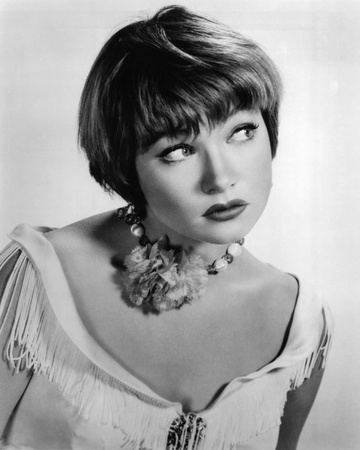
Shirley MacLaine received her first Best Actress nomination for playing Ginnie Moorehead, a vulgar, loud young girl in Vincente Minnelli's Some Came Running. I don't think that Shirley had any chance of winning the Oscar that year. She was a relative newcomer, this was her first nomination and there were bigger, more overdue stars than her (namely Susan Hayward, Deborah Kerr, Rosalind Russell and Elizabeth Taylor). I guess this was the sort of breakthrough nomination that's so often given nowadays. The members of the Academy discovered Shirley's talent and the nom helped her get a lot of great roles that made her a real star.
Some Came Running is a weird movie and it's not good at all. It's overlong, way too complicated and long. There are so many storylines and the whole thing just didn't make any sense to me. I was really confused sometimes and I didn't see the point of the actions of the characters. I guess the Academy members liked it more as they gave a couple of nominations to this one. Arthur Kennedy got her last Oscar nomination for playinf Frank. I don't really think that he deserved to be recognised as he wasn't anything special. The same goes for Martha Hyer who's so clichéd here.
Shirley MacLaine is not among my favorite actress but I guess you know that quite well already. But there are things that I like about her acting. She could play a young girl with a heart of gold so easily and believably. I even liked her Irma La Douce, which is quite a rare thing. She perfected this type of character in the Best Picture winner, The Apartment. Things were changing later and she started to play mothers and I don't like those performances that much though Terms of Endearment was quite good.
However, Some Came Running she was still in her girl-with-a-heart-of-gold period. Ginnie is a girl who meets a military man and quickly falls for him. But Ginnie's mobster ex-boyfriend goes after them and wants to take her back, causing a real tragedy. Ginnie seems to be a real troublemaker but in fact, she's probably the most innocent character of the whole movie. She's naive and she loves Daniel like a child. Ginnie's emotions are really pure and she doesn't want to hurt anybody. I think Shirley was great at showing Ginnie's personality, which is not really complicated but there's more inside her than it seems.
In the beginning, we see her as a loud, over-the-top girl who's instantly humiliated by Frank Sinatra's character, Daniel. Ginnie's love is so strong that these things don't bother her. After that, she's not on screen for a very long time and even after that, she's rarely there. Shirley only becomes a leading character towards the end of the movie, until that she's just a colorful element of the background. I'm not saying that she's bad, it's just that I didn't see enough of her and she was not outstanding enough to survive the movie's gaps. I guess that's the biggest problem of this performance. The overall effect of it might have been much stronger if she had been given more screentime. This way, we can only be touched by the ending (which is indeed very good).
So it takes a lot of time to really see how good Shirley is as Ginnie Moorehead. As I said, she was best at creating Ginnie's innocence and showing her loving personality. All the scenes of humiliation are done excellently by her and the character almost broke my heart. She was the only character in this movie that I really felt sorry for. In fact, she was the only character who had depth and who was properly written and played. Shirley deserves lots of credit for being the only great thing about it movie. For me, watching this film meant waiting for her to come because I knew that something good was going to come. Like the scene where she goes to meet her "rival", a schoolteacher with whom her love is in love with. It's a really heartwrenching moment done exceptionally well by Shirley. She perfectly showed Ginnie's determination to get the man she loves more than anything. It was a sad moment but a great one.
I still have to say that I wasn't truly blown away. Although it's true that Shirley MacLaine gave a great performance as Ginnie Moorehead but she was trapped in a movie that's constantly working against her, plus she didn't have enough time to develop the character as well as she could have/should have. Still, I applaud Shirley for making Ginnie loveable and being the best part of her movie.
I decided to give her a 4 because of the strength of some of the scenes.
Rosalind Russell in Auntie Mame
Rosalind Russell received her last Oscar nomination for playing the title role of Auntie Mame, a very eccentric, free-spirited woman who has to take care of her nephew after her brother dies. If Susan Hayward hadn't been nominated that year, I think Russell might have won. She was overdue and she had a successul movie and won a Golden Globe for Best Actress in a Comedy/Musical. I feel, though, that her star faded a little bit at the time and she wasn't as popular as she was 15 years before. Still, I think she was at least the third. That being said, I think Russell's 'time' was in 1947 when she infamously lost to her friend Loretta Young.
Auntie Mame is movie that I really didn't like much. It's much better than Travels with My Aunt but I don't think that it deserved a Best Picture nomination. There are many "funny" situations but I never laughed out loud. The art direction and the costumes were, however, just excellent and I feel the movie deservedly received those nominations. I guess audiences at the time must have been crazy about this movie but right now it didn't really impress me. Peggy Cass is amusing in some moments but I didn't feel that she really rocked in that role or deserved a nomination.
Rosalind Russell is an actress I don't really know what to think about. I saw too few of her movies to judge her overall work. For example, I loved her in His Gorl Friday, but I thought she really overacted in Mourning Becomes Electra. She might have been one of those actresses who were nominated for the wrong roles or something. She's now mostly renowned for her comedy roles so I was actually quite looking forward to watching Auntie Mame, which is one of her most popular movies.
One expression sums up Rosalind Russell's performance the best: over-the-top. Her Mame is a very exaggerated character, who's quite loud and colorful. This is not exactly the type of performance that I go for and this one was not an exception, either. All in all, I wasn't impressed by Roz Russell. One would expect a very significant and grand entrée from such a character but somehow it wasn't that big. She's just there and that's it. She's saying things to her nephew in a very over-the-top manner, she has colorful costumes and that's it. That might be heavenly for some, but not me.
Roz Russell is really weird as Auntie Mame. You don't get a full picture of her and you don't know what to think about her. The character's development is not solved very well by Roz. Mame might be a fickle person but I don't think that she changes that fast. Her motherly instincts become strong from one moment to another without anything that could make it more believable.
Roz wass great at comedy in general and she solved the funny parts of the movie well without making Mame a total idiot. Although the horse riding scene if on the edge, Roz somehow survived that one, too. There are parts when Mame is more sarcastic and those scenes show something of the His Girl Friday Roz. Otherwise, this is not one of her best comedy performances on the screen.
This doesn't mean that she's not amusing in some of the scenes. She did not make me laugh out loud but she made me smile once in a while. Mame's extravagance is quite entertaining if you get used to it. Because you really have to empty your head to enjoy this performance. If you really think, you will be disappointed but you'll like her to a degree if you don't think that much. Because there are really stupid things about this performance. If you're willing not to care about them, you'll be quite pleased by Roz, ortherwise you'll have two and a half hours of suffering. I think you should let yourself get used to this character.
Still, somehow I feel that Roz Russell's performance as Auntie Mame is quite lacking and not a really great one. There's something really off-putting about it and I feel she could have tried harder to elevate the material. It might be that she didn't impress me because I don't go for this type of performance. I don't know why I didn't like her but the point is that I wasn't impressed at all.
What do you think?
Elizabeth Taylor in Cat on a Hot Tin Roof
Monday, June 13, 2011
Elizabeth Taylor received her second Best Actress nomination for playing Maggie Pollitt, a woman who's desperate to have some connection to her husband in the movie Cat on a Hot Tin Roof. Elizabeth Taylor's second nomination was even more significant than her very first one one year earlier. This time, she played a truly complex character in a movie that's based on a contemporary play and that was nominated for Best Picture. Still, I don't believe that she had a chance of winning over Susan Hayward. She may have got ahead of Roz Russell but Hayward was unbeatable that year. Nowadays, however, many people think that Liz should have won her first award for this performance of hers instead of BUtterfield 8.
Cat on a Hot Tin Roof is a movie that's a milder version of Tennessee Williams' play. Still, I think it's a brilliant movie and I might even give it my vote for Best Picture. The filmmakers had to be very careful with the censors but I still feel that Cat on a Hot Tin Roof is quite a progressive and brave piece of work and everybody can be proud of it. The ensemble cast is just brilliant. Everybody has the so-called 'moment' and everyone is very memorable. Paul Newman might have even become my own Best Actor pick. Burl Ives is, simply, astonishing. I think they mixed up the titles of the movies and that's why he won for the wrong film. Moreover, Judith Anderson was robbed of a nomination and perhaps even a win.
But what can I say about Elizabeth Taylor? I wrote a bit cynical review about her on the day she died (right before that) and that still hurts me a bit. Although as an actress she's not one of my favorites, I love Elizabeth Taylor, the star. Nobody had a star power or a beauty like hers. And yet the celebrity gradually overshadowed the actress and we didn't see her in more great movies in which she could have given great performances. However, she gave an almost legendary performance in Cat on a Hot Tin Roof at a time when she was at her prime as an actress.
Her nominated performances (except the last one) consit of several parts: screaming, crying, a big monologue and an effective ending. While these things didn't work with me in Raintree County or Suddenly, Last Summer, they were absolutely fine her, in Cat on a Hot Tin Roof. Somehow, I felt that she did this part with total, almost brutal honesty and that she really felt for Maggie the cat. When she filmed this movie, a personal tragedy came in her life: she lost her husband, Michael Todd who died in a plane crash exactly when she began filming. I guess that helped a lot. All the sorrows that Liz must have felt came to surface in this part and in a very good way.
In my opinion, Maggie, the Cat is a fabulous character like all the female characters that were created by Tennessee Williams. Somehow, he had an instinct for writing great parts for actresses. Although Liz didn't originate this part, it seems to have been taylor made for her (no pun intended). Her high-pitched voice fit Maggie's personality so well and what could have been really annoying somewhere else worked totally well here. I just loved the way that she handled all the pain and desperation inside Maggie. Liz's performance becomes so strong and intense and as a result, the audience can relate to the character so easily.
Liz has a great monologue at the beginning where she's complaining to her husband about the lack of love (and sex) she receives. We can feel Maggie's sadness but we can also observe her determination to change things. Liz shows that Maggie is an incredibly strong and loving woman who just wants to love and be loved. She does everything possible for her husband. And she fights for his benefits, too if she has to. Maggie experienced poverty (as she says in a wonderful monologue) and she doesn't want that to happen once again.
I have one complaint, though. It's that the greatness of Liz mostly shows itself at the beginning and towards the ending she doesn't get as much spotlight as she would deserve. That's not a minor thing but it's forgiveable as it's not really Liz's fault.
Still, this is a wonderful performance that (at least to me) lived up to its reputation. Elizabeth Taylor is really fantastic as Maggie, the Cat, creating a fascinating, complex, multi-layered character. The fierce emotionality Liz added to Maggie is just brilliant. You can so easily identify with this character thanks to Taylor's greatness in this part. Fantastic work.
Again, a strong 4,5.
What do you think? I think Liz was at her most beautiful here. She was incredibly sexy and beautiful. Gaaah... :) Do you agree?
Susan Hayward in I Want to Live!
Susan Hayward received her fifth nomination and her overdue Academy Award for playing Barbara Graham, a woman who's sentenced to death because she took part in killing a paralyzed old lady in the movie I Want to Live!, which is based on a real life case. Last time when I was writing about Greta Garbo, I mentioned a locked Oscar win. That was certainly the case with Susan Hayward. Everybody wanted her to win, she won every award. It really was her time in every possible way: she had an extremely baity role, she played a controversial real-life character, she was way overdue plus she was a beloved superstar. No surprise that she won and the audience applauded enthusastically.
I Want to Live is actually a much better film than I remembered. Although it starts out very oddly, it turns out to be a very effective piece of work that was more than worthy of a Best Director nomination (I'd not even complain about a win). It's a very intense and exciting experience and I loved the fact that it minimalised the clichés of the movies about capital punishment. So if you watch it, don't expect a cheesy drama with tears and such. It's actually a very tough movie that is sometimes really nerve-wreckingly exciting.
Susan Hayward. I really cannot say much about her as I've only seen one movie in which she starred and that's her Oscar-winning role in I Want to Live! I haven't seen her roles as alcoholic women in Smash-Up and I'll Cry Tomorrow. True from what I can see, she seems to be an actress who went for really baity roles. In fact, some even consider her the one who invented Oscar baiting (though I would argue with that). All in all, I have the difficulty of not being able to compare this one to her other works and therefore, I may not even be able to properly evaluate her.
Just like the movie itself, Hayward's performance also starts out a bit out of tune and it seems very odd and weird. We get to know Barbara Graham as a very immoral, careless woman, whose credo is "Girls just wanna have fun." That being said, this character is not a saint and she doesn't come off as a very likeable person. The only thing that really bothered me about Hayward's performance is in connection with this. I felt that she was quite hammy in the beginning and somehow I was turned off by her line readings. And I became quite confused: is this the character or did Susan exaggerate Barbara's personality? In the end, I reached a decision about it: I think it's both. Although Barbara is indeed a character who's quite over-the-top, Hayward was a little bit too much at the beginning of the movie.
Still, that's the only bad thing I can say about Susan as apart from that. she gives an incredible performance as Barbara. Maybe not incredible but at least fantastic. I loved the way Susan developed Barbara. She both changes and remains the same. On the outside, Barbara is raging and then she's in peace but inside, she remains the same wild girl whose instincts can take her over. She has very loud outbursts and meltdowns, she's crying, screaming and so on. This might seem way too much but for me, it all worked. I can't say why, I was just really impressed by her.
The courtroom scenes are also handled extremely well by Hayward. We see Barbara fighting for her justice/freedom and all the emotions that Hayward shows are really impressive. She swears on everything possible, cries and screams (again) and it's so understandable. I can totally imagine the real Barbara acting this way.
What quite probably won Hayward this Oscar was the emotionality of this performance. We really feel sorry for Barbara even though we're never certain if she was really innocent. We are sorry for her when she's hysterical when they want to take her baby away and we're feeling really awkward when she goes to her own execution. Her last scenes are incredibly effective and one just keeps wondering about what she whispered to the priest in the end. Did she say "I did it?" Hayward brilliantly added all the shades and layers to this character and it's obvious that Barbara knows much more than she says.
So to sum up, it's no wonder that Hayward won the Oscar for her performance as Barbara Graham. Although I have some problems with her work here, I can say that she's indeed fantastic at showing all of Barbara's emotions. It's a very realistic portrayal of a desperate woman who wants to live. Moreover, Hayward made this character much more complicated and layered than most actresses would have.
A strong 4,5.
What do you think?
Note: Dear Readers, you seem to be quite inactive with this year. Are you so uninterested in this year? I could use 1 or 2 comments. :)
The Next Year
Sunday, June 12, 2011
1958
So the nominees were:
- Susan Hayward in I Want to Live!
- Deborah Kerr in Separate Tables
- Shirley MacLaine in Some Came Running
- Rosalind Russell in Auntie Mame
- Elizabeth Taylor in Cat on a Hot Tin Roof
Wow, an interesting looking year but I don't have any idea how my ranking will look like. At the time, a whole country wanted Susan Hayward to finally win and her triumph was one of the most applauded ones (if not the one) in history. Many people are still talking about that year with sweet memories, so we'll see if I go with America's pick of the time or somebody else.
What do you think? Who's your pick? What are your predictions?
Labels:
1958,
Best Actress,
Deborah Kerr,
elizabeth taylor,
Rosalind Russell,
shirley maclaine,
Susan Hayward
Subscribe to:
Posts (Atom)