
Showing posts with label 1978. Show all posts
Showing posts with label 1978. Show all posts

335. Absolution
Friday, December 28, 2012
335. (27 Dec) Absolution (1978, Anthony Page) 54

Richard Burton is in excellent form here as a priest with a dark streak who plays favorites with the boys he teaches. He's especially unkind to one with a leg brace, but the real intrigue is in his more than friendly interest in a free-spirited athlete. After Burton gives an ultimatum that the boy no longer see a suspicious drifter, the boy gets even by giving a false confession that he's willingly committed homosexual acts. Burton's at his best here, at once furious about and interested in the boy's sordid private life.
Unfortunately, the third act gets sloppy. Though Absolution gets all the more mean-spirited and demented, easy to relish for its shock value, the melodrama is plainly overstated. At times, it remains a rather honest depiction of youthful cruelty. Yet Anthony Shaffer's clumsy stage play wins out with an ending that's downright stupid.

Richard Burton is in excellent form here as a priest with a dark streak who plays favorites with the boys he teaches. He's especially unkind to one with a leg brace, but the real intrigue is in his more than friendly interest in a free-spirited athlete. After Burton gives an ultimatum that the boy no longer see a suspicious drifter, the boy gets even by giving a false confession that he's willingly committed homosexual acts. Burton's at his best here, at once furious about and interested in the boy's sordid private life.
Unfortunately, the third act gets sloppy. Though Absolution gets all the more mean-spirited and demented, easy to relish for its shock value, the melodrama is plainly overstated. At times, it remains a rather honest depiction of youthful cruelty. Yet Anthony Shaffer's clumsy stage play wins out with an ending that's downright stupid.
223. The World Beyond
Thursday, September 27, 2012
223. (26 Sep) The World Beyond (1978, Noel Black) 40

Honestly, this must be one of the most outrageous things I've seen in my life. A monster made of mud terrorizes Granville Van Dusen and JoBeth Williams before they realize it can be stopped by salt. That premise leads to the totally amazing one-liner, "I used to think the ocean was too salty. Not anymore." Unfortunately, this is kooky, not scary, and drags on even at a mere 58 minutes.

Honestly, this must be one of the most outrageous things I've seen in my life. A monster made of mud terrorizes Granville Van Dusen and JoBeth Williams before they realize it can be stopped by salt. That premise leads to the totally amazing one-liner, "I used to think the ocean was too salty. Not anymore." Unfortunately, this is kooky, not scary, and drags on even at a mere 58 minutes.
187. Magic
Monday, September 3, 2012
187. (03 Sep) Magic (1978, Richard Attenborough) 49

Magic never comes close to topping what "The Dummy" episode of The Twilight Zone accomplished in a fraction of the time. Rather than capitalizing on a gimmicky premise, the film takes an unexpected direction by focusing on a romance between Anthony Hopkins and Ann-Margret. Whenever it barely becomes a thriller, it's intriguing. Unfortunately, much of this is Anthony Hopkins overacting while Ann-Margret comes across quite poorly. Richard Attenborough made a film far too serious for its own good.

Magic never comes close to topping what "The Dummy" episode of The Twilight Zone accomplished in a fraction of the time. Rather than capitalizing on a gimmicky premise, the film takes an unexpected direction by focusing on a romance between Anthony Hopkins and Ann-Margret. Whenever it barely becomes a thriller, it's intriguing. Unfortunately, much of this is Anthony Hopkins overacting while Ann-Margret comes across quite poorly. Richard Attenborough made a film far too serious for its own good.
Double Feature: Heaven Can Wait (1978) and The Accidental Tourist (1988)
Monday, July 30, 2012
Note: Out of the 496 films nominated for the Best Picture Oscar, I'm down to 148 left to see.
Heaven Can Wait:

The Accidental Tourist:

Heaven Can Wait:

When he is prematurely sent to Heaven, quarterback Joe Pendleton (Warren Beatty) is forced to inhabit the body of a recently-deceased millionaire. He meets idealist Betty Logan (Julie Christie), falls in love with her, and buys a football team in an attempt to play in the Super Bowl. But he must leave the body, as per the deal he made, and inhabit another - a football player's. As a quarterback once again at the end of the film, he must play until the game is over and try to get Betty back in the guise of a complete stranger. This film is so likable that it's easy to see why the Academy honored it.
The film received nominations for Best Picture, Best Director, Best Actor, Best Supporting Actor (Jack Warden), Best Supporting Actress (Dyan Cannon), Best Adapted Screenplay, Best Art Direction, Best Cinematography, and Best Original Score. It took home one statuette for Best Art Direction.
The Accidental Tourist:

Lawrence Kasdan's adaptation of a noted bestseller features William Hurt as Macon Leary, a travel guide author. After his wife Sarah (Kathleen Turner) divorces him, he meets Muriel Pritchett (Geena Davis), a dog carer/trainer, as he leaves his dog at a kennel so that he can go away for work. Of course, he is reluctantly taken in by the woman and her son when he returns, and he grows to love them. Then his wife shows up to reconcile their marriage upon the finality of their divorce. Will he choose to go back to his wife or start a new one with Muriel? You probably know the answer, but it doesn't change the enjoyable aspects of the film. A.M.P.A.S. likes movies that go down easy, and this one certainly does.
The film received nominations for Best Picture, Best Supporting Actress (Davis), Best Adapted Screenplay, and Best Original Score. Davis won a deserved Oscar for her scene-stealing performance.
071. The Lovers' Wind
Tuesday, February 28, 2012
071. (27 Feb) The Lovers' Wind (1978, Albert Lamorisse) 59

The aerial photography here can be rather staggering. Lamorisse finds patterns and rhythms in the Iranian landscape that make this mesmerizing. It's a stunning view of the country from above. Unfortunately, he makes the odd choice to have the film narrated by the wind and I don't mean that figuratively. Someone literally speaks as the voice of the wind, explaining what the wind thinks of the scenery. Huh.

The aerial photography here can be rather staggering. Lamorisse finds patterns and rhythms in the Iranian landscape that make this mesmerizing. It's a stunning view of the country from above. Unfortunately, he makes the odd choice to have the film narrated by the wind and I don't mean that figuratively. Someone literally speaks as the voice of the wind, explaining what the wind thinks of the scenery. Huh.
Double Feature: Midnight Express (1978) and Breaking Away (1979)
Wednesday, November 2, 2011
Midnight Express:
 In this true-story film directed by Alan Parker, Brad Davis stars as Billy Hayes, who was imprisoned in a Turkish prison from 1970 to 1975. Though their is controversy over the events portrayed in the film, it does remain an effective political thriller from a great decade in American cinema.
The film received nominations for Best Picture, Best Director, Best Supporting Actor (John Hurt), Best Adapted Screenplay, Best Film Editing, and Best Original Score. Oliver Stone won his first Oscar for the film's screenplay, and Giorgio Moroder's synthetic score was also honored with a win.
Breaking Away:
 Peter Yates' 1979 film is another true-story film, chronicling the "cutters" (townies) of Bloomington, Indiana and their cycling victory at the Little 500. While it is light and comedic, the film does hold up as a great sports movie and a worthy Best Picture nominee.
The film received nominations for Best Picture, Best Actor, Best Supporting Actress (Barbara Barrie), Best Original Screenplay, and Best Original Song Score and Its Adaptation or Best Adaptation Score. Aside from winning Best Original Screenplay, it is slightly disappointing that Paul Dooley didn't get a Best Supporting Actor nomination.

The film received nominations for Best Picture, Best Director, Best Supporting Actor (John Hurt), Best Adapted Screenplay, Best Film Editing, and Best Original Score. Oliver Stone won his first Oscar for the film's screenplay, and Giorgio Moroder's synthetic score was also honored with a win.
Breaking Away:

The film received nominations for Best Picture, Best Actor, Best Supporting Actress (Barbara Barrie), Best Original Screenplay, and Best Original Song Score and Its Adaptation or Best Adaptation Score. Aside from winning Best Original Screenplay, it is slightly disappointing that Paul Dooley didn't get a Best Supporting Actor nomination.
Double Feature: Coming Home (1978) and Missing (1982)
Friday, September 30, 2011
Coming Home:
 In Oscar-winning performances, Jon Voight and Jane Fonda headline this controversial 1978 drama about the effects of the Vietnam war on veterans. Bruce Dern also gives a fine performance in this terrific Best Picture nominee.
The film received nominations for Best Picture, Best Director, Best Actor, Best Actress, Best Supporting Actor (Dern), Best Supporting Actress (Milford), Best Original Screenplay, and Best Film Editing. It was worthy of all of them, and the film still holds up today.
Missing:
 Jack Lemmon and Sissy Spacek star as a father and daughter-in-law in search of their son/husband in this 1982 drama. Costa-Gavras (and Donald Stewart) won an Oscar for the film's screenplay, arguably as a reward for his superior Z (1969 Best Picture nominee).
The film received nominations for Best Picture, Best Actor, Best Actress, and Best Adapted Screenplay. Since the film is an intriguing politically-charged work, it fits well within the standards of the Oscars and is in the league of a great many films nominated in the 1970s.

The film received nominations for Best Picture, Best Director, Best Actor, Best Actress, Best Supporting Actor (Dern), Best Supporting Actress (Milford), Best Original Screenplay, and Best Film Editing. It was worthy of all of them, and the film still holds up today.
Missing:

The film received nominations for Best Picture, Best Actor, Best Actress, and Best Adapted Screenplay. Since the film is an intriguing politically-charged work, it fits well within the standards of the Oscars and is in the league of a great many films nominated in the 1970s.
Wu Du (Five Deadly Venoms) 1978 **
Wednesday, March 2, 2011

(This article is from guest contributor Sarkoffagus and first appeared at http://classic-film-tv.blogspot.com/. The rating in the title is my own.)
In the 1978 cult kung fu film, The Five Deadly Venoms (aka The Five Venoms), a dying sifu ("master" or "teacher" in Chinese) tells his pupil of a "Poison Clan" consisting of five students. The sifu had taught each member of the clan a very specific and deadly technique: the Centipede, the Snake, the Scorpion, the Lizard and the Toad. The clan had long ago disbanded, but since the students hid their identities (even from one another, always wearing masks), their master does not know their whereabouts. He asks his pupil to ensure that the former students are not utilizing their skills for evil deeds. The young fighter has been taught each of the five techniques, but since he has not focused on a single one, he will only be able to defeat an opponent if he aligns with another.
 When I was younger, there was a local cable channel that often ran obscure movies, typically of the horror variety. But if it was not a horror film, chances are it was a '70s Hong Kong kung fu action pic. I saw The Five Deadly Venoms many years ago, and for the longest time, I could not recall the title. There were three distinguishing characteristics of the film that I never forgot: different men with unique styles, one in particular with his hands posed like snake fangs (and yes, it was the Snake); a villain boasting of killing someone without anyone knowing it was murder (he simply drove a hook up the nose and... well, you get the picture); and one of the fighters was seemingly indestructible, and his opponents continually tried to find his weakness.
I was happy that I eventually discovered the film again and enjoyed it immensely. The fight sequences are outstanding. By the time this film was released, director Chang Cheh had mastered the kung fu film. He was one of the most prolific directors at Shaw Bros. Studio in Hong Kong, having also helmed the classic 1967 One-Armed Swordsman, which made a star out of Jimmy Wang Yu (one of the biggest actors in Hong Kong before that Bruce Lee guy came along). What also makes The Five Deadly Venoms great is an undeniably strong story. The fact that the young pupil has to first identify each former student adds an element of mystery to the action film. It's not just a movie about kung fu fighters in combat. It's about loyalty and trust, two attributes which prove necessary for survival in a world of poison clans.
 The year of 1978 also saw the release of Crippled Avengers, which was released in the U.S. as Return of the Five Deadly Venoms. It was certainly not a sequel to Five Deadly Venoms, but a few of the actors appear in each film, and, not surprisingly, Chang had his directorial hand in both. In Crippled Avengers, a man discovers his wife killed and his son crippled (his arms have been severed). Years later, father and son (now with deadly arms made of iron!) seek to harm whomever they so desire. Four of the men crippled by the two vengeance-minded villains band together to stop the familial rein of terror. Though the two films are connected only by (U.S.) titles, they make a terrific double feature.
The Final Conclusion - Best Actress 1978
Friday, October 8, 2010
About the field: Wow, not as strong as I expected. My #1 and 2 were so obvious, as both of them gave towering performances. I feel soooooo extremely bad about not picking #2 as she's so Oscar-worthy and by not picking her, I feel like harming her or something. She was BRILLIANT and I would never-ever take anything from her so this win was just brilliant (I wish a tie was an option!)! So I decided to give her a special award. I think I'm entitled to that! :D The third and fourth ones are also brilliant and they really grew on me in the last three weeks. I actually regret saying some bad things about her, but my grade is just fine I think (still). My biggest disappointment came #5. I love that actress very-very much and I wanted to be so amazed by her.
So, I can say that Ellen Burstyn gives quite a good, entertaining, but surprisingly uneven performance, which is quite far from her best works, but for an actress with less talent it would be a huge feat. But we're talking about Ellen Burstyn who's quite far from mediocre.
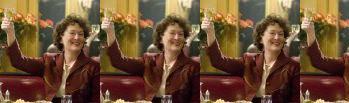
It's mainly Clayburgh's achievement that this whole thing works. She's the engine, the power, she has so much screentime (she's practically always on-screen) and a very baity role, which is much more layered than you would think. She gets into your mind and leaves there a seed which becomes a beautiful tree if you think about it.

This is fantastic, brilliant and unforgettable acting for the ages and I'm really hoping that more people will discover Page's brilliance. Although I could have arguments that she's supporting, the impact of this performance is so strong that it truly stays with you. Terrific work by a terrific actress.
This is a fantastic, brilliant and unforgettable performance for the ages. I'm feeling so guilty about not giving her a win. In any other year, she would be a shoo-in for the award. Unfortunately, I have to go with Ingrid but my dear Jane is just wonderful and really heart-breaking as Sally Hyde. Excellent, unforgettable and thought-provoking work that grows with each view. She'll get special mention from me. Such an amazing performance cannot go unrewarded.

1. Ingrid Bergman in Autumn Sonata
This is, and now I'm not overly enthusiastic, one of the best and most true performances I have ever seen from an actor, male or female.She does not only haunt you for days, she remains with you for the rest of your life. I wish Bergman had the opportunity to say farewell to her film career with a last, glorious Oscar win for this once-in-a-lifetime performance.
So I can proudly announce
that my winner is...Ingrid Bergman in Autumn Sonata
 One of the best performances ever.

1. Ingrid Bergman in Autumn Sonata
This is, and now I'm not overly enthusiastic, one of the best and most true performances I have ever seen from an actor, male or female.She does not only haunt you for days, she remains with you for the rest of your life. I wish Bergman had the opportunity to say farewell to her film career with a last, glorious Oscar win for this once-in-a-lifetime performance.
So I can proudly announce
that my winner is...Ingrid Bergman in Autumn Sonata
One of the best performances ever.And here I give a very special award to
Jane Fonda
in
Coming Home

Another astonishing performance.
So the ranking of the already reviewed years:
- 1974
- 1959
- 2009
- 1963
- 1978
- 1948
- 2002
- 1940
- 1998
Omissions:
- Liv Ullmann in Autumn Sonata
- Jamie Lee Curtis in Halloween
And now it's time to give the clues to the next year, which was a very legendary year. If there's only ONE legendary year in motion picture history, this is it. No other clues and I helped you more than enough. :)
What do YOU think? :)
What do YOU think? :)
Ellen Burstyn in Same Time, Next Year
Thursday, October 7, 2010
 The great Ellen Burstyn (one of my favorite actresses) received her fourth Oscar nomination for reprising her Broadway role of Doris in the romantic comedy/drama Same Time, Next Year. Wow, I'm really sure that Ellen Burstyn received the least number of votes despite winning the Golden Globe (along with the great Maggie Smith). She won the Oscar four years before and really it wasn't her time.
 Same Time, Next Year is a nice, but quite an ordinary romantic movie, which is certainly not for the ages, but it is occasionally very moving. As I said it's not the best one ever and it's not as entertaining as it was intended. I think this story is much better for the stage than the screen. Its famous song is really hailed and loved and I liked it a lot, but it did not blow me away. Alan Alda gives a great, if a bit uneven performance and I might even say that he deserved a nomination (I mean he has one reaaaally heartwrenching scene).
Ellen Burstyn is also good as Doris, but she's even more uneven than Alda. Although it's mostly the screenplay's fault, Ellen really could have don more with this role, I think. Actually, she gives multiple performances (each face of Doris is different and it's not that believable that she could change that much), so I' going to review them all.
In my opinion, the first Doris (in 1951) is just terrific: she's not very bright, but we can see how much more she could do with her life and what a lovely and warm person she is. Ellen totally caught her very simple thinking by adding a touch of irony to her. The start is just excellent and I thought that it would go on.
The second Doris of 1956 is probably the best acted one of all: right there Ellen totally grabbed my attention and I just could not take my eyes off her. There she's a bit like Julianne Moore in Far from Heaven: the kind, warm and perfect housewife of the late 50s. Her argument scene with Alan Alda at the airport is just unforgettable: when she says "I am a human being too" I almost got creeps. Her presence was really strong and I just loved her.
However, the best, most moving and funniest scene comes with the 1961 Doris. She has to deliver a baby in the room and Alan Alda doesn't know what to do. Her actions are so damn natural, funny and hearbreaking at the same time, that it's really an unbelievable packing. Although it's not as brilliant as the 1956 Doris, she's really just fine.
She totally loses her strength however in 1966, where Doris becomes a hippie. It's really not credible, it's awfully written and it was only for the sake of showing some trendy politics on screen (I would not have minded it had the movie's story justified it but it really did not fit the rest of it). Ellen is totally stuck in that awful character and she could not really find the way back to brilliance.
As the movie goes on, she doesn't really get that much better. The emancipated businesswoman Doris does not really have any showy or funny scenes and without great material, she really couldn't give anything memorable. I would have wanted some fire and music as Ellen Burstyn certainly is a fire-and-music actress. Her talent is so enourmous (see Requiem for a Dream, The Exorcist etc), but had I seen this movie first from her, I would not have had a great first impression of her.
The ending however (sort of) lives up to the first half and there are some good scenes. That "I'm already married" line is truly great, but it's not really THAT hearbreaking. I may have lost interest during the movie, but the effect of hers was really not that strong on me after all.
So, I can say that Ellen Burstyn gives quite a good, entertaining, but surprisingly uneven performance, which is quite far from her best works, but for an actress with less talent it would be a huge feat. But we're talking about Ellen Burstyn who's quite far from mediocre.
 So what do you think? You cannot give your official predictions now! The final conclusion is here in a couple of hours!
Ellen Burstyn is also good as Doris, but she's even more uneven than Alda. Although it's mostly the screenplay's fault, Ellen really could have don more with this role, I think. Actually, she gives multiple performances (each face of Doris is different and it's not that believable that she could change that much), so I' going to review them all.
In my opinion, the first Doris (in 1951) is just terrific: she's not very bright, but we can see how much more she could do with her life and what a lovely and warm person she is. Ellen totally caught her very simple thinking by adding a touch of irony to her. The start is just excellent and I thought that it would go on.
The second Doris of 1956 is probably the best acted one of all: right there Ellen totally grabbed my attention and I just could not take my eyes off her. There she's a bit like Julianne Moore in Far from Heaven: the kind, warm and perfect housewife of the late 50s. Her argument scene with Alan Alda at the airport is just unforgettable: when she says "I am a human being too" I almost got creeps. Her presence was really strong and I just loved her.
However, the best, most moving and funniest scene comes with the 1961 Doris. She has to deliver a baby in the room and Alan Alda doesn't know what to do. Her actions are so damn natural, funny and hearbreaking at the same time, that it's really an unbelievable packing. Although it's not as brilliant as the 1956 Doris, she's really just fine.
She totally loses her strength however in 1966, where Doris becomes a hippie. It's really not credible, it's awfully written and it was only for the sake of showing some trendy politics on screen (I would not have minded it had the movie's story justified it but it really did not fit the rest of it). Ellen is totally stuck in that awful character and she could not really find the way back to brilliance.
As the movie goes on, she doesn't really get that much better. The emancipated businesswoman Doris does not really have any showy or funny scenes and without great material, she really couldn't give anything memorable. I would have wanted some fire and music as Ellen Burstyn certainly is a fire-and-music actress. Her talent is so enourmous (see Requiem for a Dream, The Exorcist etc), but had I seen this movie first from her, I would not have had a great first impression of her.
The ending however (sort of) lives up to the first half and there are some good scenes. That "I'm already married" line is truly great, but it's not really THAT hearbreaking. I may have lost interest during the movie, but the effect of hers was really not that strong on me after all.
So, I can say that Ellen Burstyn gives quite a good, entertaining, but surprisingly uneven performance, which is quite far from her best works, but for an actress with less talent it would be a huge feat. But we're talking about Ellen Burstyn who's quite far from mediocre.
So what do you think? You cannot give your official predictions now! The final conclusion is here in a couple of hours!Jane Fonda in Coming Home
Sunday, September 26, 2010
 Jane Fonda received her fourth Best Actress nomination and second Oscar for playing Sally Hyde, a naive houswife whose husband goes to Vietnam in Hal Ashby's acclaimed movie, Coming Home. Jane also won a Golden Globe for her performance and I am sure that she was the front-runner. She had the "we forgive you" factor, she lost the previous year for an awesome performance, she starred in a very hot and brave (then) movie and her main rival was a three time Oscar winner. So it was no huge surprise I guess.
Coming Home is a good, but a bit dated movie about Vietnam for which critics and audiences went wild back then. It's one of the very first openly anti-Vietnam movies and its battle with The Deer Hunter for Best Picture has become legendary. I think that finally the Academy made a right decision as The Deer Hunter is still a classic but Coming Home is just as great, if not better (actually, I would have probably voted for Coming Home). Jon Voight gives a brilliant, heart-breaking performance in the movie and he more than deserved to win the Oscar. His sadness and fury really burns the screen and certainly amazed me. Bruce Dern is awfully overacting sometimes but he's quite great and so is Penelope Milford. They both deserved the nominations.
Jane Fonda. Brilliance in human body. She's really someone we can be really grateful for. She's not only a fantastic actress, but also a great human being (and the latter helps the former, too, I think). I am always so blown away by her and her movies. She gives such special performances that I find so easy to relate to. She makes all the characters deeply human, so understandable and close to your soul. And I'm not only talking about her works in drama. I could mention her carefree young wife from Barefoot in the Park or the terrified divorcée from Nine to Five. She always gets the human out of the parts.
When we first see Sally Hyde, she's just an ordinary American houswife cooking for her husband, smiling, being kind and loving. Sally herself is a stereotype, but Julianne Moore and Judi Dench have proven that you can turn a cliché into a performance for the ages (with a great script of course and an extraordinary amount of talent). When I didn't like Jane here, I was complaining that the part was underwritten and really boring. Now that all the pieces of the puzzle have fallen into the right place, I know how wrong I was (and why I was wrong). Sally shouldn't be interesting. She has to be a very ordinary person just like most of the people on this planet. Sally is (I think) the viewer who watches Coming Home and witnesses the horrors of war (without any pictures of war). Therefore, it's so easy to relate to her and understand her feelings. I guess you should rewatch Coming Home a couple of times until you find this out. Jane's performance here is like good wine that becomes better with age. If you let her grow inside you, it's going to be a much better experience.
Sally's transformation is so real and it's both incredibly heart-breaking and uplifting to see her go through this journey. Not only do we see all her happiness, but also her fears and doubts. Her monologue to Jon Voight on the beach is just terrific and it's a very touching, gentle and quietly emotional moment that should be shown everywhere. I think that's probably my favorite moment of the whole movie.
However, it would be a scene not to mention the two sex scenes in the movie involving her. They were done very tastefully and they weren't too rough and it was so interesting to compare the emotions of Sally (and how Jane showed them). With her husband, Sally doesn't enjoy the act but she seems to be so passionate and free while being with Luke. The moment of the orgasm is (and please don't take this the wrong way) really the highlight. We see all of Sally's emotions coming to the surface and it's a brilliantly acted moment.
Moreover, Jane's presence is incredibly strong and not only because of her star power. Somehow she attracted my eyes with her personality and her confidence on the screen. I was always looking forward to the scenes of Sally because then I knew that something special was going to happen.
You might ask why I changed my mind about this performance. It might be that seasons change or I might have had a revelation. I must say, however, that for her work alone (without comparing her to anyone), Jane richly deserved the Academy Award she won for Coming Home. This performance may not be for everyone and I see why some dislike it, I think Jane's utterly brilliant and heart-breaking as Sally Hyde. Truly astonishing work by a brilliant actress.

What do you think?
Geraldine Page in Interiors
Friday, September 24, 2010
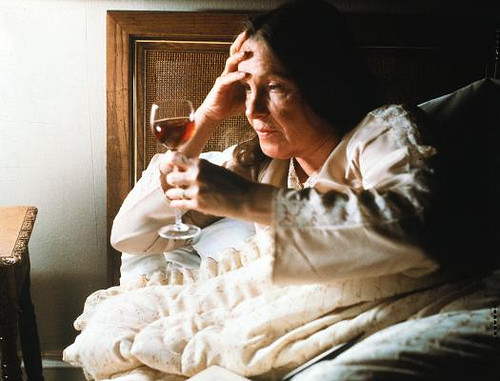
Geraldine Page received her sixth Best Actress nomination for playing Eve, an interior decorator having mental problems in Woody Allen's bergmanesque drama, Interiors. Well, poor Geraldine Page. In my opinion she had the least chance of winning as she was campaigned in the wrong category. I'm more than sure that had she been nominated supporting she would have won the Oscar (just like she did at the Baftas). I'm not certain though if I would pick her over the great Dame Maggie, but I may give her the win in a tie.
Interiors is a pretty much love-or-hate movie and your attitude and reaction really depends on your own mood. When I first saw it I couldn't stand a minute of it as at the time I was a bit anxious. But now when I was totally relaxed looking forward to the weekend, I really was crazy about it. In fact, it was so good sometimes that I got creeps. It really is a grabbing piece with excellent performances by Maureen Stapleton, Diane Keaton and mostly by Mary Beth Hurt and Geraldine Page. I especially loved Hurt in the last scenes. It's interesting that for the first time I hated the movie mostly because of her.
And Geraldine Page. What can I say about this masterful actress? She was so unique and versatile that whenever I see a movie with her I am really not surprised at all how brilliant she is. For her it wasn't a problem to play a forgotten movie star after a shy spinster, or a suicidal, theatrical interior decorator before a lovely old lady desperate to see her home. She had so many faces and really never could be stuck in a typical character.
You might think that when I said in the beginning that I would give her the Supporting Actress win, I really wanted to suggest that she belongs to the supporting category. But if I really think about it, SHE is the lead. Despite not having much screentime, everything is about her and the effects of her actions on her family. It's tricky that she is even on-screen when is not (if you know what I mean), because her impact in this small (at least in terms of time) role is probably the most significant one.
When we first see Eve, Page makes it very clear that she's a very controlling, ultra-sensitive woman with over-the-top reactions, mood swings, huge screams and breakdowns, but also that she's a very intelligent and gifted person, who's probably way too perfect for her family and even herself. She loves being worshiped and pampered, but she always makes sure that it's the decision of the other person. Actually I can think of her profession (decorator) as a symbol of her role in the family. She always sets the stage for everyone, guides, helps, but also mercilessly controls them.
It's also fatanstic to witness how carefully Page built the relationship between Eve and Joey. In one of the first scenes they are chatting, but all the tension between these two women come to the surface. Eve really corners everyone emotionally and almost kills them with her mood swings. She always refers to the other one and has problems and she causes so much pain.
My favorite scene comes at the beginning during the birthday party. Eve is having a usual conversation with her daughter, when she suddenly (after a brief sentence about her husband) suffers a theatrical and almost laughable breakdown in front of everybody. Right there, Page was really on the edge of being too over-the-top, but she solved this very hard sequence with such dexterity and ease that it's amazing.
Her suicide attempt is really chilling. It shows, how theatrical and over-the-top Eve is, lying down gracefully in a beautiful dress. She's really madness in person.
People mostly praise her (well sort of) last scene in the church, when she has another breakdown as she finds out about the marriage plans of her ex-husband. I cannot really say enough times how well page shows Eve's personality. She screams "It's humiliating" with such passion and I even dare say, pleasure. Actually there and in the birthday party I became quite sure that Eve actually enjoys being in the centre of attention. Not to mention how incredibly haunting she is even when she's silent.
So to sum up, I saw once again fantastic, brilliant and unforgettable acting for the ages and I'm really hoping that more people will discover Page's brilliance. Although I could have arguments that she's supporting, the impact of this performance is so strong that it truly stays with you. Terrific work by a terrific actress, which gets
 So, what do you think? I haven't decided about who should be the next, but you will know in time.
Interiors is a pretty much love-or-hate movie and your attitude and reaction really depends on your own mood. When I first saw it I couldn't stand a minute of it as at the time I was a bit anxious. But now when I was totally relaxed looking forward to the weekend, I really was crazy about it. In fact, it was so good sometimes that I got creeps. It really is a grabbing piece with excellent performances by Maureen Stapleton, Diane Keaton and mostly by Mary Beth Hurt and Geraldine Page. I especially loved Hurt in the last scenes. It's interesting that for the first time I hated the movie mostly because of her.
And Geraldine Page. What can I say about this masterful actress? She was so unique and versatile that whenever I see a movie with her I am really not surprised at all how brilliant she is. For her it wasn't a problem to play a forgotten movie star after a shy spinster, or a suicidal, theatrical interior decorator before a lovely old lady desperate to see her home. She had so many faces and really never could be stuck in a typical character.
You might think that when I said in the beginning that I would give her the Supporting Actress win, I really wanted to suggest that she belongs to the supporting category. But if I really think about it, SHE is the lead. Despite not having much screentime, everything is about her and the effects of her actions on her family. It's tricky that she is even on-screen when is not (if you know what I mean), because her impact in this small (at least in terms of time) role is probably the most significant one.
When we first see Eve, Page makes it very clear that she's a very controlling, ultra-sensitive woman with over-the-top reactions, mood swings, huge screams and breakdowns, but also that she's a very intelligent and gifted person, who's probably way too perfect for her family and even herself. She loves being worshiped and pampered, but she always makes sure that it's the decision of the other person. Actually I can think of her profession (decorator) as a symbol of her role in the family. She always sets the stage for everyone, guides, helps, but also mercilessly controls them.
It's also fatanstic to witness how carefully Page built the relationship between Eve and Joey. In one of the first scenes they are chatting, but all the tension between these two women come to the surface. Eve really corners everyone emotionally and almost kills them with her mood swings. She always refers to the other one and has problems and she causes so much pain.
My favorite scene comes at the beginning during the birthday party. Eve is having a usual conversation with her daughter, when she suddenly (after a brief sentence about her husband) suffers a theatrical and almost laughable breakdown in front of everybody. Right there, Page was really on the edge of being too over-the-top, but she solved this very hard sequence with such dexterity and ease that it's amazing.
Her suicide attempt is really chilling. It shows, how theatrical and over-the-top Eve is, lying down gracefully in a beautiful dress. She's really madness in person.
People mostly praise her (well sort of) last scene in the church, when she has another breakdown as she finds out about the marriage plans of her ex-husband. I cannot really say enough times how well page shows Eve's personality. She screams "It's humiliating" with such passion and I even dare say, pleasure. Actually there and in the birthday party I became quite sure that Eve actually enjoys being in the centre of attention. Not to mention how incredibly haunting she is even when she's silent.
So to sum up, I saw once again fantastic, brilliant and unforgettable acting for the ages and I'm really hoping that more people will discover Page's brilliance. Although I could have arguments that she's supporting, the impact of this performance is so strong that it truly stays with you. Terrific work by a terrific actress, which gets

Ingrid Bergman in Autumn Sonata
Saturday, September 18, 2010
Ingrid Bergman received her last Oscar nomination (and in my mind her last award) for playing Charlotte, a concert pianist in Ingmar Bergman's drama Autumn Sonatata. I am quite sure that had she not won that supporting Oscar four years earlier, she would have won for Autumn Sonata, despite the fact that her performance was in Swedish. I believe that she received many votes from the older and/or conservative members of the Academy over Jane Fonda. Nevertheless this was her last motion picture (not counting a Tv movie), because at the time she was suffering from cancer.Autumn Sonata is one of the greatest movies ever, which brilliantly observes and shows the complex and stormy relationship between a mother and her daughter. It's a 100% intense experience, which is far from being easy or pleasant to witness as we get to know such depths of the human mind that we can only see in a Bergman movie. Just like in Interiors, the characters are unlikeable and selfish, however Bergman was able to present them with much more reality. The actors are all terrific, including Liv Ullmann, who was ROBBED of a nomination for her performance. The dialogues, the directing, everything is pitch-perfect.
 However, Ingrid Bergman is beyond perfect. You can easily say that I'm very biased, because she's one of my favorite actresses ever and I would not deny it, but I would also expect other people NOT to deny Ingrid Bergman's brilliance in this movie. And you must understand that I don't love this performance because Ingrid is one of my favorite actresses. She's one of my favorite actresses because of this performance. If you expect to see something like Casablanca or Gaslight from her, turn off your TV right away. It's not about teary eyes anymore. You don't get to see an actress acting, you'll witness the torture and misery of a woman.
Ingrid Bergman had already been ill, when the shooting of this movie started. It's known that she remained dignified and brave in her illness, which caused her death, but somehow you get the feeling that she acted as if this was her last chance to show herself to the world. She pushed the bounderies and burdens of acting, as we can clearly see: acting and life cannot be separated in Autumn Sonata. She put every strength, ability and skill she possessed into this one last movie of hers. She's not a technical actress like, say, Meryl Streep. She's the prototype of an actress totally relying on emotions and this type of performing totally suited Ingmar Bergman's screenplay (or filmography as a whole). She shows her feelings by little looks or shows her pain with her hands, fingers, eyebrows.
 She plays a theatrical, over-the-top woman (which is NOT true about her performance!), who's life is just pure acting and pretending. The first time she appears, she's getting out of her car, having pain in her back. Charlotte has many regrets, dreams and desires, however throughout the years she's become bitter and pretentious. In the beginning she has little clashes with her daughter, short arguments and that's it. It's simply mindblowing to see her face in the scene where Eva tries to impress her by playing the piano, the musical instrument that means Charlotte's life. She becomes teary, we can see that she's proud of her daughter, but we can also observe that she's a bit scared that she may not be the best and we can also experience that she does not only feel pride and love towards her daughter. Eventually, she plays the same prelude: she straightens up, almost closes her eyes and we immediately see a genious working, producing ART.
Before this scene, she talks about how much her longtime companion suffered from a long fatal illness. It must have been tough for her to talk about things, which were so current in her life, but she never lets us feel her own pain, only the characters despite the fact that she lived Charlotte's character, she BECAME Charlotte.
In a mindblowing scene (which Liv Ullmann's character is listening to in the background) Charlotte talks about Eva to her son-in-law, who tells her nearly all of Eva's secrets. Bergman brilliantly portrayed the two-faced nature of the character: she pretends to be concerned about her daughter, and by this we cannot be certain if she's really interested.
 The whole movie gets more intense after a shocking dream scene (she does it brilliantly) where Charlotte wakes up screaming. Her daughter meets her downstairs and as they are alone, they cannot avoid the confrontation and the arguing about the past. Eva can only blame her mother, who's not defending herself (and does not even want to in the end). It's so natural and real when she whispers while she's crying: "Eva, you hate me." All the bitterness and desparation of this woman is revealed mercilessly and she breaks down under this heavy burden. In the end she begs for the forgiveness of her daughter, who cruelly rejects it. Charlotte says that she'll change, but she does not believe it herself. And we also know that their relationship cannot be saved.
This long fight full of emotions reaches its highlight when Bergman lies down on the floor, opening up to her daughter about her feeling. Her performance reaches the biggest depth an actor can ever achieve. The way she says "I don't remeber" is simply so utterly heartbreaking, but in a very strange way. You don't cry or anything, desparation fills your soul. Along with Bergman we reach a level of catharsis which can rarely be experienced.
Charlotte tries to escape, but we know that she's hopeless. There's only one thing that can give a meaning to her life: music. Ironic though, that this movie is not about music or its power, it's just a brilliantly edged relationship drama. At the very end of her movie we can see her face for only a few seconds. In this minimal time, she shows more truth than most of the actors can through their entire careers.
This is, and now I'm not overly enthusiastic, the best and most true performance I have ever seen from an actor, male or female. With this re-watch I've become certain. I have seen it three times, but she always gives me something else. She does not only haunt you for days, she remains with you for the rest of your life. I wish Bergman had the opportunity to say farewell to her film career with a last, glorious Oscar win for this once-in-a-lifetime performance.
 I keep the formality of rating, but this performance doesn't need it.
Comments anyone?
Jill Clayburgh in An Unmarried Woman
Friday, September 17, 2010
 Jill Clayburgh received her first Best Actress nomination for playing Erica, a recently divorced woman living in New York in Paul Mazursky's acclaimed movie, An Unmarried Woman. In my opinion Clayburgh had a fair chance of winning as she had strong support and I think she was eventually third in the voting. The old school actors must have went with Ingrid Begman and they might have given Fonda some votes, who also had the new generation supporting her. Clayburgh must have been the most popular among women.
But enough about speculations. An Unmarried Woman is a fair movie, which is not ground-breaking, but great. OK, some say how much impact it had on today's culture, but I don't consider Sex and the City as marvellous as most people (in other words I dislike it). However, there are not that many similarities between these two, maybe the over-the-top conversations of four women. The actors give very fair performances, but they really don't have very complex roles.
When I watch a performance, I always at least try to leave expectations and previous experiences behind and focus only on its effect on me right then. Clayburgh's acting here is very much loved and applauded, some go crazy for it. I never believe in the hype and that's why I wasn't disappointed by her. I did not expect much, but I did not get that much either (or did I?). All I saw was a very strong and subtle work, which really impressed me occasionally.
Without a doubt Clayburgh's strongest and most memorable scenes are in the beginning when she plays the happily married woman who's perfectly satisfied with her life. She has a career, a great husband and a daughter, excellent sex life and lives in a huge apartment. Clayburgh never suggests that Erica doesn't feel alright. She's perfectly balanced, calm person you can truly count on. Actually, (in my opinion naturally) Clayburgh inhabited this face of Erica much better and more interesting. She's absolutely free of clichés, her acting is very impressive.
But it's a huge and significant change in Erica's life (and Jill's performance) when her husband admits cheating on her and says that he wants a divorce. Clayburgh's reaction in that scene is totally priceless: as we see this huge, pink, American dream life falling apart, it's so damn natural (their breakup scene was so much like in Far from Heaven, don't you think with the husband crying that he loves someone else) and heartwrenching. That's probably the highlight of Jill's whole work in this movie. She's 100% realistic and so damn subtle (plus she saves a horribly edited sequence).
But I just felt that from a magnificent beginning, the standard of Clayburgh's whole performance went a bit downhill. Don't misunderstand me here, I absolutely loved her afterwards too, but she really had her best moments in the first scenes. She's amazing sometimes, especially with the therapist. Right then I almost felt that I was talking to the shrink and not Clayburgh. It's funny that only after watching the whole movie did I realise her brilliance here. She's always so subtle and extremely believable.
I felt though, that Alan Bates really ruined this film. There was nothing wrong with his acting, but when he appeared, the movie slowly, but firmly fell apart. Jill was still able to grab our attention, but everything was became quite boring. However, it's mainly Clayburgh's achievement that this whole thing works. She's the engine, the power, she has so much screentime (she's practically always on-screen) and a very baity role, which is much more layered than you would think. She gets into your mind and leaves there a seed which becomes a beautiful tree if you think about it.
Right now, I have to withdraw my previous statement that I did not get much out of Jill Clayburgh's performance. It's truly-truly amazing work, which is extremely realistic, layered and powerful in its subtlety. I did not really expect to write this down when I started this review, but she's just unforgettable.
 So what do you think? Ingrid is next, than Ellen.
The Next Year
Monday, September 13, 2010
So right now, I'm moving along with my next year, which is said to be one of the strongest ones ever in this category. We'll see. There are supporters of all the nominated performances and you will find out my ranking of these five great ladies. I really wanted to do this year, so I'm quite excited. There are more performances here I am very fond of, so I will really like this year I think.

The nominees were:
- Ingrid Bergman in Autumn Sonata
- Ellen Burstyn in Same Time, Next Year
- Jill Clayburgh in An Unmarried Woman
- Jane Fonda in Coming Home*
- Geraldine Page in Interiors
I really don't know what my ranking will look like (well, I have an idea about a certain place, but no rush) but we will see. Any predictions anyone? Who are YOU rooting for?
Subscribe to:
Posts (Atom)


