Pages

Powered by Blogger.
Showing posts with label 1939. Show all posts

269. The Man in the Iron Mask

Sunday, November 11, 2012

269. (11 Nov) The Man in the Iron Mask (1939, James Whale) 35


This clunky adaptation of The Man with the Iron Mask emphasizes all of the mean-spiritedness of Dumas's plot. The lavish production and adventure are a rather joyless slog as a result. There's so much deck-stacking to make us root for Philippe of Gascony and despise King Louis XIV the characters seem far from human. The Oscar-nominated score is fine, but lacks anything resembling a memorable theme.

Double Feature: Love Affair (1939) and Wuthering Heights (1939)

Monday, June 4, 2012

Love Affair:

Better known as 1957's remake An Affair to Remember, this heartbreaking melodrama features Irene Dunne and Charles Boyer as lovers who meet on a cruise and agree to meet again, only to have their meeting spoiled. The love story is no epic (88 minutes), but it doesn't have to be. This is an underseen classic romance with great performances. While it is not one of 1939's best films, it is no wonder that this received a Best Picture nomination in a year of ten nominees.

The film received nominations for Best Picture, Best Actress, Best Supporting Actress (M. Ouspenskaya), Best Writing (Story), Best Art Direction, and Best Original Song. Though it did not win anything, the Best Picture nomination was arguably consolation enough, given that better films like Only Angels Have Wings, Gunga Din, The Roaring Twenties, and The Hunchback of Notre Dame were not nominated for Best Picture.

Wuthering Heights:

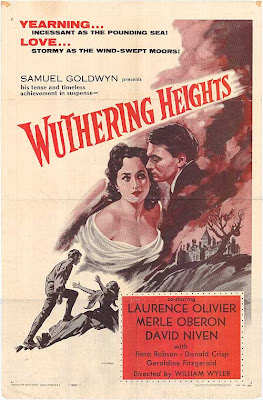
This classic from 1939 is a wonderful adaptation of Emily Bronte's famous literary work. Laurence Olivier and Merle Oberon are magnificent as Heathcliff the poor stable boy and Cathy - his wealthy adopted sister. With a love story that has endured many cinematic versions, the film rivals the sweeping romance of Scarlett and Rhett in Gone with the Wind. William Wyler's film is one of the very best that 1939 has to offer, and it very much deserved its Best Picture nomination.

The film received nominations for Best Picture, Best Director, Best Actor, Best Supporting Actress (G. Fitzgerald), Best Writing (Screenplay), Best Art Direction, Best Cinematography (B&W), and Best Original Score. It did not win Best Picture, but it did win cinematographer Gregg Toland (Citizen Kane) his only Oscar.

Mr. Smith Goes to Washington (1939) ***

Monday, February 20, 2012

mr-smith-goes-to-washington-147344

Who runs Washington? How does one become a congressperson, a senator, or the president? These questions were asked in 1939—and are still being asked today. Americans would like to think that idealists like Jefferson Smith (James Stewart) go to Washington to serve the best interests of those they represent.  Yet, in reality, few idealists ever get to Washington, and if they do get there they are quickly disillusioned by the political process.  Most rational Americans today know that the political process has been corrupted, but I’m not quite so sure that people were so aware of what happened in Washington back in 1939—the year this film, like so many other classics, hit the silver screen.

mr-smith_M_jpg_627x325_crop_upscale_q85Nominated for eleven Academy Awards (Best Picture, Best Director [Frank Capra], Best Actor [James Stewart], Best Supporting Actor [Harry Carey and Claude Rains], Best Score, Best Sound Recording, Best Film Editing, Best Interior Direction, Best Screenplay, and Best Original Story [winner Lewis R. Foster]), the film was almost put on the shelf after the outbreak of WWII in Europe.  It would seem that some thought the film presented the shining beacon of democracy as a corrupt cesspool operated by political thugs.  And, really, those people were partly right, but there’s more to the story than that.  Sure, director Frank Capra shows the dirt under the political rug, but he also brightly polishes the true meaning of patriotism and republicanism. 

Mr. Smith Goes to Washington is the simple story of a common man thrown into a complicated situation.  Jefferson Smith is called upon to represent his state (never identified) as a junior senator when his predecessor, Sam Foley, dies.  Needing to fill the position with someone who will be easy to control, mr_smith_taylorGovernor "Happy" Hopper (Guy Kibbee) chooses Mr. Smith because he is regarded as a hero and loved for his work with the Boy Rangers (think Boy Scouts)—plus, he has no political experience whatsoever.  As such, he represents, in the words of the governor, “the perfect man, never in politics in his life, wouldn't know what it was all about in two years, let alone two months. And the important thing it means votes. A hero of 50,000 boys, and a hundred thousand parents.” 

Why is it so important that the governor find a “yes” man?  Because he and every political office holder in the state are beholden to political boss Jim Taylor (Eddie Arnold). Taylor has bought up land surrounding a canyon along Willet Creek and wants his political stooges to push through a bill that will provide government funding for a dam—which would mr_smith_bad-guys1-500x375allow him to sell the land he’s bought up for a huge profit. Quite simply, it’s the blue ribbon of political pork. Taylor controls everyone, even Senator Joe Paine (Claude Rains), a man some think might be the next president. Indeed, Senator Paine is admired by many, especially by Mr. Smith, whose father was Paine’s best friend. Ah, the dangers of hero-worship.

Capra is quite crafty in how he juxtaposes the backroom dealings of a corrupt political machine with Mr. Smith’s honest reverence for freedom and democracy.  While Taylor, Hopper and Paine are always working the system in closed rooms (they choose who’s allowed in), Mr. Smith revels in the openness of the monuments of Washington (where everyone is welcome).  Even the Senate chamber (expertly mr-smith-goes-to-washington1recreated by Lionel Banks) is used to show the many faces of the political process. While Smith sits at his desk, once occupied by Daniel Webster, he can see common, everyday people looking on in the gallery. Yet, in this same chamber, you can see senators working the system and attempting to stymie the wheels of truth and justice.

There is an educational bent to the film as well. Mr. Smith’s secretary, Clarissa Saunders (the top-billed Jean Arthur), is supposed to make sure he shows up for roll call and that he votes how the machine wants.  In the beginning, she thinks he’s a big dope and refers to him as Daniel Boone and Don Quixote.  You see, she is the cynical Washington insider who knows how things work, and when some country bumpkin starts spouting off about the virtues of democracy smith_wash01she thinks he’s beyond naïve. She’s also not pleased that he wants to write a bill to start a national boy’s camp.  And, this is where the educational bent comes in.  Trying to dissuade him from his idea she explains the very long and tedious process of what it takes to get a bill passed.  Just her explanation alone is a civic lesson in itself—and perhaps an eye-opener for many audience members.  You must remember, they didn’t have School House Rock and “I’m Just a Bill” in 1939!

Of course, the fact that he wants to build this camp along Willet Creek also creates another problem for Saunders—as she knows about Taylor and Paine’s porked-up plan.  What to do?  Like many secretaries of the 1930s, Saunders is smarter than the boss and so she holds his hand as he first presents the bill and then gives himrsmithfilibuster2m a crash course in political trench warfare after Paine and the machine discredit and crucify him.  And, this brings us to the famous 23-hour filibuster, where Mr. Smith refuses to yield the floor by reading from the Constitution and various other documents in the hopes that someone, specifically Paine, will clear his good name. Jimmy Stewart always played his righteous characters with just enough instability that they didn’t seem sanctimonious and/or preachy.  You see the complete destruction of his character in these scenes.  At the beginning of the filibuster he seems hopeful and self-assured—surely he will be able to convince the 011809mrsmith-300x211chamber that he is innocent.  But slowly, his strong voice and straight as a rod back start to falter.  His posture droops, his voice cracks, his clothes wrinkle, his hair musses.  What did democracy look like in 1787? Perhaps like Jefferson Smith when he began his filibuster—confident and composed. What does democracy look like in 1939? Like Mr. Smith at the end of his filibuster—defeated and disheveled.  Ah, have heart, there’s more to the story than that, but you need to watch it for yourself to find out. 

Mr. Smith Goes to Washington is a political morality tale about living up to the principles of republicanism—government of the people, by the people, for the people.  Who knew a monument could play a supporting role in a film? Everyone, even Lincoln himself, plays their part well. Eddie Arnold is the epitome of the vile political boss whomsgwa_stl_5_h will stop at nothing (not even running children off the road) to get what he wants. Claude Rains takes the part of cynical politician to a whole new level—you either want to slap or hug him.  Jean Arthur is her usual wise-cracking self, playing a Washington-weary woman just waiting for the right man to come along so she can show her heart of gold.  And, James Stewart does naïve as only he can—desperation and despondency never looked so believable. 

Final assessment: we could use more Jefferson Smiths in America today. Oh, and the film is quite good, too.

Gone with the Wind (1939) ****

Monday, November 14, 2011

gonewith

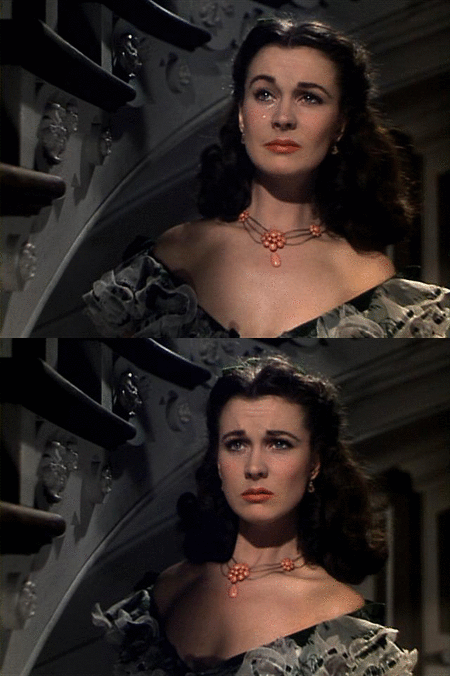
Why, Ms. Scarlett (Vivien Leigh), I do declare that you are one of the greatest female characters, both in film and prose, in American history.  You might be calculating but oddly still stupid at times, but I still like you and your 18 inch waist (pre Bonnie, rest her dear soul). Perhaps I often found myself hoping that Ms. Melly (Olivia de Havilland) would slap you or that a Yankee soldier would defile you—both to teach you a lesson—but I still hoped beyond hope that you would triumph in the end.  Alas, your god and creator, Margaret Mitchell, got it right in the end—let the reader/viewer decide how  your tomorrow turned out.  Of course, had Mitchell known that her money-grubbing descendants would allow Alexandra Ripley to write a trashy sequel (I won’t name the title, but the title is the most creative thing about it…and that’s all you need to know, Ms. Scarlett), perhaps she would have relented about writing the end of your story.  So, what makes you and your film merit a four-star rating, Ms. Scarlett? 

GWTW_3lgStar one: your theme music.  Dramatic and memorable—just like you Ms. Scarlett. Whenever I hear it I immediately think of the lush green gardens of Tara (and the burning of Atlanta, too—damn those Yankess, Miss Scarlett, damn them!),  Ah, and just like you were robbed by those damn Yankees, composer Max Steiner was robbed by the Academy when he lost the Oscar to some silly guy named The Wizard of Oz—now you know that’s not a decent, Southern gentleman’s name, Ms. Scarlett. Of course, it only makes sense that you would have one of the most memorable film scores ever, Ms. Scarlett, as you are the most memorable female film character in history.  Every badass needs a badass theme song, Ms. Scarlett, and rest assured, when your overpriced barouche is cruising the streets of Charleston (or Savannah, Atlanta, etc.) people know what badass is coming. 

Star two: your clothes.  With a figure like yours, Scarlet-OHaraMs. Scarlett, you would look good in anything.  While I don’t know how wise it is to wear a green and white dress to a BBQ, I still think you make it work—and that green ribbon that attaches your hat to the rest of you could be used as a napkin if need be. What I’m saying is, you know how to make any dress work.  Take for example the white ruffle dress—some people would look like a roll of toilet paper gone wrong, but somehow it looks flouncy on you.  Another example is the red garnet gown that you look ultra-fierce in.  Some people just couldn’t work those feathers and the gauze-veil thingy, but you rock it. And, who but you could make a dress out of green velvet drapes seem stylish (sort of)?  Granted, it was because of those damn Yankees that you had to rip those curtains down and wear the tassels as an accessory belt, but we can’t blame the dress for the circumstances into which it was born. 

gone_with_the_wind_movie-11469Star three: your crew. Rhett Butler (Clark Gable) may have left you in the end, but while he was with you he was the man in charge.  Your scenes together alone could have burned down Atlanta—damn Yankees.  I have to admit, I just couldn’t understand why you were always after that loser Ashley Wilkes (Leslie Howard) when you had a man like Rhett around. Was it that he rejected you, Ms. Scarlett?  You were just too much woman for that weak man!  He needed a calm woman like your cousin Ms. Melly, so he could continue the cycle of inbreeding. Melly, now there was a woman who knew how to endure, Ms. Scarlett.  Just think of all the insufferable things Aunt Pittypat (Laura Hope Crews) said over the years to that poor girl!  And you thought listening to Prissy (Butterfly McQueen) and Mammy (Hattie McDaniel) all the time was almost too much to bare.

Star four: your attitude.  There’s one thing that makes a person memorable, and that’s their attitude.  Sometimes things don’t go the way you want, but that doesn’t mean you give up. And, Lord knows, Ms. Scarlett you never give up.  Ashley married Melanie, so you married Charles (he was better looking anyway, plus he died and ScarletonStaircaseleft you some worthless Confederate money—damn Yankees!). When you didn’t have the money to pay the taxes on Tara you and your drape dress found Frank Kennedy.  When the damn Yankees came calling you shot one dead. To me, this is a can-do attitude.  Plus, you always know you are the most interesting woman in the room.  Of course, you do have a a touch of willfullness and a rather nasty temper, but Irish blood runs hot!  Now, if I had to make one constructive suggestion to you it would be this: get over your procrastination issue. Tomorrow might be another day, but sometimes that day can turn out to be really crummy. Still, I like the can-do attitude about getting your man back. 

And, that, Ms. Scarlett is why you and your film are so memorable.

Double Feature: Of Mice and Men (1939) and Goodbye, Mr. Chips (1939)

Wednesday, September 21, 2011

As I'm trying to see every Best Picture nominee ever made, I watched two 1939 entries for the first time this week.

Of Mice and Men:


This gem features Burgess Meredith and Lon Chaney Jr. as two labor workers in the rural American south in the Great Depression. Both give great performances in a worthy Best Picture nominee that more classic movie fans should see, if they haven't already.

The film received nominations for Best Picture, Best Original Score, Best Scoring, and Best Sound. However, it definitely deserved additional nominations for Meredith (Best Actor) and Chaney Jr. (Best Supporting Actor).

Goodbye, Mr. Chips:


This beloved classic is just that: a wonderful, emotionally-satisfying piece about a boarding school teacher. Robert Donat is sublime in an Oscar-winning performance, and the film arguably deserved the Best Picture prize.

The film received nominations for Best Picture, Best Director, Best Actor, Best Actress, Best Screenplay, Best Film Editing, and Best Sound. Of course, Greer Garson's leading performance was supporting, and the film could have been nominated for Best Art Direction.

The Wizard of Oz (1939) ****

Tuesday, September 20, 2011

wizard-of-oz-DVDcover
So, how does one of the greatest films of all-time come to be classified as a “Guilty Pleasure” by me? Well, it goes something like this…

Imagine if you will a group of adults sitting in a darkened room watching a 60-inch plasma screen TV with the sound of the film on mute and the Pink Floyd album The Dark Side of the Moon blaring from the surround sound.  Perhaps some adult beverages and other illicit items have been consumed and you are feeling pretty good…and then something happens when Dorothy (Judy Garland) starts singing “Somewhere Over the Rainbow” and you don’t hear her voice.  We won’t call it a flashback or, goodness to Betsy, a “bad trip.” No, we’ll call it a Proust moment…a Remembrance of Things Past, if you will.

My first recollection of watching The Wizard of Oz (1939) finds me wizard-of-oz-dorothy-and-glindaabout age five—curiously enough, about the size of a Munchkin. At the time I was an only child who spent a lot of time talking to Weeble Wobbles and my prized Franco Harris football card.  How mind-bending was it when the black-and-white screen turned to color as Dorothy emerged from the farmhouse into the merry old land of Oz? Aren’t those little people cute…can I, too, represent the Lollipop Guild…I would thank you very sweetly if I might.  Oh, and that beautiful Glinda (Billie Burke)—she does remind me of my beloved Aunt Jean, with her sweet disposition and strawberry blonde hair.  It was a night of amazement—flying monkeys and a horse of a different color—I was hooked. I would spend the next twenty years watching the annual CBS broadcast with my family—every year, no matter what. 

Of course, my perception of the film and its characters changed over that twenty year period. For example, when my mother remarried and I gained not only a step-father but a spiteful step-5280197grandmother, Almira Gulch and the Wicked Witch (Margaret Hamilton) looked just a little bit like her, and my loathing of those characters somehow intensified. At around the age of twelve I stopped being afraid when Dorothy and the gang nervously went into the hall of the great and powerful Oz (Frank Morgan), as well as when they ventured into the haunted forest with those creepy trees—I couldn’t let my two younger brothers think their big sister lacked courage. Then, there were the boyfriends in my mid-teens who wanted to do anything but spend a night watching an old movie with my entire family—they did it, of course, most of them had brains you see. Yes, things changed, but I could still count on that yearly broadcast to bring my family together.

And, then something unbelievably rude happened: CBS stopped airing it in 1998 and TNT/TBS bought the television rights. Yes, we had Cable and could continue to watch if we wanted, but something fundamentally wrong had occurred. CBS showed the film once a year—TBS/TNT showed it several times, year round.  The EVENT was no longer an event…it was just any other film on TV, plus they took way too many commercial breaks. Alas, we stopped watching the film together as a family in our home…and as the film tells us, there is no place like home. 

So, there I would be, sitting on my couch channel surfing and all of the sudden I’d find myself on TNT and hear the Wicked Witch say, “You cursed brat! Look what you've done! I'm melting! melting! Oh, what a world! What a world! Who would have thought a good little girl like you could destroy my beautiful wickedness?” Really? It’s almost over! Curse you CBS!  Is nothing sacred?  I blocked TNT and TBS from my favorite channels on my remote. 

My yearning for the film and its true meaning brought me to the point of despair. The situation had become so desperate that I contemplated doing something unfathwizardofoz1omable: watching the film in a theatre. Yes, when Warner Brothers re-released the film to theatres I wanted—no, I needed—to go.  Oddly enough, I couldn’t find any adults to go with me.  And, then it happened: It really was no miracle. What happened was just this...My eye began to twitch. My skin, to itch. And suddenly I started to unhitch. Just then the Ditz—that’s right, I asked a Tween to go with me.  Now, you must understand, I have no children for a reason: I don’t like them. Perhaps that sounds strange coming from a person who admires a film that opens with a title that reads:

…this story has given faithful service to the Young in Heart; and Time has been powerless to put its kindly philosophy out of fashion. To those of you who have been faithful to it in return...and to the Young in Heart...we dedicate this picture.

Still, I despise children most sincerely. As such, you can only imagine to what depths my despair had descended to ask a child to go see my childhood favorite film.  So, we went. And, to my great surprise, we had a good time. The film truly transcends time and age.  That doesn’t mean I encountered the same feelings I got when I watched it with my family—that is something that can never be recaptured—but it was still a memorable, pleasant experience. It was a cathartic moment.

Now, I no longer block TNT and TBS from my remote, and if I happen upon Oz when the Witch is asking the Scarecrow if he wants to play with fire, I watch it.  Mind you, I find myself looking imagesCA943LZ1around the room to see if my brothers chant along when the guards at the witch’s castle say, “"O-Ee-Yah! Eoh-Ah!" And, it is here that I feel a pang of guilt. Have I betrayed a familial ritual by watching the film alone or with other imbibing adults in the dark? Perhaps…but time marches on and broadcast television changes its schedule.  We will always have those twenty years of things remembered about the wonderful world of Oz—and I will always endure my own private guilty pleasure whenever I watch it.

The Rules of the Game (La Regle Du Jeu) 1939 **1/2

Sunday, January 16, 2011

rules
(This article is from guest contributor Rick29 and first appeared at The Classic Film & TV Cafe.  The rating in the title is my own.)

Entire books have been devoted to analyzing Jean Renoir's 1939 masterpiece, so it's impossible to do justice to this French classic in a single film review. However, I am constantly surprised by the number of film buffs who haven't seen it, so I feel compelled to promote it--well that, plus it's been a personal favorite since I watched it in college long ago.

Best described as a "comic tragedy," The Rules of the Game focuses on three themes: the relationship between and among the frivilous upper-class and their servants; the complex emotions between men and women; and the boundaries and expectations of society (the "rules of the game").

The film opens with the arrival of Andre Jurieux, a courageous aviator who has just completed a 23-hour solo flight across the Atlantic. As the public stands ready to hear about his heroic exploits, Andre uses the opportunity to whine that he did it all for a woman who didn't bother to be there and greet him. It doesn't matter to Andre that Christine, the woman in question, is married.

Andre's best friend, Octave (Renoir), has a long-standing friendship with Christine (Nora Gregor). He uses his influence to secure Andre an invitation to La Coliniere, a country estate owned by Christine and her husband Robert (Marcel Dalio). Robert is hesitant to agree at first, but Octave convinces him by agreeing to find a husband for Robert's mistress Geneviève (Mila Parely).

At the country gathering of friends, relationships change amidst an avalanche of mixed messages and misunderstandings. A confused Christine contemplates an affair with a stranger, then confesses her love for Andre before realizing that her friendship with Octave may be much more. Meanwhile, her maid Lisette ignores her husband, the gamekeeper, and flirts with both Octave and a poacher-turned-servant named Marceau. It's a classical French farce on the surface, but it's undercut by a condemnation of the bourgeois and concludes with an unexpected tragedy.


Clearly, Renoir wants to expose the emptiness and thoughtless cruelty of the upper classes, the latter conveyed in the film's most famous scene: a hunting party that slaughters dozens of rabbits and pheasants. As if this sequence (which is difficult to watch) needed more conviction, Renoir forsakes his typical long takes for cramming in 51 shots in less than four minutes. The violence is shocking and the analogy--that the bourgeois are indifferently destroying an unsuspecting society--is all the more potent.

It's no coincidence that the only likable members of Renoir's bourgeois are "outsiders." Several of Robert and Christine's "friends" feel sorry for Christine because she's Austrian. Later, we learn that Robert's father was a "Rosenthal from Frankfort"--meaning that he was Jewish. This allows us to feel empathy for them while still accepting that their vacuous life of luxury is no different from their guests.


In Renoir's world, both upper-class and servant classes understand the conventions of society, even though they break them. Octave stresses to Andre that "society has rules." And one of the house maids, upon learning Christine allowed Andre to sit next to her at dinner, expresses concern because "etiquette is etiquette."

It's ironic that the two most pathetic characters--Andre and Geneviève--are the ones who follow the rules at the risk of their own unhappiness. Andre may come across as a lovestruck fool, but he truly loves Christine and knows what he wants. Likewise, Geneviève understands that she doesn't want to lose Robert, although she confesses that "I don't know if it's love or force of habit." In contrast, Christine, Octave, and Robert struggle with trying to figure out what they really want. In the end, their actions seem foolish and perhaps even tragic, but as Octave explains to Robert at one point: "Everyone has their reasons."


The history of The Rules of the Game is almost as fascinating as the film itself. Two of Renoir's previous two films--La bête humaine and Grand Illusion--were big commercial and critical successes (Illusion even earned an Oscar nomintaion as Best Film...not Best Foreign-Language Film). So, it was a tremendous disappointment when Rules of the Games flopped miserably. Renoir even re-edited the film, trimming its running time from 96 minutes to 81. During World War II, the Nazis destroyed all known negatives. Then, in 1959, a restored 109-minute version of the film was released. Renoir approved this version, although it's important to note that he was not involved in the restoration.

Based on shooting scripts, film historians have compared the 81-minute and 109-minute versions. They contend that the shorter film was a harsher indictment of the upper classes, since it reduced or eliminated scenes that fleshed out the characters of Octave and Robert.

Since 1952, Sight and Sound magazine has done a poll of the 100 Greatest Films every decade. The Rules of the Game entered the 1952 poll as #10 and has been  #2 or #3 in every decade since then. The only film to rank above it: Citizen Kane.

The Final Conclusion - Best Actress 1939

Sunday, October 31, 2010

About the field: This was a legendary year for Best Picture and pretty great for Best Actress. And I can say this very easily. I was so happy to (re-)watch these performances and movies. I liked them all, though sometimes I was a bit disappointed as that nominee is praised everywhere. So that was the only disappointing thing here, but that performance grew on me a bit. My #5 may not have belonged to this category, but actually there wasn't any other Best Actress performance I would have nominated instead of her. #4 was very good, though a bit uneven, I was mesmerized by #2 and #1 (big surprise) REALLY blew my socks off. This was one of the easiest rankings so far, though I believed (before starting) that it would be much more difficult. But let's just see the results (which are not surprising if you read my reviews):

This was a heartwarming and charming performance, which wasn't full of opportunities, but Garson did her best in my opinion and was able to show her immense charisma for the first time on screen. Leading or supporting? Doesn't really matter. 

This performance is also quite unusual as it basically consists of two different performances.I can say that I was impressed by Garbo once again and she gave an excellent performance full of charm, humor and her grabbing persona.

I saw a performance that disappointed me to a degree (mostly because the movie is so horrid), but there are extremely strong scenes so I really cannot say that I did not enjoy it (and it considerably grew on me). I did not find her as great as everyone else, but she's quite good.

In a movie, which was her personal favorite, Dunne was able to create a lively, charming, emotional and lovely performance, which might be a bit slow for others, but I was a total sucker for this one. Excellent, intelligent work.

Do I need to explain this? We can be grateful for the miracle that was born on-screen 71 years ago. I could go on and on, I could write a novel as long as Gone with the Wind itself about her, but I just wrap up by saying that I was overwhelmed, entertained, delighted, amazed, moved, amused and mesmerized by Vivien Leigh.
So I can proudly announce
that my winner is (hands down)...
Vivien Leigh in Gone With the Wind

Tears of a WINNER! :-)

So the ranking of the already reviewed years:
  1. 1974
  2. 1959
  3. 1939
  4. 2009
  5. 1963
  6. 1978
  7. 1948
  8. 2002
  9. 1940
  10. 1998
So my next year: I thought it would be very uncertain and I had more years to pick from after all, but somehow life decided it for me. This year is very often talked about but mostly only two of the nominees (especially one). So the clues:
  • #1 hated loss
  • Far From Heaven: The Origin
  • Deglam forever!
I think huge fans found it out from the first clue immediately. :-)

Irene Dunne in Love Affair

My darling Irene Dunne received her fourth Best Actress nomination for playing Terry, a woman in love in Love Affair, the original version of the 1957 romantic classic, An Affair to Remember. Poor Irene Dunne, she never won an Oscar, she deserved so much and not even an Honorary Oscar. It's a funny world we live in: Reese Witherspoon is an Oscar-winner and Dunne never got an award. Shame. I think she had the least chance of winning in this year as she was a serious threat to win in her other years (particularly 1937 and 1948). I guess she was fourth after all.

Love Affair is an excellent and entertaining love story, which was really so natural and enjoyable that I loved the most of it. The second part of the movie is a bit rushed though, I think they could have told something more about these characters. This is not a real complaint actually, as I liked the movie as it was, but it could have lasted a bit longer since I wanted more of the joy. Charles Boyer was a brilliant actor (it's so awful that he's a bit forgotten nowadays) and he proved it here once again. Maria Ouspenskaya deserved her Oscar nom, but a win would have been much. I can say the same about the movie.

And Irene Dunne. In a way. While I was watching Love Affair, I became a real fan of Ms. Dunne. Actually, I had previously seen only two of her films. I loved her in The Awful Truth (her best performance and I am really loud with this opinion in the blogosphere LOL), but I felt a bit neutral toward her in I Remember Mama (but that was actually the movie's fault). Right now, I am proud to say that I'm an official Irene Dunne fan and I am going to watch as many of her films as I can.

But since this blog is not an Irene Dunne fanclub, I have to talk about her performance in Love Affair. And she's (once again) simply wonderful and has a very magnetic and charming presence. From the very beginning to the very last scene I was in love with her: everything was so right, so lovely, so enchanting, so adorable, so emotional.

This performance very successfully combines the technical and the emotional part. I was totally mesmerized by her sometimes and although I thought sometimes that she wasn't that amazing, she totally grew on me in a couple of minutes(!). I needed a little bit of time to fully appreciate her very intelligent and subtle acting.

She took this very simple and ordinary character and she created an effective mix with which she totally amazed me. I always felt that behind the smiling face of Terry there was some deep bitterness, but also so much hope for a better, calm life with a man with whom she can share her feelings and secrets. It's so heartbreaking to see her trying to be a mother of the orphans as she does not have children. Again, her eyes tell everything we need to know.

Another amazing thing about this performance is that Dunne is never too sentimental or soappy. She could so easily hold herself back in the dangerous scenes (most of her peers should have learned from her example). I love that Irene Dunne was always able to control a performance and show the real face of her character (and by this she also might sacrifice the big impact).

Her chemistry with Charles Boyer is simply perfect: they just look so well together that you instantly think that this is a match made in Heaven. Oh yes, that's the romantic side of me, but the merciless critic is impressed in me too. I have never been afraid to criticize popular performances or to express my fondness of least loved achievements. I am not saying this to hail myself, but to show Dunne's brilliance. There wasn't doubt in me for a second that I would not like her.

In a movie, which was her personal favorite, Dunne was able to create a lively, charming, emotional and lovely performance, which might be a bit slow for others, but I was a total sucker for this one. She's just becomes better and better as I think about her. Excellent, intelligent work.
So what do you think? You cannot officially predict now, but if you have any thoughts or observations or questions, please share it. The final conclusion is soon to come.

Greta Garbo in Ninotchka

Saturday, October 30, 2010

Greta Garbo received her fourth and final Best Actress nomination for playing Ninotchka, a communist woman in the movie Ninotchka by Ernst Lubitsch. I'm quite sure that Garbo would have won the Oscar if it wasn't for Vivien Leigh, as she was Oscarless and a huge star in an unusual role. I think she was the third after Davis that year, but I guess I should watch the results somewhere. No matter what, Garbo finally had to make do with an Honorary Award.

Ninotchka is a very entertaining and funny movie (in an old-fashioned way) and it has some very satirical thoughts which I especially loved. It makes fun of communism, capitalism, Lenin, the Russian royals, everything, of course in a very subtle way. Although some of the jokes might seem dated, they are all extremely witty and charming. The situations however are excellently directed and acted by all the actors. Melvyn Douglas is quite amusing, but this is far from his best works.

But nobody can deny a sequence that made movie history: "Garbo laughs". Yes, that was pretty special considering Garbo's ice queen personality in movies and in real life. Therefore, I think that this movie's (and performance's) enourmous popularity is mostly due to this one unforgettable and charmingly weird scene.

This performance is also quite unusual as it basically consists of two different types of acting. In the first half, it's Garbo's usual ice queen and in the second half Garbo is so unusually charming and lovely that it was a bit distracting for me. Now it's needless to say that I preferred the first half, which is more usual, but in my humble opinion much stronger and ten thousand times funnier.

In Greta Garbo's first scene, we see a stoned-faced, serious, humorless, loveless, cold, merciless, unkind, grumpy feminist and communist, who just stands there and says a fast and brilliant line: "Please don't make an issue of my womanhood". We can see how much Ninotchka sticks to her principles and how much she cares about her country and the people in it. And she's brutally hilarious and deadly witty.

I think her greatest scene in this movie is when she wants to cross the street and asks how much time she has to wait until the next whistle. Garbo so easily makes fun of this cold character and also herself. There's so much self-irony in this part, that's certainly very impressive. She had so much effect on me and her presence was extremely strong and magnetic the whole time.

Also, there are some small details of her performance that I loved: the movements of her face, her eyes, eyebrows and the way she walks. Moreover, I loved that she added a touch of dramatic depth to the character. I felt a bit sad when she left the apartment of Melvyn Douglas after the phone call. It was again, simply brilliant.

But who could ever forget the laughing scene? I saw this movie years and years ago without knowing about the "Garbo laughs" thing, but that's the only sequence that I remembered. And deservedly so: it's so lovely, charming and unforgettable. You just want to go there and give Garbo a hug. She just cannot be resisted and you laugh along with her and everyone else. This is a really great achievement.

But that scene is unfortunately the end of Garbo's true brilliance in the movie as the other part of the performance comes, which lacks the (self-)irony I loved the most about the first half and Garbo's acting goes a bit downhill. It's far from not being enjoyable, but it's not that magnetic and hilarious anymore. Actually, she's less dramatic with more drama and less funny with bigger opportunities. This was quite a dangerous part, because it's so easy.

I must admit though that I was charmed once again by her drunk scene, which was hilarious and I liked the ending too, but I just missed the wit and simplicity of the beginning.

However, I can say that I was impressed by Garbo once again and she gave an excellent performance full of charm, humor and her grabbing persona. Rating is not that easy however: the first half is a very easy five, however the second is not more than three and a half. Four would be a bit low for her and four and a half would be high for her. Great performance nevertheless.
So what do you think? Now it's time to give your last predictions! :) I accept them until I post Irene's profile.

Bette Davis in Dark Victory

Saturday, October 23, 2010

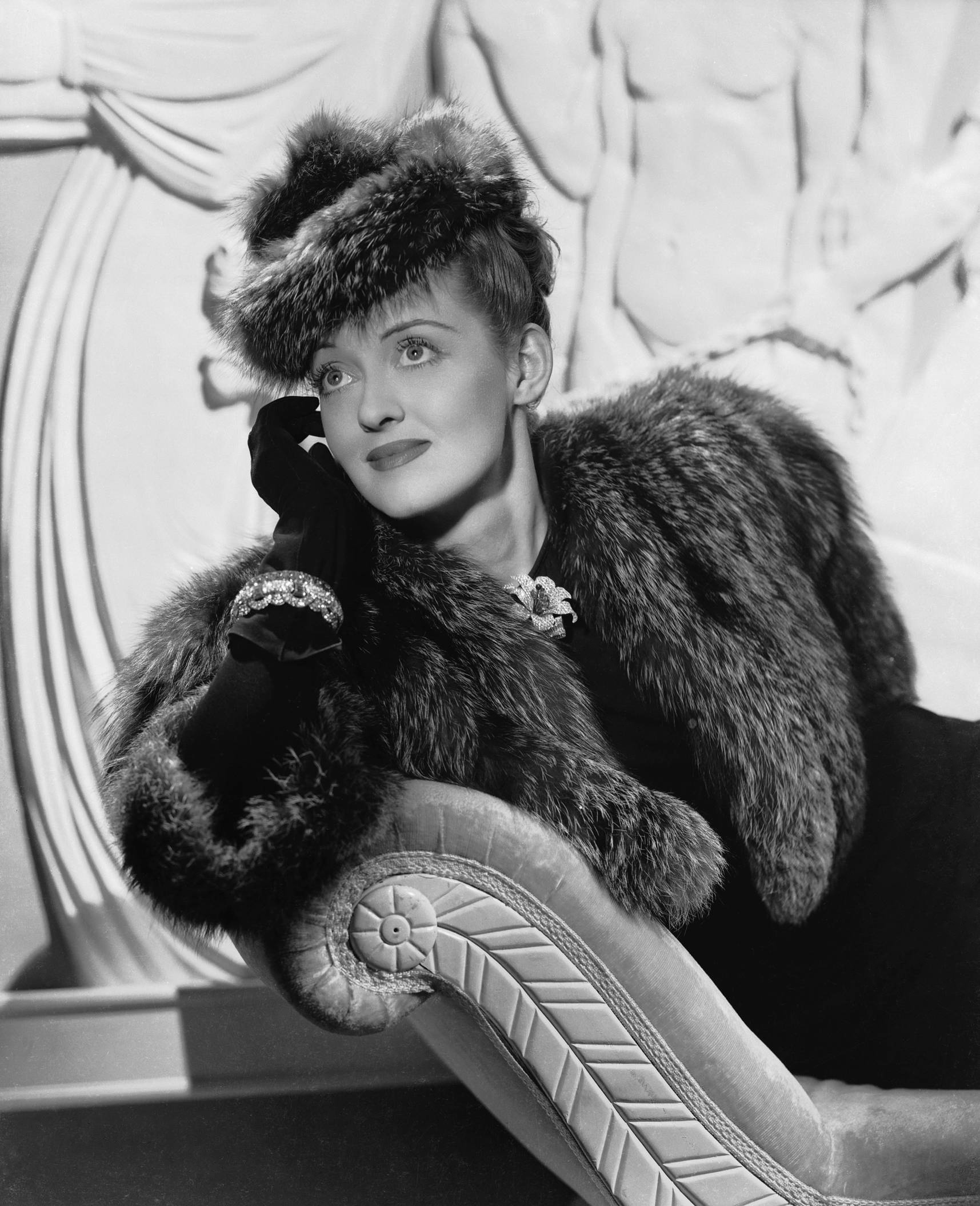
Bette Davis received her fourth Best Actress nomination for playing Judith Traherne, a careless young socialite diagnosed with a fatal brain tumor in the melodrama Dark Victory. I really did not know until yesterday that Bette Davis was actually a serious threat to win over Vivien Leigh. But we all know who got the award after all. I guess Greta Garbo and Irene Dunne might have got some votes after their big losses to Luise Rainer.

Dark Victory is a quite a mediocre and not very credible melodrama. I just really wasn't able to fully concentrate and it never grabbed my attention. The lowest point in it is easily the awful screenplay: it's full of mistakes and lacks every reality, though the character of Bette Davis is worked out quite well. Everyone else is so one-dimensional and I always thought that they were just there to make Bette Davis look better. You might think that Humphrey Bogart is great, but he really did not have anything to work with. He was (along with Ronald Reagan) the most useless character.

Bette Davis is an interesting case for me. I really love her works late in her career (All about Eve or Whatever Happened to Baby Jane?), because there's so much irony, wit and deep human drama in them, but I feel rather mixed about her earlier films. I love Jezebel or Now, Voyager, but I couldn't stand The Letter for instance. In many ways she's just like Meryl Streep: sometimes she gives amazing performances in great movies and sometimes she's just too melodramatic in awful films. So I was extremely worried about Dark Victory. It's true that people seem to love it, but that was the case with The Letter too.

I'm not saying that I am as disappointed as I was with The Letter, but this wasn't enough for me either. This role is 100% Bette and it totally fits her, but there was something again that I was missing.

But back to the role: this is a pure tearjerker with predictable character development. You know exactly what's going to happen, when and how. There are no surprises in the whole movie or in Bette's performance. That's not totally her fault actually, as it's more due to the horrible screenplay which really doesn't let her be complex, despite giving a baity role.

In the beginning, Judith is a charming, but reckless young girl, throwing parties, riding on horses, chatting, having fun. Her world however turns upside down, when she gets to know that she has cancer. Bette Davis showed the reactions of this young woman quite well: first she's in denial because she's afraid, but she eventually finds peace and prepares for death calmly. This aspect of Bette's performance is flawless, in my opinion. She understood Judith's emotions perfectly and got them across quite easily to the audience.

And here comes a very big BUT: she never really grabbed my attention. I'm not saying that I was not moved by her occasionally, but sometimes I had to force myself to pay attention to her as sometimes she was a bit boring. I don't mind when a performance is overly dramatic (see my review of Vivien Leigh), but this was a bit too much sometimes. Those big tears sometimes really made me angry. I would have sold half of my kingdom for some subtlety.

There are great and very memorable scenes though. Like the one where she discovers the truth at the doctor's office while watching her own case file or when she asks the singers to go on with the party, because "time doesn't sleep". These sequences really rocked and certainly impressed me and they made me rate her much more positively.

So to sum up, I saw a performance that disappointed me to a degree, but there are such strong scenes that I really cannot say that I did not enjoy it. I did not find her as great as everyone else, but she's quite good. My rating will be higher than you would think, but I find it reasonable.


So what do you think? Any thoughts or observations? I am EAGER and ANXIOUS to read the COMMENTS! :)

Vivien Leigh in Gone with the Wind

Friday, October 22, 2010

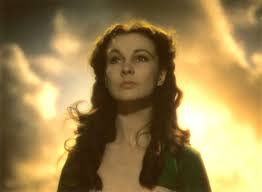
Vivien Leigh was a lucky actress. She was nominated for two Best Actress Oscars and won both of them. AND everybody agrees with both of her wins. Quite rare thing. She received her first acclaim for her legendary Hollywood debut as Scarlett O'Hara, a stubborn and greedy Southern belle in The Classic, Gone with the Wind. Really, I think she had that Oscar in her bag when she got the role of Scarlett. I don't think it was much of a surprise for anyone that she won the Academy Award.

Gone with the Wind is a brilliant movie, a true classic. Actually if you ever asked someone with a minimal knowledge of movies to say the title of only ONE classic movie, it's 60% sure that they would say Gone with the Wind (or Casablanca). David O. Selznick was really not stingy with the movie, consumed a handful of directors, but it was really worth it: GWTW is an eternal classic, the one that everyone adores. But it wouldn't be the same without the great actors: Clark Gable was ROBBED of that award as much as Hattie MacDaniel deserved that statuette (=very much). Olivia de Havilland is good, though I'm not a great fan of hers.

But really, this movie IS Vivien Leigh. I mean, the story how she got this role is a legend in itself: this unknown British stage actress won the role of Bette Davis and Katharine Hepburn. And this was heavenly mercy: could ANY of you imagine "drama queen" Davis as Scarlett or Hepburn? I even dare say that they would have RUINED this movie. Scarlett was, is and always will be Vivien Leigh.

There are iconic performances like, say, Anne Bancroft in The Graduate or Gloria Swanson in Sunset Blvd. And there's Vivien Leigh in Gone with the Wind. When I love a certain performer in a movie, I like to re-watch the most memorable scenes. But really, if I wanted to re-watch Leigh's greatest moments, I would have to start Gone with the Wind all over. From the very beginning to the end, you cannot take your eyes off her. Her presence is just magnetic: although the character is far from likeable, you just love her acting. When I had to stop the movie to change the disc, I was so overwhelmed by her that I couldn't move really.

Scarlett's so sharp-toungued, so witty, so romantic, so beautiful, so sexy. Throughout the movie I could always see something in Leigh's eyes (which is quite different from her actual personality), which made her look like a wild, sexy tiger. And Scarlett really is a wild, sexy tiger.

As for sexiness: Leigh and Gable were able to create such emotional and sexual tension, that it almost burns up the screen. Their chemistry is just amazing, it's probably a real example for nowadays' movies: you don't have to have frontal sex scenes to create amazing tension.

There's another aspect of her which is truly outstanding: the magnificent character development. She starts out as a spoiled girl, who loves being pampered and adored. Then her heart becomes more and more stiffened, she becomes extremely moneyed and greedy, but ends up being a broken-down, sad and disappointed woman. She does not get from point A to B only, but at least to point F. She's truly believable and convincing in the role. Somehow the border between the actress and the role disappeared. Really, if someone says Scarlett O'Hara, I instantly think about the brilliant, charming and beautiful Vivien Leigh.

Many people love to idolize the character of Scarlett and her bitchiness, but here's my answer: people do NOT love Scarlett, it's Leigh's brilliance in the role that they admire. She's in fact so great that she could amaze anybody regardless of age or anything. She's as popular with a 14-year-old as she is with a 70-year-old. She was the first Oscar-winner that I saw (I know I said once that it was Jane Fonda, but I was wrong) when I was 9 or 10 years old. And I was just as fascinated by her as I was now. If there's a defintion of a legendary, classic performance it's definitely Vivien Leigh.

So to sum up the raving, we can be grateful for the miracle that was born on-screen 71 years ago. I could go on and on, I could write a novel as long as Gone with the Wind itself about her, but I just wrap up by saying that I was overwhelmed, entertained, delighted, amazed, moved, amused and mesmerized by Vivien Leigh. This is the way I can honor her. Thank you, Ms. Leigh.

Damn, do I need this silly rating for her?

What do you think? I know I promised this post for tomorrow, but I had time and I couldn't wait! :) I'm so overwhelmed that I will withdraw my change in the rules of the prediciting contest and you can still predict.

Greer Garson in Goodbye Mr. Chips

Sunday, October 17, 2010

Greer Garson, the Oscar-queen of the forties received her first nomination for playing Katharine the lovely wife in the movie Goodbye Mr. Chips, her movie debut. Now I'm pretty sure that there was only one option for the name of the winner and it wasn't Greer Garson. Frankly, she had the least chance to win. She was a newcomer and did not have a very baity role.

Goodbye Mr. Chips is a very good (though a bit sentimental) movie about a shy, kind and friendly teacher, who's an icon of his school. It's quite probably the first high-profile "inspring teacher movie", it's the origin of films like Dead Poets Society. Robert Donat (in somewhat an upset) won the Oscar which seemed to be going to one of his more highl-profile adversaries. Although I thought that he was occasionally very moving, I cannot say that I agree with his win (I don't know if I would vote for Gable, Stewart or Olivier). But as I said he's quite great and he himself makes the movie.

With the help of a great SUPPORTING player, Ms. Greer Garson. That leading nomination is not that justified as she's quite far from being the lead (or the co-lead for that matter). I think Fritz put it quite well in his review about Garson: in those day it wasn't about the length of the performance. There were stars and no stars. Garson was going to become a real superstar in the forties so you get the picture now I think.

My biggest problem is not the length of the role, you know that it never influences me (Geraldine Page, Patricia Neal etc), but Katharine's character is bit one-dimensional and underwritten. Too bad. That would also be a disadvantage if she was nominated supporting (though she probably would have won that way), because not even the greatest performers can do miracles with a thin part.

However, I must say that I was totally charmed by Greer Garson's presence throughout her time on screen. Greer's beauty, elegance and dignity can always shine and save her from being pale as actually (despite the fact that I thought that the part was underwritten and weak) I never felt that she was herself weak. Also, it's quite great that had I not known that this was her first motion picture performance I really would not have noticed since she moves with such experience, confidence and strength. This is instantly visible and impressive.

She makes it perfectly clear how life-loving and romantic this woman is. She truly wants to be with Chipping, loves her very much and supports her no matter what happens. I may even say that this performance is the origin of the caring wife roles.

Her first scene is rather usual and predictable. Chipping wants to save her, but things turn out oddly and they have to stay together for a while and share a coat. Right here Garson shows a face of Katherine, which is quite loveable, but unfortunately it never changes. I never really felt that her performance was going from point A to point B. There's absolutely no development, all she has to show is charm.

I would not be fair though if I wouldn't mention the very memorable Christmas scene, where she is really heartwarming and moving. When she says that her husband will be the headmaster once, Garson is so astonishingly real, that there wasn't doubt that he will be one day. This is quite probably the most memorable (and unfortunately last) sequence with Garson in it. Too bad.

To sum up, this was a heartwarming and charming performance, which wasn't full of opportunities, but Garson did her best in my opinion and was able to show her immense charisma for the first time on screen. I thought I was giving her less, but I wouldn't be fair if I gave her at least this much.

So I said that I would write on Friday, but things turned out more brightly and I had time. What do you think? It's time to give your last predictions as I made my prediction contest a bit more difficult now.

The Next Year

Saturday, October 9, 2010

Now we are moving along with the next year, which is said to be the best year of movies ever. So it's quite understandable that I can't wait to see the performances and the films. Let's just start 1939.

1939


So the nominees were:
  • Bette Davis in Dark Victory
  • Irene Dunne in Love Affair
  • Greta Garbo in Ninotchka
  • Greer Garson in Goodbye, Mr Chips
  • Vivien Leigh in Gone with the Wind*
So what are your predictions? Even I don't know what it will look like as I have seen only two of them. We'll see. I'm quite excited.

Destry Rides Again (1939) **1/2

Friday, May 14, 2010

destryposter
It’s 1939 and things aren’t going well for Marlene Dietrich in Hollywood. Her longtime collaboration with Josef von Sternberg is over and she hasn’t made a good film since The Garden of Allah in 1936. And, then, as luck would have it, she’s cast against type as an unglamorous saloon singer in a satirical western. Who knew that all this sophisticated international star needed was a good old-fashioned non-typical American western to revamp her career?

Based on the Max Brand pulp story of the same name, this film was a remake of the 1932 Tom Mix film (and subsequently was later remade in 1954 with Audie Murphy). George Marshall directs a pair of western virgins in Dietrich and James Stewart (playing the title role) and does his very best to parody the classic Western. For example, Stewart plays a pacifistic unarmed lawman in a town where flying bullets are the norm. Released in the same year as Stagecoach, the film that set the classic western standard, Destry Rides Again sets its own unique template that other films like Cat Ballou and Blazing Saddles would later borrow from.

Dietrich,-Marlene-(Destry-Rides-Again)_03 The story take place in a town appropriately named BOTTLENECK—primarily because just about the whole movie takes place inside the Last Chance Saloon (where, yet another bit of irony here, Dietrich’s character works). Owned by a shady gambler named Kent (Brian Donlevy), the saloon is a hotbed for gunfights and cheating gamblers--most notably Kent himself. Right from the start, we see Frenchy (Dietrich) helping Kent cheat the hapless Lem Claggett (Tom Fadden) out of his $10,000 ranch by spilling hot coffee on him and allowing his cards to be switched. When Claggett complains to Sheriff Keogh (Joe King) that he was cheated, the sheriff confronts Kent and is shot and killed (off-screen).

Later, we see Frenchy doing her best Mae West impression as she sings “You’ve Got That Look That Leaves Me Weak” to a sexually charged audience. Soon after the song ends, Kent has the corrupt Mayor/Judge Slade (Samuel S. Hinds) announce the town drunk, Dimsdale (Charles Winninger), as the new sheriff. Where is the esteemed new sheriff upon this announcement? Passed out on the floor, only to be roused by a whisky to the face. Oddly enough, he decides now is a good time to become sober. It seems that before he was a souse he’d been the deputy of Marshal Destry, a famous and respected lawman. He announces he’s going to hire Destry’s son, Tom (Stewart), to help bring order to Bottleneck.

Dimsdale’s (and also the town’s) expectations that Tom Destry will strike fear into criminals are quickly obliterated when a mild-mannered Tom emerges from the stage holding a parasol for fellow passenger, Janice (Irene Harvey). r2-destry-rides-again-pdvd_009 Immediately he becomes the source of ridicule, especially after he reveals that he doesn’t carry a gun and that he drinks milk instead of whisky. Frenchy goes so far as to give him a broom and bucket as tools that he can use to clean up Bottleneck. James Stewart is priceless in these scenes, with his famous aw-shucks attitude. With this characterization, George Marshall has now established the a-typical western sheriff/hero.

However, nothing is more priceless than the catfight between Frenchy and boarding house owner Lily Belle Callahan (Una Merkel). Angry that her Russian émigré husband Boris (Mischa Auer) has lost his pants to Frenchy in a card game, Lily accuses Frenchy of cheating Dietrich and cat fight and all hell breaks lose. In yet another a-typical move, Marshall doesn’t have the obligatory barroom brawl occur between men but between two scrappy females. Perhaps one of the longest catfights ever, both women (without the aid of stand-ins) engage in punching and wrestling (among other things) one another to the ground (where they roll around for an extended amount of time) until Destry pours a bucket of water on them. Oh, no he didn’t! This enrages Frenchy and she turns her wrath on him. After engaging in the same tactics she used on Lily, she grabs a gun and aims it at him. Deciding not to shoot him, she throws everything she can get her hands on at him and even finds herself on his shoulders at one time. This scene is absolutely side-splitting hilarious—her wrath and his bewildered amazement are priceless.
After Tom escapes the saloon, Dimsdale threatens to fire him for being the town laughing-stock. Tom tries to convince him that they can restore order without using guns. Explaining that a gun didn’t do his father any good when he was shot in the back in Tombstone, Tom convinces Dimsdale to give him a chance. We soon learn that just because he doesn’t want to carry a gun it doesn’t mean he can’t handle one. When he stops a group of cowboys from shooting their guns in the air, Tom borrows a gun and puts on a clinic to the amazement of onlookers. Soon Tom learns gal_Stewart_James_4 about the trouble between Kent and Claggett and decides that Frenchy is the person to get answers from. Over coffee in her room, Tom makes mild insinuations that Frenchy purposefully dropped coffee in Claggett’s lap to distract him from his cards. Offended, Frenchy throws him out, but not before he makes a sly comment about her not wearing so much makeup because it covers up her real beauty. As time wears on, Frenchy begins to admire Destry and even offers him her lucky rabbit’s foot and advises him to stay out of dark places.

With his newly sworn-in deputy’s, Boris, help, Destry tricks Kent into believing that he knows where Sheriff Keogh’s body is. When Kent sends one of his thugs to check on the body, Boris and Dimsdale tail him and arrest him when he leads them to the body. To avoid the corrupt Mayor Slade presiding over the case, Destry sends for a federal judge. This causes Kent to plan a jailbreak for his man. Fearing that Destry will be killed in the jailbreak, Frenchy sends for him and tries to distract him by telling him she’s leaving town and wants him to go to New Orleans with her. When shots ring out, Destry rushes back to the jail to see the prisoner has escaped and that Dimsdale has been fatally shot. Having had enough, Destry arms himself with his father’s guns and with the help of the fed-up decent townspeople, storms the saloon. Frenchy even tells all the ladies (with pitchforks and rolling pins, nonetheless) they should help their men. Annex%20-%20Stewart,%20James%20(Destry%20Rides%20Again)_02 While the townsfolk are taking care of Kent’s men in the bar, Destry climbs up to the second floor in search of Kent. Just as Kent is about to shoot Destry, Frenchy throws herself in front of him and is mortally wounded. After shooting Kent, Destry holds Frenchy in his arms and honors her last request for a kiss. The way Frenchy rubs away her lipstick at this moment is heartbreaking. In the end, order is restored to the town, but not before Destry has lost another two people he loved to guns.

Before he became the serious cowboy/hero in such westerns as Winchester ‘73 and Broken Arrow, Stewart got to play the a-typical western hero. His easy-mannered performance is not a surprise, as it was his calling card on just about every film he ever made, but it is interesting to watch his Destry spin yarns into valuable lessons. His Destry reminds me of a Wild West Aesop.

Dietrich, of course, had her career revived by this film. She would go on to make two other westerns, The Spoilers and Rancho Notorious, but neither topped her performance here. She shows so many sides to her character it’s difficult to keep up: sassy, sexy, fierce, humorous, fearful, and loving. The bawdiness she puts into her musical numbers, most notably “See What the Boys in the Back Room Will Have”, is wickedly enjoyable. She took a big risk playing against type here, but in the end it worked in her favor, as she started to play more diverse characters.

Hilariously entertaining on several levels, this is a true classic.


Blogger news

Blogroll

Most Reading