Pages

Powered by Blogger.
Showing posts with label 2004. Show all posts

222. Something the Lord Made

Tuesday, September 25, 2012

222. (25 Sep) Something the Lord Made (2004, Joseph Sargent) 55


Something the Lord Made makes the odd move to dramatize heart surgery as much as the institutional racism that complicates the partnership of Alfred Blalock and Vivien Thomas. That makes for rather unbalanced scripting since it's clear Blalock and Thomas's work proved successful. The film is minor, but moving. Alan Rickman's more impassioned performance stands out here while Mos Def is underplaying perhaps too much. They have a good dynamic opposite one another which makes their volatile friendship believable.

173. Dead Birds

Monday, August 27, 2012

173. (27 Aug) Dead Birds (2004, Alex Turner) 28


I'm all for slow builds in horror movies, but Dead Birds takes forever to offer up a scare. By the time it finally does, it's well past the point of mattering much. Alex Turner's weak grasp on genre filmmaking is rivaled by his inability to make a convincing period piece. Seems whatever money they had for Dead Birds went to sets and costumes when dialect coaches were sorely needed to give this some actual authenticity.

Deja Vu (2006) vs. Man on Fire (2004)

Thursday, August 23, 2012


In remembrance of Tony Scott, I finally watched these two action films, which both star Denzel Washington. Find out who wins after the cut. (SPOILERS)


Deja Vu
The rap sheet. 
Deja Vu has a 55% rating on RottenTomatoes and a Metacritic score of 59. It received a Saturn Award nomination for Best Science Fiction Film. Man on Fire has a 39% rating on RottenTomatoes and a Metacritic score of 41. It received a Critics Choice nomination for Best Young Actress.
Winner: Deja Vu

The setup.
In Man on Fire, an ex-assassin must avenge the death of the girl he was assigned to protect. In Deja Vu, an ATF agent must solve (and prevent) a terrorist bombing on a crowded ferry.
Winner: Deja Vu

Man on Fire
The execution.
Both have all of the bells and whistles. Deja Vu has time-jumping and plenty of explosions. Man on Fire has payback and multiple deaths in the process of vengeance.
Winner: Deja Vu

The ending.
In Man on Fire, the hero dies to save the little girl, but they are both finally at peace. She's free to live, and he's free to let go. In Deja Vu, the present hero dies in the past, leaving his old self to deal with the cleanup of the averted disaster.
Winner: Man on Fire

The wild card.
Deja Vu has Jim Caviezel and Pam from "The Cosby Show". Man on Fire has Christopher Walken. 'Nuff said.
Winner: Man on Fire

Deja Vu
Winner: Deja Vu beats Man on Fire 3-2

Ratings, by the way: Deja Vu - ***1/2, Man on Fire - ***

112. Seed of Chucky

Monday, May 14, 2012

112. (13 May) Seed of Chucky (2004, Don Mancini) 46


Jennifer Tilly deserves an award for her willingness and determination to mock herself and career. Unfortunately, the child of Tiffany and Chucky is unbearably grating. A sequel where the dolls tried to take over Jennifer Tilly's body on their own would've been so much better. In the same sense that Scream 3 gets too meta for its own good, the same is true of this Child's Play installment.

Crash

Thursday, May 10, 2012

Crash, 2004
Directed by Paul Haggis
Nominated for 6 Oscars, Won 3
Up Against: Brokeback Mountain, Goodnight and Good Luck, Munich, Capote

Crash tells the story of racism in LA. It tells 6 different stories, all of which don't seem to connect with each other at first, but as the story goes along, it does. I'd explain the intersecting stories, but I'd end up explaining the whole movie to you. The first storyline is about a middle-aged white couple, the man of whom is a dsitrict attorney and uses race as a political card in his career, and his wife who was recently car-jacked feels that her biases and views towards those who aren't white are justified and therefore not racism. Then we have the car-jackers; 2 young black men, one of whom is constantly complaining about racism half the time, and uses it as an excuse the other half. Then we have 2 cops, the experienced one a racist pig, the other who believes he doesn't hold those views at all, and hates the experienced cop for his. We have a black filmmaker and his wife, who were recenetly harassed by said cops, the wife semi-molested during the experience, and feels her husband doesn't support their black background and tries to be "too white". Then we have a Latino man, who is trying to make a better life for his daughter. And a Persian family trying to make it in America with their store, who have recently purchased a gun.

I'm going to put it out there right away, this movie tried WAY too hard to get it's "point" across, that racism still happens today. In all honesty, most of the things that happened weren't really racism, just people making stupid decisions. Granted, there were a lot of examples of racism, but there were also a lot of examples of people acting like idiots. But that's besides the point. This movie just took everything to the extreme to make a point, and it really lowered it's value. This year's The Help also dealt with racism, but did it in a much better way, which wasn't throwing it in your face every 5 seconds.

Ludacris's character was the car-jacking, racism complainer. All we really did heard from him was about how racism is unfair, how racist people are, and how he don't ever steal from black people. I understand him complaining at first, but it got really tiring after over an hour of straight complaining whenever he was on screen. Granted, he did a great job in his role, and I thought he was quite well acted.

This is the same with pretty much all the character. I know it was a film about racism, but in other films about racism, it's not a constant rant about race, which is what this movie was. Sure, there were some powerful moments in the film, like when the filmmakers wife is rescued from the car crash just before it exploded by the racist cop who semi-molested her only 12 hours before. Powerful, and it wasn't as blatant as some of the other scenes, and had much more subtlety to it.

Anyway, enough about my rant about it's obviousness. Other than that fact, the acting was quite good. While most characters spent very little time on screen (another problem of the film, I felt like I was being introduced to someone new, constantly), they performed well. I was pleasantly surprised by Ludacris. I'd had no expectations from him, but he was quite good. And I really enjoyed Sandra Bullock as the cold and racist woman. Things like cinematography were good too.

Overall I spent half the movie going "oh my gosh..." and rolling my eyes, or being like "really? did that just happen?". I also laughed a lot. This movie was just too corny and hoaky, and while it did get it's message across, loud and clear, it was just too much. Also, has anyone ever heard of this movie?

4/10

A Very Long Engagement (Un Long Dimanche de Fiançailles) (2004) ***

Tuesday, January 3, 2012

long
This visually stunning 2004 French film from director Jean-Pierre Jeunet is a beautiful and touching testament to all that is good about French cinema.  Only in le cinéma Français could you depict the horror of World War I and its trench warfare with a wryly comedic touch, while at the same time tell both a love story and a revenge story without engaging in oversentimentality or malice. The acting, particularly that of the females, is nuanced and stellar. However, it is Bruno Delbonnel’s extraordinary (and Academy Award nominated) cinematography that makes this such a striking piece of art.

averylongengagement22The always beautiful and spunky Audrey Tautou plays Mathilde, a polio-crippled woman who refuses to believe that her fiancee Manech (Gaspard Ulliel) was killed alongside five other men at the ridiculously named Bingo Crepuscule trench.  All five men had been convicted of self-mutilation and thrown out into No Man’s Land between the French and German trenches to bring an end to a stalemate.  Conflicting stories as to whether any of the five men survived sends Mathilde all over France looking for answers. Along her journey she meets a unique and colorful assortment of men and women who fill in the missing parts of the story. What’s great about these characters is that none of them are useless—they all have an important role to play in moving the story along.  However, it can be difficult to keep everyone straight, so a second viewing might be necessary, especially if you watch the film subtitled.  Still, I think the pacing of the story is told in such a way that most non-French speakers can keep up with the unfolding stories.

What I like about Tautou’s Mathilde is that she is a woman not above using her disability to get what she wants.  I know that sounds politically incorrect here in America, but in France it’s quite comical to let a perceived weak person use their plight to get what they want.  In France, the weak are to be revered, so when Mathilde uses this to her advantage it’s just funny.  What makes this flawed character trait even more wheelchairwickedly amusing is that she is the strongest character in the entire film.  Whether she’s dealing with doubtful family members and quirky questionable people,  or making small deals with herself (such as: if the dog comes in the room before dinner she will continue to look for Manech), Mathilde is someone for whom you feel compelled to root.  The scene that stands out most for me is when she attempts to beat Manech’s car to the bend in the road—another deal which would ensure that he makes it home alive.  Watching her constricted body attempt this feat is heart-pounding and uplifting. The body control that Tautou had to exhibit here is mind-blowing.  It’s just something you have to behold for yourself to fully appreciate how powerful a performance she delivers throughout.

It is a given that Tautou is the star of the show, but both Jodie Foster and especially Marion Cotillard give standout performances here. Foster plays Eloide Gordes,  the wife of one of the men believed killed alongside Manech.  She and her husband Benjamin (Jean-a-very-long-engagement-2004-jodie-foster-jerome-kircher-pic-5Pierre Darroussin) have five children (none of which he fathered) and if they have a sixth he would be discharged.  So he asks her to sleep with his best friend Bastoche (Jerome Kircher).  What ensues is a story of jealousy and heartbreak—and the eventual self-mutilation of both men and then Bingo Crepuscule. You wouldn’t know that French wasn’t Foster’s mother tongue, as she speaks it with ease.  Here she delivers a haunting performance of a woman who lost both her husband and lover to the cruelty of warfare. 

I wouldn’t be doing service to this film without commenting on how riveting Marion Cotillard is as Tina Lombardi.  She obviously channeled Jean Moreau’s performance in The Bride Wore Black (1968) as she played a prostitute hell bent on cotmeting out punishment to the men she believes killed her Corsican lover Angel (Dominique Bettenfeld)—another of the five men at Bingo Crepuscule. Tina is a stone-cold ninja in how she executes a handful of French officers.  Her outfits alone are marvelous (what French woman wouldn’t come dressed for the occasion!), but the way she uses them to kill is even better. My particular favorite execution is when she kills the man who lazily neglects to pass along a pardon for the five men.  After tying the man to the bed and allowing him to think something kinky is about to happen she proceeds to shoot the mirror above the bed and shards of glass fall down on his naked body.  How ingenious can you be!  Cotillard won a César for Best Supporting Actress for this role and she deserved it. Now, if she would only return to France and stop making American films that don’t exhibit her talents to the fullest (an aside, she was the best thing, other than the visuals, about Inception)!

a-very-long-engagement-2Finally, what makes this film so beautiful is the expert cinematography of Bruno Delbonnel.  His lens poignantly captures the horrific grimness of the battle scenes at Bingo Crepuscule. Stark and appropriately captured in gray and brown tones, these scenes are powerfully displayed and are spectacular to watch.  Besides his expertly depicted battle scenes, he presents the Brittany countryside in wide, lush, sweeping shots that make you want to go there on your next vacation.  My two favorite sequences come at the Picardy war cemetery and the military archives.  The cemetery shot just overwhelms a-very-long-engagement01you with the angle positioning of the camera and the broadness of the shot—all those white crosses with Mathilde in the middle of it—notice how small she truly looks.  The military archives sequence uses complex shots, with above-head perspective and low-angle shots the look upward toward the immensity of the situation and place. It is Delbonnel’s camerawork that makes this such an enjoyable film to watch.


003. She's Too Young

Monday, January 2, 2012

003. (01 Jan) She's Too Young (2004, Tom McLoughlin) 39


Marcia Gay Harden's performance is amazingly sincere, sort of lending credibility to some scenes that are far beneath her. For instance, she awkwardly crashes a high school party full of sex, booze, and drugs in search of her daughter. There's certainly hilarity in the deadly serious way with which teen sex and syphilis are treated, demonized in a way more typical of 1980's after school specials. The weird conclusions that are drawn here -- that both overbearing and lax parenting make teenage daughters trampy -- make this particularly objectionable. But Harden gives a few scenes a tinge of poignancy.

The Final Conclusion - Best Actress 2004

Thursday, November 10, 2011

2004


So the much anticipated ranking is:

What could Hilary do in this movie, where a great actress like Margo Martindale becomes a caricature? Nothing, but remaining what the screenplay intended her to be: a cliché, nothing more than that. She does the Oscar scenes the way she's supposed to, she's easy to sympathize with so what else can I ask for? Truth and honesty, no cheap, shallow emotions.

I'm saying that I was once again impressed by Catalina's screen debut as Maria. She played this character with lots of dedication and confidence, while avoiding the obvious traps. She never becomes 'obvious' in her acting, totally identifies with her character and develops her wonderfully. I can only praise her for her incredible, extremely heart-breaking performance.

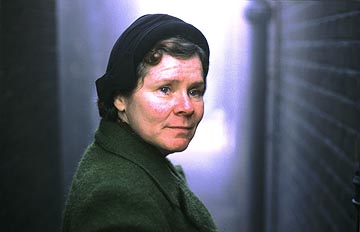
After all, I can't say anything negative about Imelda Staunton as Vera Drake. Although I don't love her as much as I used to, I still find her simply fantastic. She completely became this character and wonderfully played with the emotions. The way Imelda reveals all the layers of Vera and creates dramatic tension on the screen is just unbelievably great. Unforgettable, remarkable work.

Pure delight! Annette's performane as Julia reminded me of Pauline Collins in Shirley Valentine. It may not be a huge dramatic achievement but she's so delightful and I was so in love with the character that I couldn't get enough of her. She took this wonderful part and turned it into a fascinating, wonderful creation that's incredibly delightful.

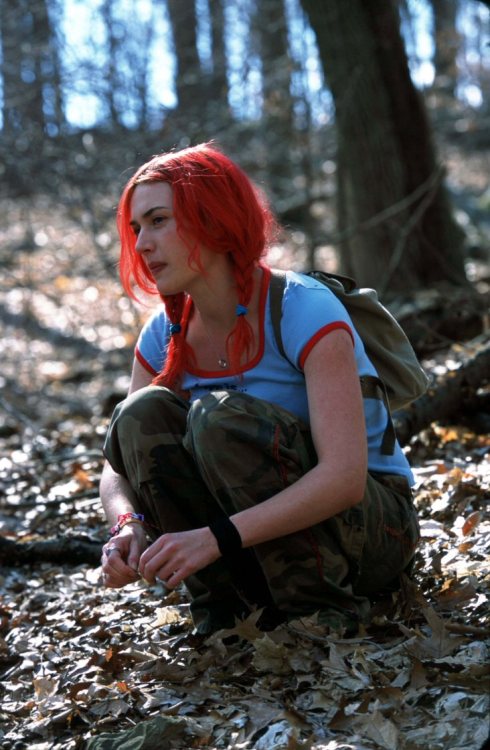
A no-brainer pick. Honestly, the "Am I ugly?" scene just locked and sealed this win and there was no other way. Kate is just as great as Clementine as people say, if not better. She evokes all the great feelings of Diane Keaton's Annie Hall without shamelessly copying her. Kate's Clementine is an utterly fascinating, unique creation bursting with creativity. Kate solved her task flawlessly and she deserves nothing but praise for it.


So I can proudly announce
that the winner is...
Kate Winslet
in
Eternal Sunshine
of the Spotless Mind
There you go, Wonder Woman. :)

Final thoughts: Wonderful year, horrible winner. Really Academy, really? I am stunned by this decision. Didn't they watch the other movies???? Kate was such an easy winner here. Her performance only got better in time. Just like Kate was the winner, Hilary was the no-brainer last but I'm not talking about her anymore. The other three were, however, the hardest to rank. It was incredibly difficult for me. I picked Annette second, she's a real delight here. That must raise some eyebrows but I honestly don't care. I was considering ranking her fourth but I got to a point where I found: hell, I liked her most next to Kate. To be perfectly honest, I would have voted for Annette as an Academy member because she was so great and overdue. OK, she's brilliant, that's it. Imelda and Catalina are pretty much equal for me, therefore their order was kind of random. :)

Omissions: Uma Thurman in Kill Bil Vol. 2.

About the next year: You just never know what can happen. My sudden encounter with this year was a shock and I never thought I could do it. It's gonna be very exciting, with four performances I haven't even seen. Clues:
  • DON'T SPEAAAAAK!
What do you think? Any thoughts on your mind?

Hilary Swank in Million Dollar Baby

Thursday, November 3, 2011

Hilary Swank received her second Best Actress nomination and win for playing Maggie Fitzgerald, an aspiring female boxer in 2004's Best Picture winner, Million Dollary Baby. Hilary Swank wasn't considered a front-runner at the beginning of the awards season as Imelda Staunton or Annette Bening were expected to win their first Oscars. Imelda was the critics' darling, Annette was the industry favorite. And there came the stupid Golden Globes that like to mix up things and give the edge to the stars (see Sandra Bullock) and then the SAG followed because (I guess) they wanted to make up for the Boys Don't Cry loss of Hilary there. These two awards created lots of buzz and in the end, Hilary's second Oscar became inevitable and she became one of the most hated actresses ever to win the award. Many compare this to Sally Field's second win though I think the only similarity between them is that they both won two Oscars from only two nods (by that, you could even compare Hilary to Vivien Leigh so come on...).

Although this was only my second watch of Million Dollar Baby, I felt I've seen it many-many times. In Rocky, The Fighter and the list could go on and on. However, Million Dollar Baby is the worst one of ALL of them. It's obvious, overly sentimental, unoriginal, extremely manipulative and, above all, awful. Yes, in my humble opinion, this choice is one of the worst ones ever made by the Academy. However, it's not Clint Eastwood who's responsible for this. In my book, he's a very good director and the directing is decent in this one but the screenplay and the story is just horrible (the screenwriter also penned Crash, just sayin'). Morgan Freeman won an Oscar but what was exactly worthy about him? His bored narrations or tired looks? Three words: Thomas Haden Church. :)

I admit that Hilary Swank is not among my favorite actresses. I am also quite pissed by the fact that she has not one but two Oscars when great actresses like Barbara Stanwyck, Irene Dunne and Glenn Close (though I hope she wins this year) never received Academy Awards. One just keeps wondering about the absurdity of Hilary's two time Oscar-winner status, while such grand dames are Oscarless. It's a real shame, in my opinion. Let's not kid ourselves: Hilary Swank is an obviously limited performer. She's good at playing masculin women but apart from that I cannot really imagine her in other roles. Also her very obvious campaigning and Oscar baiting is something very annoying to me (in many ways, she's like Melissa Leo).

Because of the above mentioned things, it's become quite chic and trendy to hate Hilary's second win for Million Dollar Baby. But does that apply to her actual performance? I've seen tons of people hating her for winning but that's mostly due to the fact that she won her second over Annette Bening and Kate Winslet. However, basically nobody talks about her actual work in Million Dollar Baby. To tell the truth, I didn't have much recollection of her work before I rewatched her.

Working from a terrible script, Hilary doesn't really have much of a chance to shine, in my opinion. Sure, there are the Oscar scenes but I don't see any real depth or emotion in them, just clear manipulation. On the outside, this role is a dream though it needs lots of hard work and dedication from the actress that I've actually seen from Hilary and yet the shallowness of the character didn't let her show what she could have done with the part. Maggie Fitzgerald is a moving cliché, much like everyone in the movie. The movie wants to make us believe that her development is real, however, I don't see any development in her at all. Even when her dream comes true, Maggie remains the very same person who's really not transformed by her success. The elliptic story of Million Dollar Baby really hurts this character and Hilary as she doesn't have the opportunity to develop her own character. Once we see her struggling and living a miserable, poor life and twenty minutes later, she's fighting at a championship. We see Maggie only as "a girl from a trailer park who has a dream".

Hilary's Oscar speech was particularly annoying to me as (after beating four way more deserving, fantastic performances from great actresses) she emphasised her cheesy sentence. "I'm just a girl from a trailer park who had a dream." Obvious and totally tasteless, she accepted in the manner of Maggie Fitzgerald. And you don't get much else from her work, either, only cheesy, "seen that, heard that, been there, done that" monologues delivered with a very annoying accent.

The movie's (and Swank's) obvious aim was to make us sympathise with Maggie and strangely enough, despite what I previously said, she succeeded on many levels. It's impossible not to feel for Maggie when we see her eating other people's leftovers and running at the beach, chasing her own dream. I admit being moved by her once or twice but I just felt so cheated, too. It was like "yeah, yeah, fine but not enough to win me over".

But again: what could Hilary do in this movie, where a great actress like Margo Martindale becomes a caricature? Nothing, but remaining what the screenplay intended her to be: a cliché, nothing more than that. She does the Oscar scenes the way she's supposed to, she's easy to sympathize with so what else can I ask for? Truth and honesty, no cheap, shallow emotions. I might be difficult to please (though I don't think so) but this performance made me angry for many reasons and never because won the Oscar over the brilliant other nominees.

What do you think?

Catalina Sandino Moreno in Maria Full of Grace

Tuesday, November 1, 2011


Catalina Sandino Moreno received an Oscar nomination for her debut performance as Maria Alvaret, a pregnant teenager who becomes a drug mule to provide for her family. Her nomination might have come as a surprise but I think it was a richly deserved one. Naturally, she didn't have much chance of winning, but they must have really liked her as she did receive the nomination after all. In her case, the nomination really was the reward and I guess it was more than anyone in her case would have dreamed of. I mean a first-timer Colombian actress rarely receives Best Actress nomination. Catalina's and Kate's nod prove that the Academy members were at the top of their game (in terms of the Best Actress nominations, not the actual horrible other nominees and winners).

Maria Full of Grace is a very interesting and raw movie, which had real emotional depth and something to say. Its atmosphere is somewhat similar to Central Station (though the two movies are quite different). I think I might even give it a Best Picture nomination (it's most certainly better than 80% of the Best Picture nominees). The directing is excellently done, you never feel that the movie is boring or that it has useless parts. The casting is so great and I particularly appreciated that they found very realistic characters.

It's a very dangerous thing to be nominated for your screen debut. You either get more and better roles or you ruin your whole career simply by trying to live up to the hype of your celebrated introduction. Sometimes, it really works out (just see Goldie Hawn or Barbra Streisand), but sometimes the actor disappered in a blink or have to work in second-rate tv series (Marlee Matlin or Timothy Hutton). Although her nomination came almost seven years ago, I still don't know which group Catalina belongs to. The energy of her work carried her to the Kodak Theater and yet I feel that she doesn't get good enough projects for her talent.

That being said, I'm about to assess Catalina's performance as Maria Alvarez, the desperate young girl, who becomes a drug mule. Just yesterday, I was raving about Imelda Staunton's heart-breaking realism as Vera Drake, a woman who does illegal things out of pure kindness and care. Maria, however, is in need of some money and she's just desperate to get a job. Both characters commit crimes, both are aware of the possible consequences and yet they do what they feel is right for them.

Catalina doesn't have the same amount of emotional scenes that Imelda gets as Vera Drake, she doesn't get caught (well, almost), she doesn't have breakdowns, courtroom scenes and yet there's something wonderfully wrenching about her work. From the beginning, I felt a kind of connection to her character and I really cared about her. She made Maria a fairly likeable person, someone who's very easy to sympathize with. I instantly developed a connection to her and wanted things to work out for her. It's very heart-breaking to see her very poor surroundings. Maria is used to doing some hard work and she's not afraid of talking back and stand up for herself. Although these scenes are excellently played by Catalina, I'd say they are the least memorable ones of all. Her bit rebellious teenager attitude is not the most interesting aspect of Maria.

Once Maria becomes a drug mule, the tone of Catalina's whole performance changes. It becomes extremely fierce and brutally raw, especially when she's practising how to swallow the pellets. There's something deeply heart-breaking about those moments. The scene where her plane to New York takes off and she holding on to her cross is just unbelievably great. Religion is a comfort for the character of Maria and somehow she develops a strange resemblance with the Virgin Mary. Both of them are teenagers (yes, the Virgin Mary was also a teenager, despite what you see in 50s Hollywood epics :P) who have to make sacrifices and accept what they have to do. The religious symbolism of this movie and Catalina's performance is just wonderfully solved and far from being forced or obvious.

The way Catalina develops Maria is also quite remarkable and especially from a first-timer. I felt lots of confidence in Catalina and she wonderfully showed the steps of Maria's growing up. She starts out as a desperate teenager and in the end, she turns out to be a grown, more responsible woman. There's only one louder scene involving her and she nailed that one, too. She never went too over-the-top and she made me realise one thing as she was crying: this girl is seventeen years old and is forced to do thing that not even adults should do. It's a deeply harrowing scene which has its effect mostly by how sudden and unexpected it really is.

So after all, I'm saying that I was once again impressed by Catalina's screen debut as Maria. She played this character with lots of dedication and confidence, while avoiding the obvious traps. She never becomes 'obvious' in her acting, totally identifies with her character and develops her wonderfully. I can only praise her for her incredible, extremely heart-breaking performance.

Imelda Staunton in Vera Drake

Monday, October 31, 2011

Imelda Staunton received her only Best Actress nomination to date for playing the title role of Vera Drake, a charming, incredibly helpful woman who "helps young girls out". Imelda Staunton was pretty much the critics' darling during the awards season. It was a big upset when she lost the Golden Globe to Hilary Swank and what once seemed to be a two-way race between Imelda and Annette Bening, turned out to be the time for Hilary Swank to repeat. I guess the other two nods for Vera Drake show that the Academy did fall for this film though I think Imelda wasn't famous enough to get ahead of Annette.

Vera Drake is an excellent piece of work by Mike Leigh though it's not perfect and I felt that sometimes it was a tiny bit obvious and didn't trust its audience enough. Other than that, it's a wonderfully written and directed film (very deserving of both nomination) that really made me cringe once or twice. Although it's not as devastating as Secrets and Lies, it's actually quite close to it. I was very impressed by the performances in this film and it was wonderful to see Mike Leigh's usual actors in very different parts.

Vera Drake is an incredibly lovely woman. You can only see her helping other people and from what we see from her, she's extremely unselfish, very loving, generous and giving. She bursts with energy and kindness, she just enlightens the mood of those close to her. I think Imelda Staunton, with her rosy cheeks and little chubby face, was the perfect choice to play this part. Vera is an incredibly simple woman and if they had given her role to a glamourous superstar, the result wouldn't have been half as effective and harrowing.

You may or may not rememember how much of a hyper I was about this performance. The first time I saw her, I was just amazed and totally chilled by this very emotional work and couldn't love her more. I was utterly surprised to find out that some of that huge amount of appreciation has disappeared. I often wonder why thos things happen. I see the very same work, the same way (if that's possible) so what could be different now? Easy: me. One of the great things about these reviews is that it constantly makes me reevalute my opinions and thoughts about a certain performance. If you would have told me two and a half years ago that I would incredibly dislike Joanne Woodward and be madly in love with Kate Winslet, I wouldn't have believed it. So it was timely to revisit this old favorite of mine.

I'm not saying anything bad about Imelda's work as Vera Drake as I still find it fantastic and amazing. The way she took this person and made totally her own is just unbelievable. Every time I want to write Imelda, I always start typing Vera. That tells a lot about how well Imelda identified with this character. In the beginning, we see her constantly smiling and humming cheerful songs and this spirit keeps up even when Vera is performing one of the abortions. Vera is incredibly calm and Imelda is so subtle in her acting.

Vera is an incredibly interesting character because of all the depths and layers inside her. Imelda was able to show so much of them and as a result, we got a brutally realistic human being. Vera herself doesn't think of her acts as abortions, she just says that she helps young girls out so that they can "get back their bleeding". For her there's no moral dilemma that holds her back as she's 100% certain that she's doing the right thing and helps these desperate women. There's something so soothing and yet very sinister about her character. You can see both an angel of mercy and a devil on earth. But which one is stronger in Vera? Imelda (and the movie) was clever enough to let the viewers decide for themselves.

The harmony of Vera's life is over when she's arrested for endangering the life of one of the girls. The change in the performance (and the movie) is so radical that it has an incredible dramatic effect. Suddenly Vera becomes a frightened anima, her wide smile disappears. Imelda is wonderful in the scene where Vera realises that the police came for her. She's acting only with her face and it was just unbelievable. She has numerous breakdowns and Imelda's cheerful presence turns out to be something really brutal and harrowing. She's quite simply amazing at the police station and courtroom scenes. She doesn't miss any of the opportunities and she constantly surprised me with her unusual choices. Imelda never went over-the-top with Vera and I always felt that it was the right way to play the reactions of Vera.

So after all, I can't say anything negative about Imelda Staunton as Vera Drake. Although I don't love her as much as I used to, I still find her simply fantastic. She completely became this character and wonderfully played with the emotions. The way Imelda reveals all the layers of Vera and creates dramatic tension on the screen is just unbelievably great. Unforgettable, remarkable work.

What do you think?

Annette Bening in Being Julia

Saturday, October 29, 2011

Poor Annette Bening, I seriously feel sorry for her. She has been so close to winning the Oscar three times at least (you might argue about her first nomination). Every time she turned on a performance to which people said she was going to win the Oscar, along came a younger actress with a showier, flashier and bigger performance and crashed Annette's Oscar hopes. Natalie Portman's win was much better received than Hilary Swank's second. Basically, the sometimes immense hate thrown against Swank might come from the fact that she beat poor Annette twice, who was (in my opinion) the runner-up both times.

Being Julia, in my opinion, is a delightful, wonderful movie. Although it's not among István Szabó's best works, it's extremely entertaining and very well-made. I enjoyed each and every moment of it, maybe partly to the nice memories that I have from the time it was released. When the movie had its premiere here in Hungary at the oldest movie theater, the media was crazy about the fact that Annette Bening came to us and there were even reports about what she had for dinner (!). A couple of months later, she was nominated for the Oscar. The hysteria went on and it became a sort of patriotic duty to be rooting for Annette Bening's win. At the time of the show, the commentators didn't even hide their disappointment when she lost. (I think something similar will happen with The Door and Helen Mirren).

I'm not a big fan of Annette Bening for one simple reason: I haven't seen enough of her movies. I'm only acquainted with her Oscar-nominated performances and most especially The Kids Are All Right, which I was extremely amazed by for the first time and yet for a second time I was kind of underwhelmed. But from what I saw of her, I've really started to like her and now I truly, sincerely wish that she won an Oscar. I hope it happens once. Personally, if she had a great supporting role, she would instantly win (that's the same thing I think about Sigourney Weaver).

Although some people write Annette's performance as Julia Lambert off as a desperate attempt to recreate Margo Channing, I'd say that's the worst interpretation of this character. Unlike Margo, Julia is not bitter and sarcastic, but extremely self-confident and sharp. Naturally, the bitchy, divaish quality is in both of them (that makes them both irresistable) and yet I would say that Julia is more positive and optimistic. She's an eccentric, larger-than-life creation and yet there's something irresistably human about her. She bursts with energy and talent and who better could play her than Annette Bening, a truly energetic and talented actress.

Julia Lambert is the greatest star of the London stage and she constantly lives up to her status as the most distinguished actress. She's a star and a diva in the best sense of the word and she's just unbelievably awesome at the different areas of life. I love her wonderful, delicate bitchiness in the scene where a snobbish woman asks her if her father was a doctor in Jersey. I won't say her answer, only that it's probably the most priceless moment of the movie.

However, at the beginning of the movie, we see Julia as someone, who's tired and fed up with her life and has very theatrical breakdowns to her friends. I loved the monologue she said to her friend and admirer at the restaurant. It all seems very exaggerated and theatrical and yet it somehow works incredibly. It's like she was acting on the stage and she was working for the applause and appreciation of the audience. Strangely enough, I myself almost started to clap many times while I was watching the film. Annette was able to create to divine presence of a distinguished stage actres, who's so blisteringly brilliant and dignified that you're tongue-tied whenever you see her. The same goes for Annette: she makes the impression of a wonderful actress while seeming incredibly effortless. I just kept wondering at how wonderful she is

Julia is a very dangerous character as any false note would have ruined the performance. However, Annette found the perfect balance. Naturally, it's very colorful and over-the-top work, but Annette knew when to hold back and when to be loud. I would say there are no flaws in this performance, except for the fact that I wanted to see even more of her. She was so good and enjoyable that I couldn't get enough of her. In each and every moment, I was delighted by her presence and wonderul persona. That big revenge scene in the end is, again, priceless.

Annette's performane as Julia reminded me of Pauline Collins in Shirley Valentine. It may not be a huge dramatic achievement but she's so delightful and I was so in love with the character that I couldn't get enough of her. She took this wonderful part and turned it into a fascinating, wonderful creation that's incredibly delightful.
What do you think?

Kate Winslet in Eternal Sunshine of the Spotless Mind

Sunday, October 23, 2011

Kate Winslet received her fourth Best Actress nomination for playing Clementine, a "fucked-up girl who's looking for her own peace of mind" in the movie Eternal Sunshine of the Spotless Mind. Wow, many have said this but it's true: Kate Winslet's performance as Clementine is the kind of work that's usually snubbed by the Academy and many uproar afterwards because of this snub. That's what happened for instance with Sally Hawkins. However, the Academy had a very good period, I guess and they nominated this very unusual piece of work. I feel, though, that Winslet was probably only fourth in the voting though nowadays most people would actually give her the win. It's more than satisfying to see her get recognised.

Eternal Sunshine of the Spotless Mind is a fascinating, original movie that doesn't stop amazing me with its witty and yet incredibly heart-breaking story. It once again shows how stupid the Golden Globes are that they nominated this movie as a Comedy. The Oscar for the Best Original Screenplay is one of the most deserved one ever to be given out (I can only think of Annie Hall, Hannah and her Sisters and Chinatown that are as good as this one). And in my humble opinion, Jim Carrey was cheated out of the nod (once again) as he was more deserving than 60% of the field. But I can mention the wonderful supporting cast as well. They are all memorable.

Recently, I have developed a huge crush on Kate Winslet. You know, she's a wonder woman (figuratively and literally, too since that fire in September) who shows greatness in each of her roles. Every time she injects an astonishing amount of talent into her role and she's so incredibly versatile. I can only think of Jane Fonda who's as versatile as Kate. For Kate, it's no big deal to play a Nazi guard after an unhappy housewife or the self-sacrificing Mildred Pierce before the drunken, constantly puking wife in Carnage. The unusual, strange role of Clementine Kruczynski fits perfectly into that group. Kate's self-admittedly looking for very different part and that's something that I admire most about her.

Her role as Clementine is said to be Kate's personal favorite and this work of hers has a huge amount of fans among movie buffs and Oscar fans. Why exactly? I would say because she creates a modern day Annie Hall, a girl who's so easy to fall in love with. Clementine is not a huge beauty, she's not very kind, she's weird, she's imperfect and yet so irresistable that you just feel it's completely appropriate that Jim Carrey's Joel cannot (and doesn't want to) forget her. However, Kate's part is far from being that "easy". Actually, she plays two Clementines (to perfection). One of them is the real Clementine we get to see after she erases her boyfriend from her mind. The other one exists in Joel's mind and I dare say she's probably even more fascinating than the real one.

It's always very hard to play such a tricky character because you can never rely on the reality or your mind. You have to really listen to your own instincts that tell you how to play that person. I feel that Kate's instincts worked wonderfully in this case. She has no big dramatic scenes, no huge, showy breakdowns, she just has to work with her charm and wit. She wonderfully shows how outspoken and sometimes annoying this character can be and she's never afraid of making her really unlikeable. The funny part of her performance is really nailed by her: she shows Clementine as a weird girl and yet she never seems to be an idiot or stupid. Kate wonderfully found the balance in this aspect. She shows so many sides and faces of this character. She's selfish, she's loving, she's loud, she's quiet, she's beautiful, she's ugly, she's lovely, she's annoying and she basically shows all the features of a human being. Clementine wears her heart on her sleeve and yet there's a mysterious feeling in her. We don't really get to know Clementine's personality and yet what we see is enough to fall for her.

There's a scene around the middle of the movie when Clementine asks Joel if she's ugly. That's probably the most wonderful scene of the whole movie. In the end, Joel says that he doesn't want it to end and the lack of Clementine becomes so incredibly painful. Kate added this irresistable bittersweet feeling of the end that's impossible to forget or even communicate. You just feel heartbroken because of her.

Another thing that I admire about Kate here is that she's so playful while also taking her job extremely seriously. This comes through especially in the scenes when the memory of Clementine and Joel hide in Joel's childhood memories. Kate is so delightful and (again) wonderfully bittersweet. She even gets to play a very small girl and she's so incredibly funny and moving there. I just felt like hugging her or something.

Although Jim Carrey is the real lead in this movie, it's Kate Winslet who makes the movie. She's the heart and soul of it and every little secret of it is in her character. Basically, Clementine becomes a symbol of love and life. She's occasionally hateful, painful and you just want to get rid of her and yet in the end, she makes it all worthwhile. Every tiny movement of hers is sparkling with the creativity of Kate Winslet who's quite simply astonishing here.

This performance has a lot of enthusiastic fans and I'm happy to say that I'm one of them: Kate Winslet is nothing short of brilliant as Clementine Kruczynski, the complicated young woman. She evokes all the great feelings of Diane Keaton's Annie Hall without shamelessly copying her. Kate's Clementine is an utterly fascinating, unique creation bursting with creativity. Kate solved her task flawlessly and she deserves nothing but praise for it.

What do you think?

The Next Year

Saturday, October 22, 2011

2004

So the nominees were:
  • Annette Bening in Being Julia
  • Catalina Sandino Moreno in Maria Full of Grace
  • Imelda Staunton in Vera Drake
  • Hilary Swank in Million Dollar Baby
  • Kate Winslet in Eternal Sunshine of the Spotless Mind
A race with a really unpopular winner and four performances that have tons of fans. We'll see how I'll appreciate these ladies. :)

What do you think? What's your ranking? What's your prediction for my ranking?

3-Iron (Bin-Jip) 2004, **

Saturday, March 12, 2011

bin-jip
This strange, but watchable Korean film from director Kim Ki-duk is in a category all its own. Short on dialogue and long on psychological motivations, it truly is a cerebral film. While the film is only 90 minutes long, it seems much longer—not that this is necessarily a bad thing, but its overall pacing is something that might deter some viewers.

3iron3Lee Hyun-Kyoon (AKA Jae Hee) gives an extremely subdued performance as Tae-suk, an over-accommodating uninvited house watcher.  Confused? I was at first, too.  Tae-suk has a strange racket: he tapes take-out menus over the keyholes of prospective houses he might want to “watch”.  He returns days later to see if any of his menus are still in place. When he finds one he breaks into the house and makes himself at home. Yet, instead of robbing these places he does the owner’s unwashed laundry, waters and prunes plants, and fixes broken things. Mind you, all of this is done in silence, with intermittent music by Sivian and an occasional TV or answering machine voice.  The premise is so bizarre that it takes awhile before you truly grasp what’s happening.

Since this isn’t a performance art film, something has to happen to move the story along, and that’s where Sun-hwa (Lee Seung-yeon) comes into play. Unbeknownst to Tae-suk he breaks into a house where battered housewife Sun-hwa silently watches him in her home.  3iron-thumbHe is there for quite some time before he even notices she is there.  Not one for human companionship, Tae-suk leaves the home but then decides to teach the abusive husband (Kwon Hyuk-ho) a lesson. Hence, the title of this film: 3-Iron (Bin-Jip). After getting the husband’s attention by practicing golf in his yard, Tae-suk proceeds to hit the man with golf balls when he comes outside to complain. Perhaps it isn’t a naval officer coming to your factory and sweeping you off your feet romantic, but it works for Sun-hwa and she leaves with Tae-suk. Mind you, they have not spoken one word to one another--Really. And, so we now have two strange “house watchers.”

The couple eventually run into some trouble when they discover an elderly dead man in one of the houses.  As if taking care of the plants wasn’t enough, the couple clean the man up and prepare him for burial.  When relatives arrive at the apartment and find the couple they assume Sun-hwa and Tae-suk are murderers and the couple finds themselves in jail. Things aren’t easily cleared up when the suspects take remaining silent to a whole new level, but eventually they are cleared of any crime.

In some strange twist, the abusive husband bribes a police officer to allow him to hit Tae-suk with golf balls. This leads to Tae-suk choking the officer and being taken off to jail while Sun-hwa has to go home with her bastard husband. While in 3ironjail, Tae-suk engages in his usual strange behavior: he hits imaginary golf balls with imaginary clubs and plays a game of hide-and-seek inside his cell with the prison guards. This “where is Tae-suk” game is quite interesting to watch…especially when he hides so well that we see him following a guard around the cell. This leads, once he is released from jail, to the even stranger ending of the film.  Having perfected this technique, Tae-suk can rejoin Sun-hwa in her own home without her husband even knowing it—really. It is a film you have to see to understand, and even then, you might find yourself questioning what really has taken place.

Both Lee Seung-yeon and Lee Hyun-Kyoon are really good at conveying their character’s emotions without the use of words. Restrained, nuanced performances are rare in cinema today, but that is how I would describe the work of these two actors. 

Not a film for everyone, 3-Iron is still an innovative film that most viewers will enjoy. However, if you are a dialogue-driven film watcher, this might not be the film for you.


Blogger news

Blogroll

Most Reading