Pages

Powered by Blogger.
Showing posts with label Robert Ryan. Show all posts

Alternate Best Supporting Actor 1973: Results

Saturday, February 2, 2013

5. Max von Sydow in The Exorcist- Sydow has a limited role but properly gives the weight and power to his role.
4. Edward G. Robinson in Soylent Green- His film is not much but Robinson gives a heartfelt performance that brings weight to a film sorely lacking in it otherwise.
3. Robert De Niro in Mean Streets- De Niro gives an effectively manic performance that infuses a childlike enthusiasm that works perfectly for the part.
2. Robert Ryan in The Iceman Cometh- Ryan gives a powerful performance piercing through the film by realizing his character's cynicism brilliantly by always managing to show that this comes from his broken dreams.
1. Robert Shaw in The Sting- Good Prediction Lezlie. This was a difficult choice to make as Ryan and Shaw are both incredible Ryan realizing his complex character brilliantly, but Shaw making so much more out of a part that is so little. For the moment the win goes to Shaw showing why he is my favorite supporting actor ever tearing into scenes with such conviction, and giving a striking villianous turn.
Overall Rank:
  1. Robert Shaw in The Sting
  2. Robert Ryan in The Iceman Cometh
  3. Robert De Niro in Mean Streets
  4. Edward G. Robinson in Soylent Green
  5. Max von Sydow in The Exorcist
  6. Harold Gould in The Sting
  7. Hal Holbrook in Magnum Force
  8. Michael Lonsdale in The Day of the Jackal
  9. Jeff Bridges in The Iceman Cometh
  10. Robert De Niro in Bang the Drum Slowly
  11. Charles Durning in The Sting 
  12. Barry Dennen in Jesus Christ Superstar 
  13. Lee J. Cobb in The Exorcist
  14. Fredric March in The Iceman Cometh
  15. Bob Bingham in Jesus Christ Superstar
  16. Kurt Yaghjian in Jesus Christ Superstar
  17. Vincent Gardenia in Bang the Drum Slowly 
  18. Lee Marvin in The Iceman Cometh
  19. Ray Walston in The Sting
  20. Tony Roberts in Serpico 
  21. Otis Young in The Last Detail
  22. Randy Quaid in The Last Detail 
  23. Robert Earl Jones in The Sting
  24. Yul Brynner in Westworld 
  25. John Houseman in The Paper Chase
  26. Richard Romanus in Mean Streets
  27. Joe Don Baker in Charley Varrick 
  28. Larry Marshall in Jesus Christ Superstar
  29. Jack Gilford in Save the Tiger
  30. Philip Toubus in Jesus Christ Superstar
  31. William O'Malley in The Exorcist
  32. John Vernon in Charley Varrick
  33. Bob Dylan in Pat Garrett and Billy The Kid
  34. Andy Robinson in Charley Varrick
  35. James Brolin in Westworld 
  36. Don Gordon in Papillon
  37. Warren Oates in Badlands
  38. Josh Mostel in Jesus Christ Superstar
  39. Jack MacGowran in The Exorcist
  40. Yaphet Kotto in Live and Let Die
  41. Robert Deman in Papillon

Alternate Best Supporting Actor 1973: Robert Ryan in The Iceman Cometh

Wednesday, January 30, 2013

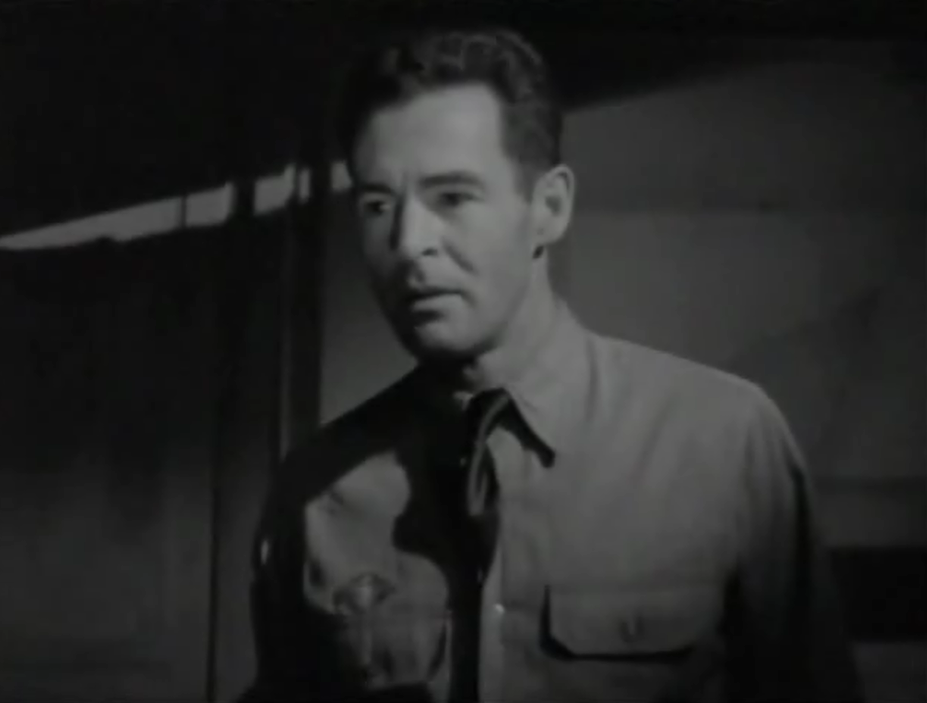
Robert Ryan did not receive an Oscar nomination, despite winning a few critic awards, for portraying Larry Slade in The Iceman Cometh.

The Iceman Cometh is a very long film, almost four hours long, but it certainly is a film with some powerful moments.

The film is notable in that it features the last film performances of both Robert Ryan and Fredric March. March though lived a few years after the release of the film, but Ryan was dying of cancer during production and the film was released posthumously. Ryan here portrays character who basically is waiting to die. A former anarchist activist who has long since given up the cause and has regulated himself to be part of the scenery in a bar filled with drunkards with their failed hopes, and dreams which they still try to hold onto in some way. Slade is different from the rest of them as there clearly is not any dream he is holding onto anymore.

Robert Ryan is best known for portraying rather low individuals, frankly evil characters from the sadistic Master d'Arms in Billy Budd, to the racist army soldier in his Oscar nominated role in Crossfire, as well as the murderous racist in A Bad Day Rock. As I said in my review of his performances in Crossfire Ryan definitely was good at playing these sorts of roles, but here in his last performance he has the chance to play a character far from his type casting. One thing that Ryan seemed to try his hardest to do, particularly in Billy Budd, was to avoid being just a one dimensional evil character. He would certianly play them as evil but he would always attempt to portray the more underlying emotions within the bad man.

In this role as Larry Slade is amazing to see Ryan take on a complex role, considering he was usually the one doing his best to add complexities to those who are not complex. Larry is a constant in the film as always a man in the bar as we see his tired worn face in the background. Ryan's expression is perfect there because it expresses the sorrow and hard life that this man has lived. It is not just a face of pain though as there is also anger there to in Larry that comes from his hatred for the world. It is the face of a cynical man who no longer can deal with any of the woes of society, instead he just sits back and observes instead just waiting for the point when he will die.

Something incredibly special about this performance is the way Ryan never allows Larry to devolve into a one note character. Early on the film he pierces through every scene he has with the harsh brutality of the statements that Larry makes. He is quite brutal with just how blunt Ryan is able to bring about the cynical edge of this character. What is equally special about his performance though is the way he still shows hints of the passion that once was in the man. It is not that he has any left over, he doesn't really, but Ryan is able to bring to life an intense passion that is in Larry. He still is a man with passion, but the problem with him is he has nothing to be passionate about other than his cynicism.

This is a film where one could argue it is seems like each actor is trying to make a bigger impression than another, and almost every actors is given such a chance in either a yelling or a breakdown scenes. There is no question though who gives the strongest performance in the film and it is clearly Robert Ryan. Ryan is terrific in every scene where he tears into to the other men. He is perfect in his performance because unlike some of the others there is no visible performance here. Ryan is brutally honest in his performance and it makes the moments where Larry espouses his disgust with the other particularly powerful. He always manages to go right for the throat with his portrayal making a strong impact whenever he can.

What is especially outstanding about Ryan's depiction Larry though is despite the harshness of his lines, Ryan somehow does manage to infuse some warmth within his performance. There are the smallest glimpses of the past in his face of happier times. In his scenes with Jeff Bridges as Don the son of Larry's former girlfriend Ryan is masterful. Ryan is able to portray that past love that is long gone in these scene in the smallest of smiles without ever losing the edge of Larry. He is fantastic in the way he weaves in the anger and disgust Larry feels toward Don for selling out his mother who was a fellow anarchist, along right with that hidden humanity that Larry still holds onto to some degree.

In this four hour film it would be easy to lose track of the character's stories, and even more easily each story could lose their strength, some of them do. One that definitely does not is Robert Ryan's. He absolutely steals the film with his heartbreaking turn as Larry Slade. All the loses of these people, and broken dreams are brought the appropriate weight through Ryan's uncompromising turn as Larry Slade. His portrayal is fantastic as he succeeds in making him the man who cuts through all the falseness of the others, but equally great in showing the man's own demons that never stop haunting him. Ryan's always finds the truth of his character and this is one of the greatest final performances ever given.

Alternate Best Supporting Actor 1973

And the Nominees Were Not:

Robert De Niro in Mean Streets

Robert Ryan in The Iceman Cometh

Robert Shaw in The Sting

Max von Sydow in The Exorcist

Edward G. Robinson in Soylent Green

Born to Be Bad(1950).

Tuesday, May 29, 2012


Born to Be Bad(1950). Melodrama directed by Nicholas Ray. Cast: Joan Fontaine and Robert Ryan. It is based on the novel.. All Kneeling, by Anne Parrish.

On the same day that Donna Foster, is planning on hosting a party for artist, Gabriel, her boss John Caine's niece, Christabel, arrives to attend the local college.


When Christabel first meets Donna's fiance, wealthy Curtis Carey, she immediately begins making plans to take him away from Donna. Nick Bradley, a friend of Donna's becomes very attracted to Christabel. Even though.. Nick sees her has very opportunistic.

Later, when Christabel, is having her portrait painted by Gobby, Curtis calls, asking her to meet him at a jewelry store. After breaking her date with Nick, Christabel, is disappointed to find out that he only wants her to help him buy an engagement present for Donna. Christabel, tries to talk Curtis into giving Donna a cameo, but.. Curtis chooses a beautiful sapphire necklace instead. Donna, loves the necklace until Christabel says " that she is very surprised that she would want such a expensive gift". Donna, later tells Nick "that she is worried that Curtis may think she is marrying him only for his money".

Later, at Gobby's art opening, Curtis shares with Christabel his fears that Donna is a gold digger. Christabel, then suggests that Curtis have a pre-nuptial agreement with Donna written up. When Curtis mentions Christabel's idea to Donna, she is deeply hurt.

Later that night, after Curtis buys Christabel's portrait, Donna informs Chistable that she broke off her engagement with him. Seeing her opportunity, Christabel asks her uncle to please allow her to stay in San Francisco, just to attend the charity ball.

At the ball, Christabel sets her sights on Curtis, who is also attracted to her. When Christabel tells Nick, that she is marrying Curtis, he tells her that she will never be happy married to him. After Christabel and Curtis marry, Christabel throws herself into charitable committees and planning balls. Christabel, comes up with a plan to have Clara, who has been living with her since her marriage, shipped back to Santa Flora, because she is worried that she will have too much influence on Curtis.

Christabel's, social plans causes Curtis to question her love for him and worries that she is still in love with Nick and suggests that they go for a weekend get away. Christabel, slips away from the resort, leaving a note claiming that Clara, needs her back in Santa Flora. Christabel meets secretly with Nick, to rekindle their romance. Nick, soon realizes that Christabel only wants to have an affair with him and turns her down. When Christabel returns home, she finds out that Clara died earlier that afternoon. Curtis, now knowing that Christabel is only using him for his money, insists that she leave with only her furs.

She is not down for long.. Christabel, has a car accident and ends up in a hospital. She soon becomes involved in a love affair with her surgeon, whose wife sues her for alienation of affection. Later, after Curtis and Donna reunite, Christabel sees a lawyer about the lawsuit which turns into another scandal.


I thought it was a wonderful film, with perfect casting, stylish sets and costumes. One scene that really surprised me is when, Fontaine returns home after her love scene with Robert Ryan and takes a bath just before husband Zachary Scott returns home. Whew!! A must see film for all Fontaine and Robert Ryan fans.


Joan Leslie, a talented young actress soon signed a contract with Warner Bros. In 1941, Leslie got her first major role in the thriller High Sierra with Humphrey Bogart, playing a crippled girl under her new billing as "Joan Leslie". She also starred in Sergeant York and The Wagons Roll at Night in that same year. Later in 1942 she appeared as James Cagney's wife in Yankee Doodle Dandy, and at the age of 18 in 1943, she starred in The Sky's the Limit with Fred Astaire. In 1946 exhibitors voted her the most promising "star of tomorrow". She starred in many more movies until 1950, when she married Dr. William Caldwell. Her last movie role was in The Revolt of Mamie Stover in 1956, and she eventually retired from acting altogether to look after her identical twin daughters Patrice and Ellen. She has appeared in several television commercials since then, and also made guest appearances in the TV shows Murder, She Wrote and Charlie's Angels. She also provided commentary as extras on the Yankee Doodle Dandy, Sergeant York, and High Sierra DVDs. Joan was a regular volunteer at the Hollywood Canteen where she danced with the servicemen and granted hundreds of autographs. In 1944, she starred with Robert Hutton in the Warner Bros. film, Hollywood Canteen.

Best Supporting Actor 1947: Results

Friday, November 25, 2011

5. Charles Bickford in The Farmer's Daughter- Bickford is certainly fine in his part, but nothing special. He perhaps could have stolen some scenes but he never is able to.
4. Thomas Gomez in Ride the Pink Horse- Although his part is fairly limited Gomez gives an enjoyable and charming performance that only adds to his film.
3. Edmund Gwenn in Miracle on 34th Street- Gwenn is not really a definitive Santa Clause by any means, and this is not any sort of great performance, but it is a good one where Gwenn makes Santa Clause just as kind and warm as he should be.
2. Robert Ryan in Crossfire- Robert Ryan plays the sort of role he became best known for and the truth is there is a reason he became known for this sort of role, because he was very good at it. This is not his best variation on this sort of character though.
1. Richard Widmark in Kiss of Death- There is no question for me who wins this year though as Widmark easily gives the most memorable and most effective performance out of the nominees. Widmark becomes basically invisible in his chilling creation of Tommy Udo a psychopath who only ever finds joy from what he does.

Best Supporting Actor 1947: Robert Ryan in Crossfire

Wednesday, November 23, 2011

Robert Ryan received his only Oscar nomination for portraying Montgomery in Crossfire.

Crossfire details the investigation behind the murder of a Jewish man.

This really is going to be a spoilers review as the film is a mystery and to really get into the qualities of Ryan's performance. Although I must say this mystery is made quite predictable becuase usually when a film is a mystery film is and that mystery film has a nomination in the supporting actor category it usually gives away who the killer is. Also the fact that Robert Ryan is in a movie is a dead give away to who is the killer since Robert Ryan was type cast as a cruel antagonist. 

I knew the second he walked on screen in the film that he was going to be the killer anyways since Ryan just naturally has an unsavory quality to the way he looks, which is why he played this sort of role so often. I must say this is not the best version of this sort of role for Ryan though as I greatly preferred his work in Billy Budd for example where there seemed to be a greater mystery to his villain and with that made his character far more chilling in that particular film.

Ryan tries from his first scene tries to avoid suspicion in the role of Montgomery although he certainly gives an effort to seem innocent and naive, he simply is Robert Ryan so I know that he could not possibly be good, but really that is not his fault. Ryan actually does fairly good job of showing Montgomery's attempts to try to throw off the investigation by acting unaware of the whole thing, although with the right undercurrent knowing the truth that he clearly is always hiding.

Robert Ryan though is best at what he does best which is being the intense vicious villain. Ryan is appropriately cruel and chilling as he shows that Montgomery really is a racist with absolutely no sympathy for anyone, especially not Jewish people who intensely hates. Ryan does not show any reason behind Montgomery's hate other than just hate that has clearly been with Montgomery for a long time. Although there are not a lot of surprises in this performance there is a reason Ryan was typecast in this sort of role, because he was very good at it as he shows here.

Best Supporting Actor 1947

Monday, November 21, 2011

And the Nominees Were:

Robert Ryan in Crossfire

Richard Widmark in Kiss of Death

Edmund Gwenn in Miracle on 34th Street

Thomas Gomez in Ride the Pink Horse

Charles Bickford in The Farmer's Daughter

Men in War (1957)

Monday, August 23, 2010

***½
Country: US
Director: Anthony Mann

Anthony Mann's Men in War, which actually takes place during the Korean War, is aptly titled, for it's one of the finest movies about any war I've seen. The film opens on the morning after a battle between Communists and a small platoon of American troops—around twenty in number—led by Lt. Benson (Robert Ryan). Stranded, their supply truck destroyed, they must make their way back on foot to a nearby hill to rendezvous with the rest of their unit. Almost as soon as they start out, a Jeep comes careering out of the distance, and Lt. Benson commandeers it and its two occupants—the driver, Sgt. Montana (Aldo Ray), and his mute, shell-shocked passenger, his commanding officer whom he calls simply The Colonel (David Keith)—to carry the platoon's weapons and ammunition. The rest of the film details the journey, which lasts several hours, to their destination.

Propelled by a sense of great urgency, the plot is utterly simple, consisting largely of the perils the platoon must deal with in order to reach its goal. These include snipers, land mines, and artillery attacks. The landscape the platoon moves through, rocky and nearly devoid of vegetation, offers little cover, and the sense of being constantly in the open and exposed to attack creates a milieu of unrelenting danger. Mann expertly milks this rather basic story for its full potential, creating a film that even in its infrequent lulls in action still maintains an atmosphere of nail-biting tension.

With such a basic plot, Men in War relies on the interactions of its characters for depth. Mann avoids the common cliché of many war movies of portraying the platoon as an obvious cross-section of ethnic and personality types. As in real groups of this kind, most of the men don't seem that distinct from one another, although a couple—a patient, likable African American medic and the nearly catatonic, battle-fatigued young soldier he cares for—do stand out. Lt. Benson, however, is thoroughly fleshed out, and Robert Ryan, who worked with Mann in three films, fully inhabits the character in one of his most nuanced and sympathetic performances.

Ryan's Lt. Benson is a weary man but a purposeful one, his immediate purpose to complete his mission and report back to his unit with vital information about the situation. At one point he states that his objective is to get just one man back to headquarters. In the meantime, although he views those under his command as resources to be deployed to achieve his strategic goal, he seems not without concern for their welfare. It's just that he sees completion of the mission overriding any consideration of the safety or even survival of himself or his men. Benson is a man of great leadership ability, able to keep his soldiers united in their purpose and focused on the task at hand. A follower of rules and prescribed procedures, he is nonetheless a practical, level-headed person able to gain the cooperation of his men with his confident attitude and skills of persuasion—organized without being a martinet, authoritative without being authoritarian.

The only person this reasonable approach does not succeed with is Sgt. Montana, and it is the clash between the personalities and attitudes of these two that provides the conflict in the film. Montana is Benson's opposite in every way, a maverick dedicated to his own agenda—to get his psychologically wounded Colonel back to safety and medical treatment. When he remarks at one point that The Colonel is the only man who ever addressed him as "son," it becomes clear that a kind of transference between the two has occurred. That The Colonel has become in essence a surrogate father for Montana explains his fierce personal loyalty, which in turn explains his disdain for Benson's mission, his animosity towards Benson, and his defiance of Benson's authority at every turn.

Burly Aldo Ray is quite good at conveying the unsympathetic qualities of Sgt. Montana. Not only is Montana an insolent loner, but he is also an almost paranoiacally suspicious racist who refers to Koreans with derogatory racial epithets, the only person in the film who ever does this. In a key sequence, the platoon encounters several American soldiers in the distance calling out to them and racing towards them. Without warning, Montana opens fire and mows them down. When the astounded platoon reaches the bodies, they discover that the dead men are actually Koreans with uniforms and weapons taken from dead American soldiers. After Benson angrily points out that Montana fired before he could even see their faces and might easily have killed Americans, Montana replies,"I can smell 'em," and adds that his practice is to shoot first and find out who he has killed later. The appalled Benson responds by saying, "God help us if we need men like you to win this war."

David Thomson compares Men in War to Mann's Westerns in the way it "work[s] toward an ordeal by combat that defines honor." In a sense, that's indeed what happens at the end of the film when the group reaches the hill only to find it has been taken by the Communists. Desperate, Benson works out a risky plan to retake the hill, and at this point circumstances force the two adversaries to set aside their considerable differences and work together. In the end, only accommodation between Montana's extremism and Benson's moderation, between Montana's gung-ho machismo and personal hatred of the enemy and Benson's professional shrewdness and detached view of the enemy as just another obstacle to be overcome, allows the two to combine the forces of anarchy and order and move towards a common aim.

Men in War ends with a brief but powerful scene in which Benson and Montana together posthumously "award" to their fallen comrades Silver Stars Montana has been given by The Colonel, each man's behavior in the scene absolutely typical of his essential nature. As the two stand atop the hill they now control, Benson methodically reads off the names of the dead in alphabetical order from a notebook in which he records the details of combat, while Montana tosses the medals over the sandbag parapet of the hill, strewing them randomly over the bodies of the dead soldiers below. I would say that in this scene Men in War arrives at a conception of honor quite unlike the unambiguous moral choice normally found in Mann's Westerns. War, Mann seems to be saying, consists of equal parts method and chaos, of both selfless nobility and selfish ferocity, of great personal sacrifices made to achieve minor victories. In the face of this paradox, honor becomes such a relative term that it ceases to have any clear meaning.
You might also be interested in my post on Samuel Fuller's Korean War movie The Steel Helmet.

On Dangerous Ground: A Neglected Masterwork by Nicholas Ray

Monday, September 21, 2009

The American film director Nicholas Ray (1911-1979) was little appreciated during his heyday in Hollywood in the 1950s. But in 1950s France the young movie critics and future filmmakers of the original Cahiers du Cinéma generation revered him as the epitome of the American auteur, the kind of director who managed to transcend the safe impersonality of studio-financed genre pictures and leave on them his own personal stamp. His films were a huge influence on the early directors of the French New Wave. Jean-Luc Godard went so far as to state, "Le cinéma, c'est Nicholas Ray" ("Nicholas Ray is cinema").

Ray's best known films are Rebel Without a Cause (1955), his masterpiece, the movie that made James Dean a star and contains his defining performance as the alienated teenager Jim Stark; the tremendously entertaining Johnny Guitar (1954), Ray's bizarrely stylized, almost Gothic take on the Western; In a Lonely Place (1950), in which Ray revealed the darkest, most sinister side of Hollywood and of Humphrey Bogart (his Fred C. Dobbs in The Treasure of the Sierra Madre and Capt. Queeg in The Caine Mutiny notwithstanding); and Ray's first film, They Live by Night (1949), one of the great films noirs of the late 1940s, a hybrid of romance and fatalism, with its young bank robber and his lover doomed from the beginning, and a clear influence on early French New Wave films as well as the later Bonnie and Clyde. The Criterion release in 2010 of Bigger Than Life (1956), with its brilliant performance by James Mason as a teacher driven to madness by the side effects of a new drug, drew renewed attention to yet another of Ray's best films.

Alongside these movies stands a film of equal merit in Ray's oeuvre, On Dangerous Ground (1952). (It was actually made in 1950 but wasn't released for two years, while RKO tinkered with the film, shortening it by about ten minutes and forcing Ray to shoot a new, more upbeat ending.) This is a movie of more subtle appeal than those better-known works. Quieter, less dense, and less quirky, it nonetheless has many of the same virtues and thematic preoccupations as those films and really should be considered one of Ray's key works.

The main character of On Dangerous Ground is a police detective in an unnamed big city, Jim Wilson (Robert Ryan, in one of his rare lead roles, giving one of the very best performances of his impressive career). Like the main characters in so many of Ray's films, Wilson suffers from a profound sense of alienation from other people and from his environment. The opening sequence of the movie emphasizes his status as a loner with little connection to life except through his job. It begins without explanation after dark with a middle-aged man whose wife is helping him strap on a holstered gun under his suit jacket. He then drives to a suburban house where another middle-aged man, watching television with his children, is being helped into a holster and gun by his wife. The scene then switches to a shabby studio apartment where Ryan stands alone before a mirror strapping on his gun and holster and waits for the other two men to pick him up. These three could easily be criminals preparing for a heist. But they aren't: they're a team of police detectives reporting to the precinct before going out on night patrol.

For the next twenty minutes or so, the movie follows them around dark city streets as they look for a pair of criminals. It is soon clear that Wilson is more than just an upholder of the law. He channels all of his hostility and disillusionment into his job. This is a man with such a grudge against the world that he is close to being a brutal sadist—"a gangster with a badge," as his commanding officer describes him at one point. His two colleagues don't approve of his vigilante approach to law enforcement, but they understand how the job has corroded his sense of ethics. "All we ever see is crooks, murderers, stoolies, dames. . . . 'Til you find out it's different, it's kind of a lonely life," explains one of his partners to the other. And that statement exactly foreshadows what will happen during the course of the movie: Wilson will find out that there is more to life than what he experiences daily and by reconnecting to others will reconnect to himself and to the larger world.

After Wilson becomes too violent with a small-time criminal, his chief sees the need to get him out of the way for a while and sends him out of the city and into a remote mountain area to help the sheriff there investigating a killing. At this point the movie shifts gears completely, and it is this sudden change that leads Wilson to his epiphany. The victim of the killing is a young girl, and Wilson soon becomes completely involved not in helping the sheriff apprehend the suspected killer, but in controlling the girl's grief-stricken father, who is determined to track down the murderer himself and kill him. This vigilantism is too much even for Wilson, and he finds himself accompanying the grieving and enraged father to prevent him from carrying out his intentions. The father, Walter Brent, is played by Ward Bond. If you are used to seeing him playing innocuous bit roles or providing cornball comedy relief in John Ford movies, you will be surprised at the malevolence he conveys in this part, as a man driven by the obsessive need for revenge.

When their car runs off a snowy road and overturns, the pair must continue their pursuit of the suspected killer on foot, and this leads them to an isolated ranch where a young blind woman, Mary Malden, lives. The men suspect her of harboring the criminal. Although she denies it, she is sheltering him, and he is her mentally disturbed, possibly autistic, young brother. Mary is played by Ida Lupino, and like Bond she is quite effective here playing against type. There is no abrasiveness or neuroticism—traits that Lupino was expert at conveying—in this character. And it is her gentleness, sensitivity, and caring nature that give Lupino's Beauty the power to tame Ryan's Beast.

Much in Ray's movies is built around the concept of contrast and opposition. Sometimes this is simple interpersonal conflict: between the teenagers and their parents and other adults in Rebel, between Joan Crawford and her nemesis Mercedes McCambridge in Johnny Guitar. Sometimes the conflict is more generalized: between Bogart and the Hollywood system in In a Lonely Place, between the criminal young lovers and the law in They Live by Night. In On Dangerous Ground, the main conflict is between people. This conflict, though, is not strictly personal, but rather between personality types and the ways those types view the world.

Andrew Sarris writes that "Robert Ryan [suffers from] disillusion with mankind in On Dangerous Ground," and I would say that is a succinct and accurate summation of Jim Wilson's persona. But Wilson himself seems unaware of the true nature of his discontent, so focused is he on the corruption he witnesses around him. When he returns to his dreary, anonymous apartment after his shift ends, the first thing he does is go to the basin and wash his hands. Then he looks at them in disgust and washes them a second time—this time even more vigorously, as if trying to scrub away all the vileness he has been exposed to for the last several hours. He almost seems to be trying to strip away the contaminated skin from his own hands.

Wilson gains perspective about himself only after he leaves his familiar environment and is exposed to Jim Brent, the murdered girl's father, and Mary Malden, the killer's protective sister. These characters hold a mirror up to Wilson, forcing him to examine himself and consider for the first time what everyone else seems to realize about him—that his dissatisfaction with life is destroying him by creating an impenetrable barrier between him and the rest of the world.

Brent shows Wilson what he might ultimately become if he does not change the course he is on, how hatred, no matter what its origin, can become all-consuming. In Brent he sees someone whose rage is even greater than his own. Recognizing the destructive ugliness of himself reflected and magnified in Malden, he comes to realize that his own brutality makes him little different from those he despises. Instead of needing to be restrained himself, he is called on to become the restraining force on Brent, and this unaccustomed role reveals to him a side of himself of which he has been unaware. He sees that his rage fueled by disillusion can be controlled, indeed must be controlled, if he is not to become the monster he sees in Brent.

Mary also becomes a catalyst that causes Wilson to discover within himself a part of his personality that is new to him. Wilson's rigid, judgmental hostility is contrasted with Mary's gentle passivity and loyalty to her brother. Mary's selflessness and protective behavior show Wilson that it is possible to love something that is flawed. It allows him to accept imperfection and shows him that his intolerance of imperfection in the world around him is really a projection of his self-loathing and inability to accept his own flawed nature. And although Mary is quite independent and capable, she still brings out the protective instinct in Wilson. When he perceives that the beauty and nobility in her are the result of the tempering of her strength with gentleness, he is able to reconcile these opposing parts of his own personality.

Brent makes Wilson realize that his intolerance and lack of self-control are actually signs of weakness, while Mary makes him see that there is strength in tolerance, self-restraint, and empathy. If in classical tragedy the hero is brought down by some kind of imbalance in his personality, an exaggeration of some characteristic in his makeup that throws him off-center, then Wilson is in a way a tragic hero doomed by the excesses of his own nature. Yet despite its dark veneer, On Dangerous Ground is ultimately about tragedy averted, for Wilson's encounters with Brent and Mary cause a kind of balance to be restored within him and permit him to avoid a tragic fate.

As with the three main characters, Ray pursues his preoccupation with contrast and opposition in the settings of the film, and it is in this purely visual element of the movie that Ray shows how truly cinematic is his way of telling a story on film. "Few other directors had such a sense of the effect of locations and interiors on people's lives, or the visual or emotional relationship between indoors and outdoors," writes David Thomson. On Dangerous Ground could serve as an illustration of that statement.

In the opening sequence in which the three detectives gather, Ray uses their homes to tell us important things about them and in particular about Ryan's character, Jim Wilson. One of Wilson's colleagues lives is an apartment with his wife. The other is first seen in his suburban living room watching television with his four children. But the place where Wilson lives forms quite a contrast with the homey environments of his colleagues. For one thing, it is clear that he lives alone. It is also clear that he lives in a rented room in a rooming house; the presence of the wash basin in the room suggests a shared bathroom down the hall. This is a bleak, impersonal place, an ascetic environment inhabited by someone living a solitary existence, like a monk or even a prisoner.

As Wilson and his partners cruise around those city streets at night, we get a clear impression of darkness and squalor. This is archetypal film noir territory—damp urban streets illuminated by dim pools of light from streetlamps and by the garish neon signs of the sleazy bars and flophouses that line them. The buildings densely crowded together and looming over the level of the streets from which they are filmed, along with the cramped interiors of the seedy places Wilson visits searching for criminals, create an atmosphere that feels enclosed and oppressive. Everyone seems to be hemmed in, almost penned up. What a visual and atmospheric contrast the last two-thirds of the movie is, then. As soon as Wilson leaves the city, the film takes on a feeling of openness and space, and the stony, man-made harshness of the city is replaced with soft, flowing, snowy landscapes broken only by the occasional conifer. The perpetual night of the city is replaced here by natural light reflected everywhere.

The extended sequence in which Ryan and Bond pursue the killer on foot through this snowy landscape is one of the most striking in the entire movie. This sequence contains virtually no dialogue or interaction between the two. It is all motion, just the images of their tiny, dark figures, filmed largely in long shot, crossing the vast, white screen. What the sequence does have, though, is the powerful music of Bernard Herrmann, which reaches its peak here, a kind of tone poem of perpetual motion that prefigures Herrmann's later scores for Hitchcock in Vertigo and North by Northwest. This is cinema of absolute simplicity and purity. And every element in these austere landscapes suggests liberation just as strongly as the earlier cityscapes suggested confinement.

Just as striking is the farmhouse Mary Malden lives in, at which Wilson and Brent arrive near dark and end up spending the night. What a contrast this house is to both Wilson's cheerless room in the city and the by-now freezing outdoors. This is a house that wraps its inhabitants in a womb-like atmosphere. Everything about it is warm and cozy: the wood from which it is constructed, the soft light from the oil lamps, the fire burning in an open fireplace, the comfortable furniture. Things that seem a little odd about the house are quickly explained by Mary's blindness. The pot of ivy hanging in the middle of the main room just below the height of her head and immediately in front of a large doorway, the little glass wind chime beside the front door that tinkles in the draft every time the door is opened, the large piece of curved, polished wood near the fireplace—these are all cues to guide the blind woman through the house. This house is a threat-free zone, a place of refuge and security.

In the end, both the environment and the people he meets during his sojourn work their spell on Wilson. He is a man redeemed. The pat ending in which Wilson abruptly turns around on his way back to the city and returns to Mary, who having rejecting him changes her mind—an ending apparently imposed on Ray by the studio—is the only thing in the movie that doesn't quite ring true. But this is a minor quibble. The rest of the movie is a remarkable blend of realistic romanticism and detached cynicism, the exact blend of opposed but complementary attitudes found in Ray's best movies.

Brief Reviews

Monday, March 2, 2009

THE SET-UP (1949) ***½
The Set-Up recounts one crucial night in the life of a boxer, Stoker Thompson (Robert Ryan). Although the film is steeped in the milieu of the world of professional boxing, that milieu is so deglamorized and so filtered through the film noir look and sensibility that the movie transcends the boxing genre to become one of the key examples of the noir genre of the late 1940's. At 72 minutes, The Set-Up is lean and concentrated. Every detail is selected by director Robert Wise and cinematographer Milton Krasner to create a focused noir ambiance. The film's harshly lit nocturnal underworld is bounded by the dilapidated Paradise City Arena (boxing Wednesdays, wrestling Fridays), the shabby Cozy Hotel where Thompson is staying, a tawdry penny arcade called The Fun Palace, and a seedy night club called Dreamland whose garish dance music can be heard every time the action moves outside or a door or window is opened.

Everyone in the movie is sleazy—the lowlife hustlers huddled in doorways or loitering on the sidewalks, the jaded, corrupt men who work at the arena, the vicious smalltime hoodlum who fixes fights, and especially the grotesques in the audience screaming for blood and mayhem. The boxers are portrayed as pathetic losers who start out as frightened kids and end up as punch-drunk burnouts. Somewhere near the end of this career arc is Stoker Thompson, who after twenty years in the ring is at the age of 35 considered over the hill. The one thing that keeps him going is the illusory belief that he is always just "one shot away" from a really important match that will make his dreams reality.

The climactic bout between Thompson and a much younger boxer that caps the movie—brilliantly staged, photographed by multiple cameras, and edited to emphasize its brutality and arduous physicality—was clearly an influence on Scorsese's Raging Bull. Robert Ryan, in one of his rare starring roles, is uncharacteristically sympathetic, a dreamer who refuses to admit that any chance of success faded long ago, a man who no matter how badly beaten always struggles back to keep on fighting. As he says, "If you're a fighter, you gotta fight." And he keeps right on fighting until the end of the movie, when the relentlessly bleak world he inhabits finally breaks and then discards him.

GOLD DIGGERS OF 1933 (1933) ****
In the early 1930's Warner Bros. produced a series of musicals that established their own unique style, a down-to-earth working-class view of show business in keeping with the gritty movies the studio produced in other genres. The typical Warners musical features a story about the practical and financial problems of mounting an elaborate revue-like stage production. The musical highlights are the outlandish and often surreal production numbers of Busby Berkeley set to the songs of Al Dubin and Harry Warren as performed by Ruby Keeler, Dick Powell, Joan Blondell, and Ginger Rogers.

The archetypal Warners musical is often considered to be 42nd Street (1933). But after seeing Gold Diggers of 1933 again recently, I would have to say that it is the better movie. The plot is constructed in such a way that rather than jamming all the production numbers into the last part of the movie as in 42nd Street and the similar Footlight Parade (1933), they are distributed throughout the movie, which opens with "We're in the Money" and concludes with "Forgotten Man," the latter perhaps the apotheosis of all Berkeley's production numbers. This results in a better balance, and more appealing mix, of music and plot. The plot itself adds new elements to the familiar "let's put on a show" story of other Warners musicals. It follows three showgirls as they pursue fame and romance—the innocent Polly (Ruby Keeler), the voluptuous and intelligent Carol (Joan Blondell), and the zany Trixie (a very funny Aline MacMahon, in a role reminiscent of Jack Lemmon's Daphne in Some Like It Hot). When these showgirls tangle with the members of a snobbish Boston family (Dick Powell, Warren William, and Guy Kibbee), it allows for the kind of pointed interaction between the working class and the privileged rich more typical of a Capra comedy.

The Great Depression is an integral part of the movie, both onstage and off, providing a more topical context than the standard Hollywood musical. And while other 1930's musicals are often suggestive, this one—made the year before the Production Code began to be enforced in earnest—is at times downright bawdy. Gold Diggers of 1933 has enough serious elements and enough depth of characterization to give it greater substance than one might expect, but it never forgets that it is primarily an entertainment, and a very lively and thoroughly enjoyable one. Also worth noting are the fluid camerawork of Warners house cinematographer Sol Polito and the eye-catching Art Deco sets of Anton Grot.

THE MAN WITH THE GOLDEN ARM (1955) **½
In the 1950's the director Otto Preminger seemed deliberately to seek projects that challenged the Production Code. In The Moon Is Blue (1954) the offending subject was sex. In the courtroom drama Anatomy of a Murder (1959), an allegation of rape—a crime not supposed to be mentioned by name—played a large part. Advise and Consent (1962) was one of the first mainstream American movies to deal openly with homosexuality. In between these movies, Preminger tackled the taboo subject of heroin addiction in this film, based on a novel by Nelson Algren. Because of the film's notoriety and its source material, I anticipated a work of harsh realism and ground-breaking maturity. What I found instead was a subject daring for its time framed in strictly conventional Hollywood terms. The whole movie is filmed on a studio set that represents a city block of a down-and-out Chicago neighborhood. But as impressive as this set is, its resemblance to the real thing is superficial, its squalor relegated to a few suggestive touches.

Frank Sinatra plays Frankie Machine, who has just returned from a jail term and treatment for heroin addiction at the federal facility in Lexington, Kentucky. Faced with the stress of a neurotically possessive paraplegic wife (Eleanor Parker) who is obsessively jealous of a pretty downstairs neighbor (Kim Novak) and whom he doesn't love, and with constant inducements to return to his criminal cronies and resume his use of heroin, he must use all of his willpower to resist falling back into his former life. The casting of Arnold Stang as his best friend, Leonid Kinskey as a quack doctor, Robert Strauss as a petty hoodlum, and Darren McGavin as a heroin dealer makes the atmosphere closer to Damon Runyon than Nelson Algren. The details of his life seem a Hollywood version of sleaze, more imagined than observed. The restrained Novak is surprisingly good, while Parker gives a florid, old-style performance that seems anomalous given the modern subject matter. The melodramatic contrivances of the plot also seem curiously old-fashioned.

One definite plus is the cinematography of Sam Leavitt, whose camera glides elegantly around the set during Preminger's customary long, unedited takes, although in a sense that elegance seems incongruous with the grim nature of the story. Another plus is Elmer Bernstein's hard, brassy jazz score, although its jagged tone unintentionally emphasizes the flaccidity of other elements of the movie. The biggest plus is Frank Sinatra's earnest performance (which deservedly earned him an Oscar nomination), in which he convincingly portrays Frankie's desperation to be strong while battling his own inner weaknesses and external temptations. That performance alone makes the movie worth seeing, but aside from that, don't expect anything remotely resembling realism. This is a purely Hollywood approach to a social milieu the movie clearly doesn't have much understanding of.

PYGMALION (1938) ****
Anyone familiar with My Fair Lady (1964) should take a look at this film version of the play by George Bernard Shaw on which the later musical is based. It is an even better movie. The plot is essentially the same, as is much of the best dialogue—no great surprise, since the adaptation is by Shaw himself. Without interruptions for songs and with its brisker pacing, the wit of the dialogue and the social commentary of the plot are even more pronounced.

Leslie Howard, who co-directed the movie with Anthony Asquith, is splendid as Prof. Henry Higgins, not so effete as Rex Harrison but still a self-centered academic insensitive to the feelings of others. Howard, a trained stage actor, gave many fine dramatic movie performances (The Animal Kingdom, Of Human Bondage, The Scarlet Pimpernel, Petrified Forest, Intermezzo), but I've never seen a better one by him than his comic turn in Pygmalion. As Eliza Dolittle, Wendy Hiller, also a trained stage actress, demonstrates amazing range in an even more demanding role.

As Higgins attempts to transform Eliza from a coarse Cockney flower seller into the simulacrum of a lady, Hiller must show Eliza's innate intelligence and a growing awareness of the artificial nature of class distinction. In the scene where Eliza has tea with the mother of Prof. Higgins, Hiller, playing the scene absolutely deadpan, is riotously funny. When she tells off Higgins for his coldness and lack of response to her feelings, she does so with a fiery spirit reminiscent of the young Katharine Hepburn. And at the end she must show that the experience of a new lifestyle has so altered Eliza that she is riven with confusion and anxiety at no longer having any real identity. All this Hiller does wonderfully in a subtly nuanced performance that is the center of the movie. She expresses all the phases of her character's transformation without ever losing the continuity of the character, convincing us that all of this playing about with social identity and self-presentation is happening to a real person. It is simply an astounding piece of acting. Even if you are thoroughly familiar with My Fair Lady, Pygmalion—with its brilliant balance of entertainment and social satire—is a film not to be missed.
 

Blogger news

Blogroll

Most Reading