Pages

Powered by Blogger.
Showing posts with label Spain. Show all posts

5th Gaudí Awards Winners

Monday, February 4, 2013

Thanks to social media today learned about these awards given by the Catalan Movie Academy (Acadèmia de Cinema Català) which last night had they awards ceremony. Juan Antonio Bayona's The Impossible became the top winner with 6 awards followed by Pablo Berger's Blancanieves and with 4 Cesc Gay's Una Pistola en cada mano.

News today speculate that these awards could be similar to what will happen in the upcoming Goya Awards, but I hope that the local huge box office success of The Impossible does not influence the Goya Awards as in my opinion what news call "Hollywood Made-in-Spain" is not superior to many other great made in Spain movies. The Impossible is not a bad movie but I cannot say it is superior to Le Havre or Dans La Maison, movies that were also nominated in the Best European Film category.

Will list the nominees and winner in top categories, but if you wish to check all categories go to the Academy official site.  Winners are in *BLUE.

Best Picture in Catalan Language
*Blancaneu (Blancanieves), Pablo Berger
El Bosc, Oscar Aibar
Els Nens Salvatges, Patricia Ferreira
Fènix 11•23, Joel Joan and Sergi Lara

Best Picture Not in Catalan Language
[REC]³ Génesis, Paco Plaza
Red Lights, Rodrigo Cortés
The Pelayos (Winning Streak), Eduard Cortés
*Una Pistola en cada mano, Cesc Gay

Best Animated Film
Cuccioli e il codice di Marco Polo, Francesco Manfio, Sergio Manfio
*Las Aventuras de Tadeo Jones (Tad, the Lost Explorer), Enrique Gato
Papá, soy una zombi, Joan Espinach and Ricardo Ramón

Best European Film
Dans La Maison (In the House), François Ozon
Le Havre, Aki Kaurismäk
Intouchables, Olivier Nakache and Eric Toledano
*Lo Imposible (The Impossible), Juan Antonio Bayona

Best Director
*Juan Antonio Bayona for The Impossible
Pablo Berger for Blancaneu
Cesc Gay for Una Pistola en Cada Mano
Joel Joan and Sergi Lara for Fènix 11•23

Best Actress
*Marina Comas in El Nens Salvatges
Angela Molina in Blancaneu
Maria Molins in El Bosc
Maribel Verdú in Blancaneu

Best Actor
*Alex Brendemühl in El Bosc
Nil Cardoner in Fènix 11•23
Alex Casanovas in Fènix 11•23
Alex Monner in El Nens Salvages

Best Screenplay
*Tomàs Aragay and Cesc Gay for Una Pistola en Cada Mano
Pablo Berger for Blancaneu
Patricia Ferreira and Virginia Yagüe for Els Nens Salvatges
Albert Sánchez Piñol for El Bosc

Believe is interesting to learn a vision from the Catalan film industry regarding their own industry, Spain's cinema as well as European cinema that's screened in Cataluña.

27th Goya Awards Nominations

Tuesday, January 8, 2013

A few minutes ago the Spanish Academy announced the nominations for the current edition of the Goya Awards and not really surprising Pablo Berger’s Blancanieves leads with 18 nominations followed by Grupo 7 by Alberto Rodríguez (16), Lo Imposible by Juan Antonio Bayona (14) and El Artista yla Modelo by Fernando Trueba (13).

Awards ceremony will be on February 17 in Centro de Congresos Príncipe Felipe, Madrid and will be broadcasted live by TVE 1.

These are the nominations.

Best Film
El Artista y la Modelo (The Artist and the Model)
Blancanieves
Grupo 7 (Unit 7)
Lo Imposible (The Impossible)

Best Director
Juan Antonio Bayona for Lo Imposible (The Impossible)
Pablo Berger for Blancanieves
Alberto Rodriguez Librero for Grupo 7 (Unit 7)
Fernando Trueba for El Artista y la Modelo (The Artist and the Model)

Best New Director
Enrique Gato for Las Aventuras de Tadeo Jones (Tad, the Lost Explorer)
Paco León for Carmina o Revienta (Carmina or Blow Up)
Oriol Paulo for El cuerpo (The Body)
Isabel de Ocampo for Evelyn

Best Actress
Penélope Cruz in Venuto al Mondo (Twice Born)
Aida Folch in El Artista y la Modelo (The Artist and the Model)
Maribel Verdú in Blancanieves
Naomi Watts in Lo Imposible (The Impossible)

Best Supporting Actress
Chus Lampreave in El Artista y la Modelo (The Artist and the Model)
María León in Carmina o Revienta (Carmina or Blow Up)
Ángela Molina in Blancanieves
Candela Peña in Una Pistola en Cada Mano

Best Newcomer Actress
Carmina Barrios in Carmina o revienta (Carmina or Blow Up)
Macarena García in Blancanieves
Estafanía de los Santos in Grupo 7 (Unit 7)
Cati Solivellas in Els nens salvatges

Best Actor
Daniel Giménez Cacho in Blancanieves
Jean Rochefort in El artista y la modelo (The Artist and the Model)
Jose Sacristán in El muerto y ser feliz (The Dead Man and Being Happy)
Antonio de la Torre in Grupo 7 (Unit 7)

Best Supporting Actor
Ewan McGregor in Lo imposible (The Impossible)
Jose María Pou in Blancanieves
Antonio de la Torre in Invasor
Julián Villagrán in Grupo 7 (Unit 7)

Best Newcomer Actor
Emilio Gavira in Blancanieves
Tom Holland in Lo imposible (The Impossible
Àlex Monner in Els nens salvatges
Joaquín Núñez in Grupo 7 (Unit 7)

Best Original Screenplay
Pablo Berger for Blancanieves
Rafael Cobos López and Alberto Rodríguez Librero for Grupo 7 (Unit 7)
Sergio G. Sánchez for Lo Imposible (The Impossible)
Fernando Trueba and Jean-Claude Carrière for El Artista y la Modelo (The Artist and the Model)

Best Adapted Screenplay
Javier Barreira, Gorka Magallón, Ignacio del Moral, Jordi Gasull and Neil Landau for Las aventuras de Tadeo Jones Las Aventuras de Tadeo Jones (Tad, the Lost Explorer)
Jorge Guerricaechevarría and Sergio G. Sánchez for Fin (The End)
Javier Gullón and Jorge Arenillas for Invasor
Manuel Rivas for Todo es silencio (All is Silence)
Ramón Salazar Hoogers for Tengo ganas de ti (I Want You)

Best Cinematography
Álex Catalán for Grupo 7 (Unit 7)
Óscar Faura for Lo Imposible (The Impossible)
Kiko de la Rica for Blancanieves
Daniel Vilar for El Artista y la Modelo (The Artist and the Model)

Best Production Design
Alain Bainée for Blancanieves
Eugenio Caballero for Lo Imposible (The Impossible)
Pepe Domínguez del Olmo for Grupo 7 (Unit 7)
Pilar Revuelta for El Artista y la Modelo (The Artist and the Model)

Best Edition
Fernando Franco for Blancanieves
José M. G. Moyano for Grupo 7 (Unit 7)
David Pinillos and Antonio Frutos for Invasor
Elena Ruiz and Bernat Vilaplana for Lo Imposible (The Impossible)
Marta Velasco for El Artista y la Modelo (The Artist and the Model)

Best Makeup/Hair
Alessandro Bertolazzi, David Martí and Montse Ribé for Lo Imposible (The Impossible)
Sylvie Imbert and Fermín Galán for Blancanieves
Sylvie Imbert and Noé Montes for El Artista y la Modelo (The Artist and the Model
Yolanda Piña for Grupo 7 (Unit 7)

Best Production Supervision
Josep Amorós for Blancanieves
Angélica Huete for El Artista y la Modelo (The Artist and the Model)
Sandra Hermida Muñiz for Lo Imposible (The Impossible)
Manuela Ocón for Grupo 7 (Unit 7)

Best Original Song
L´as tu vue? in La Banda Picasso
Líneas paralelas in Els nens salvatges
No te puedo encontrar in Blancanieves
Te voy a esperar in Las Aventuras de Tadeo Jones (Tad, the Lost Explorer)

Best Music Score
Julio de la Rosa for Grupo 7 (Unit 7)
Álex Martíne and Zacarías M. de la Riva for Las Aventuras de Tadeo Jones (Tad, the Lost Explorer)
Fernando Velázquez for Lo Imposible (The Impossible)
Alfonso de Vilallonga for Blancanieves

Best Sound
Sergio Burmann, Nicolás de Poulpiquet and James Muñoz for Invasor
Pierre Gamet, Nacho Royo-Villanova and Eduardo García Castro for El Artista y la Modelo (The Artist and the Model)
Peter Glossop, Marc Orts and Oriol Tarragó for Lo Imposible (The Impossible)
Daniel de Zayas Ramírez, Nacho Royo-Villanova and, Pelayo Gutiérrez for Grupo 7 (Unit 7)

Best Special Effects
Reyes Abades, Ferrán Piquer for Blancanieves
Reyes Abades and, Isidro Jiménez for Invasor
Pau Costa and Félix Bergés for Lo Imposible (The Impossible)
Juan Ventura for Grupo 7 (Unit 7)

Best Costume Design
Paco Delgado for Blancanieves
Fernando García for Grupo 7 (Unit 7)
Lala Huete for El Artista y la Modelo (The Artist and the Model)
Vicente Ruiz for La Banda Picasso

Best Animated Film
Las Aventuras de Tadeo Jones (Tad, the Lost Explorer), Enrique Gato
El corazón del roble, Ricardo Ramón and Ángel Izquierdo
O Apóstolo, Fernando Cortizo
The wish fish, Gorka Vázquez, Iván Oneka

Best European Film
Dans La Maison (In The House), François Ozon
De rouille et d'os (Rust and Bone), Jacques Audiard
Intouchables (The Intouchables), Oliver Nakache and Eric Toledano
Shame, Steve McQueen

Best Ibero-American Film
7 Cajas (7 Boxes), Juan Carlos Maneglia and Tana Schembori
Después de Lucía (After Lucia), Michel Franco
Infancia Clandestina (Clandestine Childhood), Benjamín Ávila
Juan de los muertos (Juan of the Dead), Alejandro Brugués

Best Documentary
Contra el tiempo, José Manuel Serrano Cueto
Hijos de las nubes, la última colonia (Sons of the Clouds), Alvaro Longoria
Los mundos sutiles, Eduardo Chapero-Jackson
Mapa, León Siminiani

Best Fiction Short Film
Aquél no era yo, Esteban Crespo García
La boda, Marina Seresesky
Ojos que no ven, Natalia Mateo
Voice Over, Martin Rosete

Best Animated Short Film
Alfred y Ana, Juan Manuel Suárez García
El vendedor de humo, Jaime Maestro
La mano de Nefertiti, Guillermo García Carsí
¿Por qué desaparecieron los dinosaurios?, María del Mar Delgado García and Esaú Dharma Vílchez Corredor

Best Documentary Short Film
A story for the Motlins, Sergio Oksman
El violinista de Auschwitz, Carlos Hernando
Las viudas de Ifni, Pedro Palacios and Pacheco Iborra
Un cineasta en La Codorniz, Javier Rioyo

To check information for each film at official site go here. As we can see this year's awards will be decided among basically four movies, so what becomes interesting is to find which film wins what and if any other nominated movie can win something.

2013 Goya Awards News - Ibero-American Films

Wednesday, November 28, 2012

Thirteen (13) Ibero-American (Latin America plus Portugal) films are being considered to select the five (5) films that will be nominated for the current edition of the Goya Awards.

Most interesting for me is to find in list the acclaimed film from Paraguay, 7 Boxes, that I was expecting to be that country submission to Oscar and look forward to be able to see; but there are more must be seen films -for me- in this list.

These are the films listed by the submitting country.

(*) Argentina: Infancia Clandestina (Clandestine Childhood), Benjamín Ávila, Argentina, Brazil and Spain
Brazil: Febre do rato (Rat Fever), Cláudio Assis, Brazil
Chile: Joven y Alocada (Young and Wild), Marialy Rivas, Chile
Colombia: La Playa, D.C., Juan Andrés Arango, Colombia, Brazil and France
Costa Rica: Tr3s Marías, Francisco "Pako" González, Costa Rica
(*) Cuba: Juan de los Muertos, Alejandro Brugués, Cuba and Spain
Ecuador: Pescador, Sebastián Cordero Espinosa, Ecuador and Colombia
Mexico: Después de Lucía (After Lucia), Michel Franco, Mexico and France
Paraguay: 7 Cajas (7 Boxes), Juan Carlos Maneglia and Tana Schémbori, Paraguay
Peru: Cielo Oscuro, Joel Calero, Peru
Portugal: Florbela, Vicente Alves do Ó, Portugal
Uruguay: 3, Pablo Stoll, Uruguay, Argentina, Chile, and Germany
Venezuela: Patas Arriba, Alejandro García Wiedemann, Venezuela, Brazil and Colombia

(*) As Infancia Clandestina is a Spain co production, film is also being considered in 8 more categories. The same happens with Juan de los Muertos that is also being considered in 19 more categories.

If you wish to check the films that are being considered in each Goya Awards category please go here where you can find info about each film too, available only in Spanish.

Today the academy released the news that from December 5 to 20 those living in Madrid will be able to see the above movies as the screenings will be open to the public, besides being the official screening for Academy members. There are no dates for the nominations announcements or the awards ceremony but I assume that nominations will be announced before January 15 and the ceremony will be after the middle of February -before the Oscars-. As soon as the dates are published will post in calendar.

Elefante Blanco (White Elephant)

Saturday, November 3, 2012

According to the Merriam-Webster dictionary this is the definition of "white elephant":

a : a property requiring much care and expense and yielding little profit
b : an object no longer of value to its owner but of value to others
c : something of little or no value

According to Pablo Trapero's film all three definitions apply to his film and story as tells about life in a real-life Buenos Aires urban slum that surrounds an unfinished sixty-years-old abandoned hospital that was supposed to become "the largest hospital" in Latin America. A true "white elephant". So by now you can imagine that this film is another portrait of social realism but this time in my opinion Trapero lost his great golden touch as decided that his protagonists had to be two Catholic priests and while watching this story is impossible to see story in only one direction as to me film perhaps is more about another "white elephant": the Catholic Church.

But is his storytelling style what really bothered me as has an extremely weak screenplay that toys with the misery in slums life (like happens in many countries of the world and especially in Latin America), idealistic priests that end up killed (like many priests in Latin America), priests caught in between the Catholic Church hierarchy and both Church and country government politics, and most unconvincingly (a very lost opportunity) toys with priests breaking their celibacy vow. Themes that are daily news in Latin American and could have been interesting if well-developed, especially if he had focused more clearly in the second "white elephant" I mention.

Performances are adequate but nothing saves this movie that no matter how you wish to see story leaves you with a bitter taste and a very unpleasant feeling of disgust.  Saying all this while remembering that I have seen a large quota of Latin American films set in slums and have highly enjoyed the social realism style, the story and even the necessary violence.

Hard for me to say the following, as is a Pablo Trapero movie, but I cannot recommend this movie and suggest you skip it.

Sigh.

Watch trailer @MOC

7 Días en La Habana (7 Days in Havana)

Sunday, October 21, 2012

Seven shorts compilation about Havana that could have been more like a tourist bureau advert for Cuba if it was not for some shorts fabulous directors with great storytelling style. But to be fair, each of the seven shorts show different aspects of what life in Cuba could be or is right now.

I did not enjoyed all shorts but wasn't expecting to do so as the eclectic group of directors had one I'm not familiar with, one I dislike and the rest are extraordinary directors, storytellers and filmmakers in my book. So let's be brief and start with the ones I like.

Thursday - Dairy of a Beginner by Elia Suleiman

Absolutely fabulous but I am a huge Elia Suleiman fan that always goes crazy for his deadpan performances as Suleiman not only directs but also performs. Believe that in the surface story is about a foreigner that comes to Havana to interview a prominent Cuban figure and to kill time wanders around town; but to me short is a very spiced critique that imagine Cuban sensors did not get as film is included in collection.

Tuesday - Jam Session by Pablo Trapero

Again I'm truly surprised that Cuban sensors allowed this short to be in the compilation as while on the surface tells a very simple story about a well-known director travelling to Cuba to receive an award in a film festival, short message depth goes from awards disdain to show a bitter glimpse in the life of a musician. Then in always peculiar Trapero style short is great and realistic plus the well-known director role is played by none other than Emir Kusturica. In all shorts music plays a great role, but none like the one it plays here.

Sunday - La Fuente by Laurent Cantet

A very elegant tale considering the short theme as is about Santeria with an old woman dreaming Oshun asking for a celebration the same evening and the whole neighborhood helping to make it happen. Story is the excuse to show people ingenious ways to survive, which yes is also a surprise short is in compilation. Very interesting work that in my opinion shows Cantent's different filmmaking style while the storytelling style is absolutely his.

Friday - Ritual by Gaspar Noé

A more normal tale about Santeria darkish side portraying a "limpia" (cleaning) in a lesbian young girl as parents want to get the "devilish" lesbian tendencies away from her. Very dark cinematography that perfectly shows Gaspar Noé very peculiar great style.

Wednesday - La tentación de Cecilia by Julio Medem

In the most melodramatic Medem's style a tale about decisions to leave or leave not the island. Short has what I find not so great performance by Daniel Brühl (usually like his performances) probably due to him speaking Spanish. Not surprisingly this is the hotter short in the compilation. Short is entertaining but nothing more.

Saturday - Dulce Amargo by Juan Carlos Tabío

Not familiar with director but very familiar with Jorge Perugorría that always gives great performances and in here is not the exception. To me short has a style similar to Latin American soap operas, which I do not like but it is watchable as tells about life of what elsewhere could be called upper-middle class family while in Cuba is regular working class. Indirectly related to Santeria but you only know until you see the finished cake. With this short you notice that all short stories have a relationship.

Monday - El Yuma by Benicio del Toro

Don't enjoy Benicio del Toro acting or directing and this short is no exception as not only has the silliest story about how dumb Americans are in foreign lands but short style is truly awful. Ted Atkins performance is not that bad but definitively this story in the hands of a more accomplished director would have look and feel a lot better. Still, I know this is about the ONLY short that surely will be more understandable and enjoyable to general audiences.

As mentioned music is an important element in the shorts and worth mentioning that also cinematography is remarkable in some of the shorts. In general production values are good in all shorts.

Now I am thinking that maybe Cuban sensors have become more relaxed and are allowing out stories that show how life in Cuba, even if could seem hard for foreigners, is very normal/enjoyable for the island citizens. Yes, that's it... probably.

Nevertheless if you enjoy the work of many of the great directors included in this compilation I suggest you don't skip their shorts, but highly recommend you watch them in the compilation as there is a thin relationship between the shorts stories and the order each short is shown -which is not how I listed them here- has an intention. Film was screened in competition at Un Certain Regard section of 2012 Cannes Official Selection.

Enjoy!!

Watch trailer @MOC

60th San Sebastian Film Festival Award Winners

Saturday, September 29, 2012

With a good awards ceremony, San Sebastian closes this year. The most emotional moment was when Dustin Hoffman received the Donostia award, not only for the movie clips but also for his speech.

Great films won awards. Good.

Official Selection

Golden Shell for Best Film: Dans La Maison (In The House), François Ozon, France

Special Jury Prize: Blancanieves (Snow White), Pablo Berger, Spain and France
Special Mention: The Attack, Ziad Doueiri and Joelle Touma, Lebanon, France, Qatar, Belgium

Silver Shell for Best Director: Fernando Trueba for El Artista y La Modelo, Spain

Silver Shell for Best Actress: (tie)
Katie Coseni in Foxfire, Laurent Cantet, France and Canada
Macarena García in Blancanieves (Snow White), Pablo Berger, Spain and France

Silver Shell for Best Actor: Jose Sacristan in El Muerto y Ser Feliz (The Dead Man and Being Happy), Javier Rebollo, Spain, Argentina and France

Jury Prize for Best Cinematography: Fasle Kargadan (Rhino Season), Bahman Ghobadi, Turkey and Iraqi Kurdistan
Jury Prize for Best Screenplayer: Dans La Maison (In The House), François Ozon, France

Zabaltegi-New Directors

Kusta-New Directors Award: Fernando Guzzoni for Carne de Perro (Dog Flesh), Chile, France and Germany
Special Mentions:
Parviz, Majid Barzegar, Iran
El Limpiador (The Cleaner), Adrián Saba, Peru

Horizontes Latinos

Best Film: El Ultimo Elvis, Armando Bo, Argentina and USA
Special Mentions:
Era Uma Vez Eu, Veronica (Once Upon A Time Was I, Veronica), Marcelo Gomes, Brasil
Despues de Lucia, Michel Franco, Mexico

Other Awards

FIPRESCI Award: El Muerto y Ser Feliz (The Dead Man and Being Happy), Javier Rebollo, Spain, Argentina and France
SIGNIS Award: Días de Pesca (Gone Fishing), Carlos Sorin, Argentina
Solidarity Award: Le Capital (Capital), Costa Gravas, France
Serbitzu Saria for Best Basque Film: Pura Vida, Pablo Iraburu y Migueltxo Molina, Spain
SEBASTIANE Award: Joven y Alocada (Young and Wild), Marialy Rivas, Chile
Euskatel Youth Award: 7 Cajas (7 Boxes), Juan Carlos Maeglia and Tana Schémbori, Paraguay

TVE - Another Look Award: Shesh Peamin (Six Acts), Jonathan Gurfinkel, Israel
Special mention: The Attack, Ziad Doueiri, Lebanon, France, Qatar and Belgium

Films in Progress Award: Gloria, Sebastián Lelio, Chile
Norteado Award: Tanta Agua, Ana Guevara and Leticia Jorge, Uruguay, Mexico, Netherlands

Cinema in Motion Awards
Le Veau D'Or (The Golden Calf), Hassan Legzouli, France and Morocco
Moug (Waves), Ahmed Nour, Egypt and Morocco

Audience Award: The Sessions, Ben Lewin, USA
European Film Audience Award: The Angel's Share, Ken Loach, UK, France, Belgium and Italy

International Film Student Meetings Awards - Short Films
Panavision Award: The Mass of Men, Gabriel Gauchet, UK, National Film and TV School
Freak Independent Film Agency Award: The Mass of Men, Gabriel Gauchet, UK, National Film and TV School
Participation in the Short Film Corner at Cannes Festival
The Mass of Men, Gabriel Gauchet, UK, National Film and TV School
Wedding Duet, Goran MIhailov, Romania, Universitatea Nationala de Arta Teatrala si Cinematografica“I.L. Caragiale
I Think This Is The Closest to How the Footage Looked, Yuval Hameiri and Michal Vaknin, Israel, Tel Aviv University

To check info about each movie go here and/or check home page at fest official page.

Les adieux à la reine (Farewell, My Queen)

Sunday, September 16, 2012

An interesting glimpse into history in a movie that actually was filmed in Versailles and surprisingly for me shows not only the sumptuous lifestyle inside the palace but also the grim world of servant quarters. But I was not captivated by story as while watching I was thinking more about the different worlds that inhabit the palace and the historic events that happened at that time which amazingly resemble so much to what is happening today in current world time.

Based on a book with the same name by Chantal Thomas, this Benoît Jacquot film tells the story of four days at the eve of the French Revolution seen by a fictional character, Sidonie Laborde (Léa Seydoux) who is a reader to Marie Antoinette (Diane Kruger). It is tale that that perfectly fits the label of a "women's point-of-view" as in story we have mainly female characters telling us about monarchy reactions to the storming of La Bastille, that with its fall is the flashpoint to the French Revolution and the beginning of modern France.

Let's be clear, this is not a history class. In the surface is a tale of a woman that will do anything and everything for the queen and indeed she does; but at least for me, was impossible not to relate what I was seeing to historical events and in my opinion, here is where this movie excels as have seen other same-period movies and none made me think about historic events. If you know your world history then maybe the same could happen to you and if it does, believe me, is a very interesting ride.

Movie absurd marketing told us that film had lesbian interest, specifically Marie Antoinette relationship with Gabrielle de Polignac (Virginie Ledoyen). As a matter of fact film was competing for the Teddy Award in the 2012 Berlinale, where was also in the main competition for the Golden Bear. Now I can tell you that film had no opportunity to win the Teddy as there is not much lesbian interest in this movie, just a few short scenes that suggest something that now, after reading historic facts, learned that has never been factual as seems was used for political reasons. I'm talking about de Polignac being Marie Antoinette lesbian lover published in the newspapers of that time. So if you watch movie expecting what marketing promised, maybe you will be disappointed.

Besides what I call my "history provocation" this movie has something else that definitively allowed me to think so much and follow closely what I was seeing in the screen, outstanding Léa Seydoux performance and quite good Diane Kruger interpretation of Marie Antoniette that included an Austrian accent while speaking French, which magnificently resembles possible reality. Brief Virginie Ledoyen performance was too short for me as I really like her performances and most of all, her fabulous voice tone. Last, but not least, film is a feast for the eyes if you enjoy watching glorious period costumes.

Have no idea if director storytelling style had the purpose to provoke history relationships, but know that his intention was to portrait intense emotions in a close environment far away from where history was developing. Actually he shows a tight close environment as camera never leaves Versailles in film and what we see in screen is characters having all sort of emotions; but for me, as a viewer, didn't felt any emotions, I was only an spectator, like a fly in the wall that can see everything but can't feel anything.

It's unusual for me to wait a long time before writing a review, but this time I wanted to digest what I saw and my reactions before deciding what to write, maybe that is why this review is kind of "brainy" but after all my first and foremost experience with this film was very brainy. I can't assure you will have the same experience but what I can suggest is not to skip this film that surely has something that you could enjoy.

Enjoy!!!

Watch trailer @MOC

25th European Film Awards - Long List

Tuesday, September 11, 2012

A few minutes ago the European Film Academy (EFA) announced the titles of the forty-seven (47) films on this year's selection with films that will be considered for a nomination in the European Film Awards.

In the 20 countries with the most EFA Members, these members have voted one national film directly into the selection list. To complete the list, a Selection Committee consisting of EFA Board Members and invited experts Pierre-Henri Deleau (France), Marit Kapla (Sweden), Stefan Kitanov (Bulgaria), Paz Lázaro (Spain), Derek Malcolm (UK), and Elma Tataragic (Bosnia & Herzegovina) have included further films.

These are the films.

A PERDRE LA RAISON (OUR CHILDREN), Joachim Lafosse, Belgium/France/Switzerland/Luxembourg
AΔΙΚΟΣ ΚΟΣΜΟΣ ADIKOS KOSMOS (UNFAIR WORLD), Filippos Tsitos, Greece/Germany
AZ AJTÓ (THE DOOR), István Szabó, Hungary/Germany
ALPEIS (ALPS), Yorgos Lanthimos, Greece
AMOUR (LOVE), Michael Haneke, Austria/France/Germany
THE ANGELS’ SHARE, Ken Loach, UK/France/Belgium/Italy
AVALON, Axel Petersén, Sweden
BARBARA, Christian Petzold, Germany
BİR ZAMANLAR ANADOLU’DA (ONCE UPON A TIME IN ANATOLIA), Nuri Bilge Ceylan, Turkey
CARNAGE, Roman Polanski, France/Germany/Poland/Spain
CESARE DEVE MORIRE (CAESAR MUST DIE), Paolo & Vittorio Taviani, Italy
CIGÁN (GYPSY), Martin Šulík, Czech Republic/Slovakia
CSAK A SZÉL (JUST THE WIND), Bence Fliegauf, Hungary/Germany/France
DE ROUILLE ET D’OS (RUST AND BONE), Jacques Audiard, France
DIAZ: DON’T CLEAN UP THIS BLOOD, Daniele Vicari, Italy/Romania/France
DJECA (CHILDREN OF SARAJEVO), Aida Begić, Bosnia & Herzegovina/Germany/France/Turkey
DUPĂ DEALURI (BEYOND THE HILLS), Cristian Mungiu, Romania/France/Belgium
L’ENFANT D’EN HAUT (SISTER), Ursula Meier, Switzerland/France
FAUST, Alexander Sokurov, Russia
GRUPO 7 (UNIT 7), Alberto Rodriguez, Spain
ההתחלפות HAHITHALFUT (THE EXCHANGE), Eran Kolirin, Israel/Germany
השוטר HASHOTER (POLICEMAN), Nadav Lapid, Israel
HASTA LA VISTA (COME AS YOU ARE), Geoffrey Enthoven, Belgium
IN DARKNESS, Agnieszka Holland, Germany/Poland/Canada
INTOUCHABLES (UNTOUCHABLE), Olivier Nakache & Eric Toledano, France
IO SONO LI (SHUN LI AND THE POET), Andrea Segre, Italy
IRON SKY, Timo Vuorensola, Finland/Germany/Australia
JAGTEN (THE HUNT), Thomas Vinterberg, Denmark
KAUWBOY, Boudewijn Koole, The Netherlands
КЕЦОВЕ KETCOVE (SNEAKERS), Ivan Vladimirov & Valery Yordanov, Bulgaria
EN KONGELIG AFFÆRE (A ROYAL AFFAIR), Nikolaj Arcel, Denmark
KRIEGERIN (COMBAT GIRLS), David Wnendt, Germany
PARADA (THE PARADE), Srđjan Dragojević, Serbia
PARADIES: LIEBE (PARADISE: LOVE), Ulrich Seidl, Austria/Germany/France
POUPATA (FLOWER BUDS), Zdeněk Jiráský, Czech Republic
RÓŻA (ROSE), Wojciech Smarzowski, Poland
SHAME, Steve McQueen, UK
SMRT ČOVEKA NA BALKANU (DEATH OF A MAN IN BALKANS), Miroslav Momčilović, Serbia
SØNNER AV NORGE (SONS OF NORWAY), Jens Lien, Norway
SUEÑO Y SILENCIO (THE DREAM AND THE SILENCE), Jaime Rosales, Spain/France
TABU, Miguel Gomes, Portugal/Germany/Brazil/France
TINKER TAILOR SOLDIER SPY, Tomas Alfredson, France/UK/Germany
В ТУМАНΕ V TUMANE (IN THE FOG), Sergei Loznitsa, Germany/Russia/Latvia/the Netherlands/Belarus
LA VOZ DORMIDA (THE SLEEPING VOICE), Benito Zambrano, Spain
VUOSAARI (NAKED HARBOUR), Aku Louhimies, Finland
Жената која ги избриша своите солзи ZENATA KOJA GI IZBRISA SOLZITE (THE WOMAN WHO BRUSHED OFF HER TEARS), Teona Strugar Mitevska, Macedonia/Belgium/Slovenia/Germany
ЖИЛА-БЫЛА ОДНА БАБА ZHILA-BYLA ODNA BABA (ONCE UPON A TIME THERE LIVED A SIMPLE WOMAN), Andrey Smirnov, Russia

To check the list with movie info at the European Film Awards official site go here.

As every single year the Academy members will have a very hard task selecting one film to vote as there are TOO MANY extraordinary movies; how can you decide, for example, between Haneke, Audiard, Mungiu, Loznitsa, Ceylan and Sokurov? I can't.

Anyway, in the coming weeks, the 2,700 members of the European Film Academy will vote for the nominations in the different award categories. The nominations will then be announced on 3 November at the Seville European Film Festival in Spain and the 25th European Film Awards ceremony will take place in Malta on 1 December. The ceremony will be streamed live at the awards official site and yes, I'll be watching.

The list has many films that I have not seen, many that are must be seen for me, some that I did not particularly liked and one or two that I wish not to see. The good news for me is that list also has some movies I was not familiar with and now will like to learn more about them.

Cheers!!!

60th San Sebastian Film Festival Lineup

Sunday, September 9, 2012

Been waiting for the official site to publish complete info and finally is up in English. Lineup with a few exceptions seems interesting as has some films that are must be seen for me, but I knew about many before the fest officially announced them. According to what I see in the fest official site the fest will screen a total of 230 films.

Here are the films in the three main competitive sections of this festival that will run from September 21st to 29th.

Official Selection

Opening Film: Arbitrage, Nicholas Jarcki, USA
All Apologies, Emily Tang, China
El Artista y La Modelo, Fernando Trueba, Spain
The Attack, Ziad Doueiri and Joelle Touma, Lebanon, France, Qatar, Belgium
Blancanieves (Snow White), Pablo Berger, Spain and France
Le Capital (Capital), Costa-Gavras, France
Dans La Maison (In The House), François Ozon, France
Días de pesca (Gone Fishing), Carlos Sorín, Argentina
Die Lebeden (The Dead and The Living), Barbara Albert, Austria, Poland and Germany
Fasle Kargadan (Rhino Season), Bahman Ghobadi, Turkey and Iraqi Kurdistan
Foxfire, Laurent Cantet, France and Canada
Hypnotisören (The Hypnotist), Lasse Hallström, Sweden
El Muerto y Ser Feliz (The Dead Man and Being Happy), Javier Rebollo, Spain, Argentina and France
Venuto al Mondo (Twice Born), Sergio Castellitto, Italy and Spain

Jury
President: Christine Vauchon, producer USA
Mia Hansen-Løve, director, France
Julie Taymor, director, USA
Agusti Villaronga, director, Spain
Ricardo Darin, actor, Argentina
Peter Suschitzky, cinematographer, Poland
Michel Gaztambide, screenwriter,

Out of Competition

Closing Film: Quartet, Dustin Hoffman, UK
Argo, Ben Affleck, USA
¡Atraco!, Eduard Cortés, Spain and Argentina
The Impossible, Juan Antonio Bayona, Spain

New Directors

7 Cajas (7 Boxes), Juan Carlos Maneglia and Tana Schembori, Paraguay
Animals, Marçal Forés, Spain
Carne de Perro (Dog Flesh), Fernando Guzzoni, Chile, France and Germany
Chaika (Seagull), Miguel Ángel Jiménez, Spain, Georgia and Russia
Cores (Colors), Francisco Garcia, Brazil
Draussen Ist Sommer (Summer Outside), Friederike Jehn, Germany and Switzerland
Los Increíbles (The Incredibles), David Valero, Spain (documentary)
Le Jour des Corneilles (Day of The Crows), Jean-Christophe Dessaint, France and Belgium (animation)
Layali Bala Noom (Sleepless Nights), Elaine Raheb, Lebanon, Dubai, Qatar, Palestine and France
El Limpiador (The Cleaner), Adrián Saba, Peru
The Love Songs of Tiedan, Hao Jie, China
Parviz, Majid Barzegar, Iran
Rocker, Marian Crisan, Romania, France and Germany
Shell, Scott Graham, UK
Shesh Peamin (Six Acts), Jonathan Gurfinkel, Israel
Silent City, Threes Anna, Netherlands, Luxembourg, Belgium
Viceværten (A Caretaker's Tale), Katrine Wiedemann, Denmark

Jury
President: Katayoon Shahbi, producer, Iran
Radu Muntean, director, Romania
Demetrios Matheou, writer and film critic, UK
Lourdes Oñederra, writer, Spain
Diana Sánchez, TIFF programmer and now IFF Panama Artistic Director

Horizontes Latinos

Opening Film: Infancia Clandestina (Clandestine Childhood), Benjamín Ávila, Argentina, Spain and Brazil
Aquí y allá, Antonio Méndez Esparza, Mexico, Spain and USA
El Bella Vista (The Bella Vista), Alicia Cano, Uruguay and Germany (documentary)
La Demora (The Delay), Rodrigo Plá, Uruguay, Mexico and France
Despues de Luicia, Michel Franco, Mexico
Era Uma Vez Eu, Veronica (Once Upon A Time Was I, Veronica), Marcelo Gomes, Brasil
Joven & Alocada (Young & Wild), Marialy Rivas, Chile
La Playa, Juan Andrés Arango, Colombia, Brazil and France
Post Tenebras Lux, Carlos Reygadas, Mexico, France, Germany and Netherlands
Salsipuedes, Mariano Luque, Argentina
La Sirga, William Vega, Colombia, Mexico and France
El Ultimo Elvis, Armando Bo, Argentina and USA

Jury
President: Jorge Dexler, musician, Uruguay
Fernanda del Nido, producer, Argentina
Sandro Fiorin, producer

Ewan McGregor, Tommy Lee Jones, and John Travolta will receive the Donostia Award as well as Dustin Hoffman and Oliver Stone the Special 60th Anniversary Donostia Award. To check films info for above sections plus films in other sections go here.

Definitively Castellitto film calls my attention but I'm puzzled with the casting; been following everything about Paraguay's 7 Boxes as seems film is my kind of film; glad to find a new Marian Crisan movie that seems to have great visuals - similar to Mungiu's latest film. Lasse Hallström and Laurent Cantet films are highly attractive for me, as well as became really interested in Bahman Ghobadi's film. But most interesting to find a new Rodrigo Plá movie plus the latest Costa-Gavras film that instantly become must be seen for me.

As we know the FIPRESCI Grand Prix for Best Film of the Year is given at the fest opening gala; FIPRESCI already announced the film and is none other than Amour (Love) by Michael Haneke. From the Thematic Retrospectives, worth mention is the In Progress - Ten Years With Latin America Cinema as for those that enjoy non-traditional cinema from the region, films to be screened make a great list to check films you may have forgotten, list is here.

1st Europe-Latin America Co-Production Forum - 60th San Sebastian International Film Festival

Tuesday, August 14, 2012

In the fest business framework Industry Club one of the events that will take place on September 25 and 26 is this forum open to film projects at the development stage from Latin America and Europe that have a direct link with Latin America: involvement of a Latin American producer, filming locations or another similar formula. Seventeen (17) projects were selected this year from 104 projects entered from 18 countries and project creators will have the opportunity to find contributors to help them in the production and distribution of their films.

Also, by way of continuation to the San Sebastian Forum and thanks to collaboration with the Festival de Cannes Marché du Film and Argentina’s National Institute of Cinema and Audiovisual Arts (INCAA), some of these projects will have the opportunity to continue their international trajectory with participation in the Ventana Sur market and in the next edition of the Cannes Producers Network. These events will decisively boost the international promotion of the participating projects.

These are the selected projects.

Aire Libre, Anahí Berneri, Argentina
Claria, Luis Angel Ramírez, Spain and Mexico
Cuando Los Caballos Aprendieron a LLorar, Nicolás Pereda, Mexico and Spain
Chico Ventana También Quisiera Tener Un Submarino, Alex Piperno, Argentina and Uruguay
El Elefante Desaparecido, Javier Fuentes-León, Peru, Colombia and Spain
El Escuadrón de la Muerte-Una Comedia, Jayro Bustamante, Guatemala
Las Malcogidas, Denisse Arancibia, Bolivia
Mi Amiga del Parque, Ana Katz, Argentina
O Homem que Matou Minha Amada Morta, Aly Muritiba, Brazil
El Palomar, Daniel Hendler, Uruguay
Pensé Que Iba a Haber Fiesta, Victoria Galardi, Argentina
Pietá, Iñaki Elizalde, Spain
La Puta Realidad, Gabriela Calvache, Ecuador
Que Viva La Música!, Carlos Moreno, Colombia
Sexo Fácil y Películas Tristes, Alejo Flah, Spain and Argentina
Sin Memoriam, David David, Colombia
Tuya, Edgardo González, Argentina

Can't help but to comment that for me is quite strange that in the above list there is no project from Chile, odd. Nevertheless, let's hope that most of these projects find the much needed resources to finish their films.

60th San Sebastian International Film Festival News

This year the fest reaches a milestone with the celebration of the 60th edition, making it what seems to be the oldest (*) while being the most prestigious festival in the Spanish-speaking world. The fest is the fourth largest in Europe after Venice, Cannes and Berlin.

To honor their anniversary here is a brief fest history.

This year the Festival will be celebrating its 60th consecutive edition with the same enthusiasm felt the day it first saw the light on September 21st 1953. Conceived as an International Film Week for the purpose of screening and marketing films, it was not long before the FIAPF (Fédération Internationale des Associations de Producteurs de Films) or IFFPA in English, granted it B status (non-competitive), thanks to the success of its first edition. A year later it was called the International Film Festival, and in 1955 the IFFPA recognized the festival as competitive, specializing in color films. In other words, it could now grant official prizes. This marked the emergence of the "Concha", or shell - at the time only awarded in silver - determined by an international jury.

In 1957 the festival was granted "A" status and the Shell awarded in the main categories turned to gold. The festival symbols became increasingly recognizable, as did the direction the festival was aiming for and still strives for to this day. That is, a tendency towards liberalization, shying away from the corseted censorship of the past, still alive today. The festival's primordial role is to serve as a showcase for each year's most disquieting and innovative films.

Today, the Company FESTIVAL INTERNACIONAL DE CINE DE DONOSTIA-SAN SEBASTIÁN is made up in equal parts of the City Council of Donostia-San Sebastian, the Basque Government, the Gipuzkoa Regional Government and the Ministry of Culture, and the chairmanship is held by the Mayor of Donostia-San Sebastian, Mr. Juan Karlos Izagirre. In 2011 José Luis Rebordinos became the director of the festival after being a member of its Management Committee for the previous 15 years.

The 2012 Edition

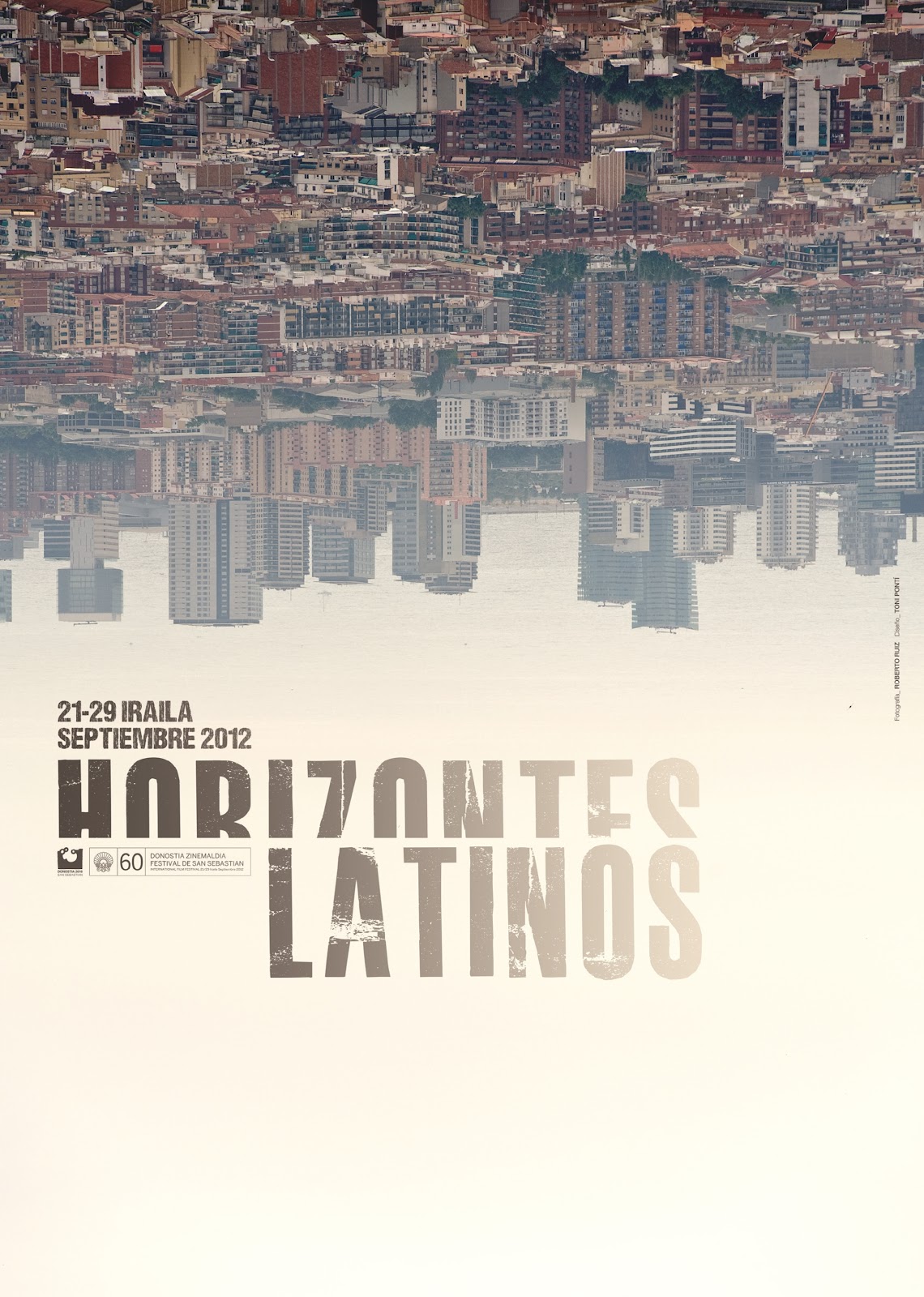
The festival will run from September 21 to 29 and some films have been already announced but will post lineup when all films are published at the fest official site. While we wait, let's review what festival sections are all about.

Official Selection
A selection of feature films produced worldwide over the year, not yet screened, that meet the conditions established by the FIAPF for festivals classified as “competitive non-specialized”.

New Directors
An international competition for first and second works by their directors. All are examples of the most recent in not-yet-released film production worldwide.

Zabaltegi
An open, heterogeneous section showcasing the biggest and best movies of the year; has two sections.
Zabaltegi Pearls
A selection of the year’s biggest films including some already presented at other festivals.
Zabaltegi Specials
A hugely varied selection of proposals not bound by format, genre or length, where strong cinematic interest prevails.

Horizontes Latinos
A competition between the most interesting Latin American features of the year not previously screened in Spain.

Made in Spain
Non-competitive selection showcasing Spanish films of the year, including productions previously premiered or not in Spain. The Festival offers these films an excellent international launch-pad.

Zinemira
A section on Basque film with the following subsections: Zinemira Premieres (Selection of world premieres mainly produced in the Basque Country), Zinemira Panorama (Overview of the best Basque films of the year), Zinemira Kimuak (selection of Basque short films), Zinemira Works Restored by the Basque Film Library.

Culinary Zinema
Section created in collaboration with the Berlin International Film Festival and jointly organized with the Basque Culinary Center to unite cinema, gastronomy and activities related to food in education, science and agriculture. This section offers a non-competitive selection of gastronomy-related films accompanied by themed dinners.

Velodrome
A hugely popular section screening big premieres to packed sessions in a cinema with seating for an audience of 3,000, cutting-edge screening systems and a giant 400 m² screen. Every morning, the Velodrome is set aside for a kids’ audience. Thanks to an agreement with Basque primary and secondary schools, the Velodrome offers an exclusive programme treating schoolchildren to a film in Basque on the giant screen.

Movies for Kids
A non-competitive section with film premieres specially chosen for younger audiences.

International Film Students Meeting
The meeting gathers students from film schools all over the world to attend screenings of their previously selected shorts, discussions and master classes given by industry professionals. A competition between the short films presented at the meeting will also be called where a student jury, chaired by a prestigious filmmaker, will choose the winner of the Panavision Award and the Agencia Freak Award. The jury will similarly decide the names of the three directors given the opportunity to participate in the Short Film Corner at Cannes.

Retrospectives.
Already announced the Classic retrospective for French filmmaker Georges Franju.
Thematic retrospective will be on New American Comedy with a cycle that includes 20 titles.
Thematic retrospective to celebrate the 10th anniversary of its Films in Progress section and Ten Years with Latin American Cinema that will showcase 18 titles from among all those screened at festival during these 10 years

As has become a tradition the fest has very colorful posters for each of its sections and this year perhaps the one that stands among all is the Thematic Retrospective. In Progress. Ten Years with Latin American Cinema section that has an outstanding photo from the film Norteado by Rigoberto Pérezcano. Also is "interesting" that two posters have been released for the New Directors section, one for male directors and other for female directors. These are some of the 2012 posters.


(*)Was not able to confirm from reliable sources if the fest is the oldest in the Spanish-speaking world; but as far as I was able to read, in the Spanish-speaking world there is NO other festival founded before 1953, so probably it is.

2012 Winter Movie Bits

Saturday, March 10, 2012

Here are some bits about movies that didn’t touch me enough, at least enough to write something about them.

This Must Be The Place. I have no clear idea of what was I expecting from this movie but Paolo Sorrentino credentials gave me expectations of an intense cinematic experience. Can’t say movie is bad as it’s not, much less that Sean Penn is bad as he gives an excellent performance but there is something that bothered me. I saw two styles, thus two movies; one I liked, happened in Europe, the other I didn’t, set in USA. Not as intense as I was hoping and wish film styles blended better; hope next Sorrentino film stays in Europe only. Enjoy! Italy, France and Ireland.

Drive. With all the awful marketing promotion I delayed watching as much as possible as imagined movie was going to be very violent. It is not and end up enjoying the story, the performances and fabulous Nicolas Winding Refn style. If you don’t care about violent movies do not skip this one as not only is not that violent but you will be missing a great movie with great actors’ performances and an acceptable story. Enjoy!!! USA.

Martha Marcy May Marlene. Actually I liked movie and as I said after watching if it wasn’t for them talking English I would have say that this is an European movie, maybe German, good German cinema and Elizabeth Olsen has a great performance, should have gotten an Oscar nod as she does world class acting. If you haven’t seen it, do not skip it worth watching no matter how story is. Enjoy!!! USA.

Young Adult. I believe I’m a Diablo Cody fan and really are looking forward to her directorial debut. In a nutshell this Jason Reitman film has outstanding –and very sharp- dialogues and an amazing performance by Charlize Theron, so good that the classic drunk scene made me feel very awkward, so much that had to “close” my ears and really close my eyes. Do not skip this movie as is a fantastic movie about those really dysfunctional individuals that never grow up. Enjoy!!! USA.

The Iron Lady. Meryl Streep does an outstanding performance that in my opinion does not save the movie that should have been more a made for TV movie, unlike the famous The Queen. I really HATED the story as was a not-kind and very unpleasant to watch portrait of a famous woman. There was NO need to tell the story from this point-of-view even when intention was to humanize Mrs. Thatcher. Can you think about an alive male statesman that was an object of a “humanizing” portrait such as this one? I can’t. Anyway even when Streep deserves Oscar I wish the American Academy wouldn’t celebrate her greatness in such a poor movie. Sigh. UK and France.

J. Edgar. Talking about humanizing famous man this Clint Eastwood film does that with perhaps one of the must “larger-than-life” American infamous law iconic figure and in this sense Eastwood absolutely succeeds as Hoover is seen more like a person than a not-so-positive legend. But film has something that makes the end product not outstanding and not relatable. I believe is the screenplay and yes, performances, the later is hard for me say as I believe Eastwood is a master filmmaker, but I know that once in a while he does movies that leave me wondering why he did them and these films have big stars as leads –remember Angelina Jolie movie? Anyway, watch it without expectations and maybe you will learn that Hoover actually did something good. Enjoy. USA

A Dangerous Method. Complex movie, too much psychoanalysis (as it should be) not much entertaining as is very brainy, thus “dry”; but then what was there to expect from a movie about the founders of modern psychology? (lol!) Indeed most of what I heard already knew and had to pay to learn it! Didn’t enjoy much actors’ performances especially Keira Knightley was not good and at times very unpleasant to watch. Watch at your own risk. Enjoy. Canada, UK, Germany, and Switzerland.

Octubre (October). Been waiting a long time to watch this Vega brothers film and no, I was not really impressed with their much praised film. Peruvian cinema has so much evolved and leaped into the international arena that I was hoping for a world class cinema experience. It was not. Movie has more the regular Latin American style and well, has an entertaining story good enough for an entertainment escape moment. Watch at your own risk. Enjoy. Peru.

Un Cuento Chino (Chinese Take-Away). What do you think of a story that starts with a cow falling from the sky into a small boat and killing the woman that was about to get a marriage proposal? That’s exactly how this sometimes comedy sometimes drama starts plus sets the tone and manner to everything that follows. Is an entertaining movie quite well done with the always outstanding and reliable performance by Ricardo Darin. Enjoy!! Argentina and Spain.

Violeta se fue a los Cielos (Violeta Went to Heaven). For me Violeta Parra is an icon and watching her bio was not easy as tells –and made me recall- about turbulent times in the Latin American region not only Chile. Still, I believe Andres Wood does a good job as she was portrayed as what –everyone says- she was, a not pleasant woman. I like her songs and this movie will not change that, but maybe I liked better the idea I had of her in my head than the one portrayed here. Watch at your own risk, especially if you know who Violeta Parra is and her outstanding poetry in her lyrics. Enjoy. Chile, Argentina and Brazil.

Apflickorna (She Monkeys). Lisa Aschan much honored debut film is a very interesting essay on very young and young women –or should I say children?- behavior as story is strong and yes, not easy to watch. But what makes film quite outstanding is Aschan magnificent visual and narrative storytelling style. Looking forward to her next film and suggest you do not skip this movie, but be prepared as story is not light. Yes has some lesbian interest but in my opinion film transcends the label both because story as because the superb filmmaking style, so wider audiences should be able to enjoy this very European movie. Enjoy!!! Sweden. Lesbian interest.

Poulet aux Prunes (Chicken with Plums). After Persepolis I was really hoping for an outstanding story and was looking forward to see how directors move from animation into live filmmaking; then Mathieu Amalric is a very special performer that either you love him in a particular role or you don’t. Here Amalric is the don’t-like kind and live film does not reach the same great levels of their animation film. For me story is not that interesting –at least as much as was Persepolis- even when I recognize that’s magical. Some say is a very French movie, I don’t agree, film does not look or feel French or European at all. But I hope next film by Vincent Paronnaud and Marjane Satrapi regains the magic that Persepolis had. Enjoy! France, Germany and Belgium.

La Source des Femmes (The Source). I was really looking forward to watch this Radu Mihaileanu film with a story that revolves around women. I really like Leïla Bekhti performances as well as excellent Hiam Abbass and good Hafsia Herzi; can’t complain as it was good watching them here but didn’t enjoy much the story as I believe is one I have seen before told in many more compelling ways. Still, visually this film is a true beauty that will feast your eyes. Enjoy! Belgium, Italy and France.

Les Géants. Bouli Lanners films are not easy to watch for me as was unable to watch Eldorado, but wanted to try to watch this Cannes honored movie. I couldn’t, had to stop watching as was feeling physical sick and very uncomfortable. A story of three kids that never imagined could be portrayed so not easy to watch for the most non-sense simple situations. Watch at your own risk. Sigh. Belgium.

Polisse. Not sure what was going to watch here as Maïwenn movies are always not very easy to watch or enjoy. Well, definitively this one has not her usual style and style becomes maybe more commercial as film looks and feels like mainstream cinema –and could extend it to being like a movie made for the small screen. Still film tells a compelling story about children and actors give very good performances, which makes film worth watching. Do not skip it, even if you don’t particularly like French cinema, you will enjoy this movie. Enjoy!! France.

Les Femmes du 6e étage (The Women on the 6th Floor). Watched because Carmen Maura got a Cesar nomination –which she won- but I’m no fan of French comedies as no, I don’t particularly enjoy their humor. Still film is a lot more a drama than a comedy and was a true pleasure to watch Fabrice Luchini performance. Movie is quite watchable and yes I do recommend it for an escape moment, French style of course. Enjoy!! France.

وهلّأ لوين؟ Wo Hallah La Wen? (Where Do We Go Now?) Nadine Labaki mesmerizes me as an actress and most of all as a director. I really LOVED Sukkar Banat (Caramel) so can deny that had HUGE expectations for her next movie. In my opinion her second movie is VERY different to her first and yes, I did enjoy a lot more her first than her second. Story here is very relevant plus her visual and narrative filmmaking style are interesting, but I have seen this story told before in more compelling and emotional ways. Still it was a true pleasure to watch Nadine Labaki in the screen, which makes movie worth watching. I’m really looking forward to her third movie that hope has a more universal story developed with her particular style. Enjoy. France, Lebanon, Egypt, and Italy.

Café de Flore. A very pretentious movie by Jean-Marc Vallée that many say is about love, me I say is an anatomy of a separation told by mirrored stories that happen in the past (Paris) and the present (Montreal) but thanks to pretentious editing –yes editing is what makes this film pretentious- time is senseless crisscrossed, rewind, and forwarded. Better editing could have made mirrored stories more flawlessly intertwined and movie more enjoyable. I really enjoyed Hélène Florent performance and believe she stole the movie. If you don’t mind to watch a movie that moves (too much) in time to tell a story that somehow is predictable (was for me) and journey is not that enjoyable, then watch this film for the love story that many people see in it. Enjoy. Canada and France.

Oslo, 31. August (Oslo, August 31st). Loved Reprise and yes had expectations. Second Joachim Trier film has the same great filmmaking style as his first film but tells a simple story that with his style becomes quite disturbing. So much disturbing that yes, I do suggest you avoid this film as you could get really depressed by Trier’s interpretation of Pierre Drieu La Rochelle’s 1931 Le Feu Follet. Here is not an alcoholic but a drug addict, yet drama is SO well developed that will hurt you inside –where hurts more. Okay, is a very good movie, but find a good state of mind to watch it or you will get very depressed. Enjoy! Norway.

The Artist. Just realized that I didn’t wrote about this movie that in my opinion glorifies Hollywood cinema like no American film has ever done, so it’s no surprise that film became a favorite of critics and the American industry. I enjoyed movie, it was entertaining but as I mentioned elsewhere, if I wanted to honor American silent cinema I could watch so many good films with many excellent silent actors that this film will absolutely pale in the comparison. Obviously film doesn’t look or feel like French cinema and wonder if the honor of being the most honored French movie of all times really celebrates this cinema and not the American one. Watch movie just because won Oscar and if you have to watch all Oscar wining movies. Enjoy! France and Belgium.

I’m sure I forgot many more movies but this is it for today.

Cheers.

26th Goya Awards Winners

Monday, February 20, 2012

A few minutes ago the award ceremony reach the end with no big awards to Almodovar, except for Elena Anaya winning. I'm convinced that is not easy to win in Spain for Almodovar but I'm very glad that he won the BAFTA a few days ago as his movie deserves all the honors because he went back to his most excellent style that only him can do. Sigh. Okay got it out.

Ceremony was not entertaining with a few exceptions but most amusing and highly entertaining was following the #premiosgoya in twitter while watching on TV, that was really fun as seems "everyone" was twitting about the awards as almost reached trend No. 1 worldwide so you could read the most funny, amusing, annoying, etc tweets you can imagine. But was lots of fun.

The Academy site was object of a DOS attack and will take a while for them to have the site back; so if you wish to read winners in all categories will have to wait until probably tomorrow, but go here. Nevertheless winners for main categories are in *BLUE.

--//--
1/10

A few minutes ago the Academy announced the nominations and here they are for some categories. Most remarkable is that Almodovar latest film, La Piel Que Habito got 16 nominations, which I think makes film one with most nods in Almodovar’s own country, congrats to Pedro Almodovar!

Best Film
Blackthorn, Mateo Gil (oh! Magaly Solier is here!)
La Piel Que Habito (The Skin I Live In), Pedro Almodóvar
La Voz Dormida (The Sleeping Voice), Benito Zambrano
*No habrá paz para los malvados, Enrique Urbizu

Best Director
Mateo Gil for Blackthorn
Pedro Almodóvar for La Piel que Habito
Benito Zambrano for La Voz Dormida
*Enrique Urbizu for No habrá paz para los malvados

Best New Director
Paula Ortiz for De tu Ventana la Mía
*Kike Maíllo for Eva
Paco Arango for Maktub
Eduardo Chapero-Jackson for Verbo

Best Actress
Verónica Echegui in Katmandú. Un espejo en el cielo, Icíar Bollaín
Salma Hayek in La Chispa de la Vida, Alex de la Iglesia
*Elena Anaya in La Piel Que Habito, Pedro Almodóvar
Inma Cuesta in La Voz Dormida, Benito Zambrano

Best Actor
Daniel Brühl in Eva, Kike Maíllo
Antonio Banderas in La Piel que Habito, Pedro Almodóvar
Luis Tosar, Mientras Duermes (Sleep Tight), Jaume Balagueró
*Jose Coronado in No habrá paz para los malvados, Enrique Urbizu

Best European Film
Jane Eyre, Cary Fukunaga
Melancholia, Lars von Trier
*The Artist, Michel Hazanavicius
Carnage, Roman Polanski

Best Iberoamerican Film
Boleto al Paraíso, Gerardo Chijona, Cuba
Miss Bala, Gerardo Naranjo, Mexico
*Un Cuento Chino (Chinese Take-Away), Sebastián Borensztein, Argentina
Violeta se fue a los Cielos (Violeta), Andrés Wood, Chile

To check nominees in all categories go here.  Eva Hace will be the award host and let’s hope this year will be entertaining (I know every year I hope for the same, lol); award ceremony will be at 10:00pm Madrid time on February 19 and will be broadcast by TVE.

Las Acacias

Thursday, February 16, 2012

If you ask me what type of movie would I like to see a lot more nowadays my answer absolutely is the type Las Acacias has. What a fantastic movie, one that makes you feel good, makes you wonder why cinema doesn’t have more stories told like this one and one that absolutely deserves all the honors that has been collecting since premiering at 2011 Cannes where won the prestigious Camera d’Or plus the Grand Rail d’Or, the ACID Award and the Young Critics award in the Semaine de la Critique section.

As you know I don’t like to know much about a movie and in this case I knew nothing, zip, nada. I strongly suggest that if possible that’s the best way to watch this marvelous movie that slowly, very slowly will grow in you, grab you, hold you tight with a big smile in your face and won’t release you –nor your smile- until is over.

Let me just share that Pablo Giorgelli’s film is what we could call a road movie but is of the unexpected kind –if you know nothing about story- that starts near the Paraguay/Argentina border and ends in Buenos Aires, Argentina; trip is done in a trailer and yes, there are handheld cameras that will allow you to feel inside the cabin the uneven roads the truck transits. It’s great.

Actually have to comment that last year Canes Critics’ Week had fabulous movies like this one and Take Shelter, which is NOT common as usually the strangest/weirdest movies are screened in this section; second all the honors that film have been collecting all over the world are extremely well deserved for a fantastic story, great production values, excellent performances and a filmmaker that masters the art of storytelling with images, little details and very little dialogue. While is not unique certainly is not common so-well done in Latin American cinema, thus chapeau Master Giorgelli!

All right is not for all audiences unless you prepare for a very slow storytelling, a long while where nothing seems to be happening, lots of silences where actors expressions –or lack of expressions- (including an impressive baby) tell everything that’s going on and an intrusive camera with many handheld takes.

Strongly recommend this movie to all that enjoy great world-class cinema and especially to those that enjoy Latin American cinema, even when story is not local, is really universal and filmmaker transcended most styles that predominate in the region. Oh yes, I enjoyed the movie well-beyond my expectations and well, when movie was over I was surprised beyond my imagination with the high quality of this complete cinematic experience.

Big Enjoy!!!

Watch trailer @MOC

Autumn Movie Bites #1

Wednesday, November 30, 2011

Here are some bites about lesbian interest movies. Enjoy.

Circumstance by Maryam Keshavarz. France, USA, and Iran. Bit confused about film as found stays like in the middle not going in depth with something. As a genre film tells a known story –set in the Middle East too- with love scenes that are more sex scenes filmed from a male-point-of-view than with female eyes. Not the best lesbian interest film with similar theme that I have seen. Then as a political statement is not strong as there are other female centered stories that have more successfully shown how Middle Eastern cultures/traditions/religion converts women to almost non-existence within their society. Maybe if film had no lesbian interest content political message could have been developed more; likewise if had no political message then the lesbian interest story could have been developed more and more appropriately. Still, film is watchable. Enjoy.

You and I by Roland Joffé. Russia and USA. Not pleasant to watch thanks to a terrible script with absurd dialogues and lack of clear focus in a story that pretends to show youth decadence in contemporary Russia by telling the “falling in love” story of Janie (Shantel VanSanten) and Lana (Mischa Barton). If you skip movie you will be missing absolutely nothing. Sigh.

Sour Sorriso (Sister Smile) by Roger Deutsch. Italy. This 2001 film is more a fictitious account of what infamous Belgian nun surely didn’t live; but not like the more recent version, clearly presents a woman that loved women. The problem is that the director to tell a 60’s set story used a 60’s cinema style that today makes story and film not easy-to-watch plus hard to be related to. Sigh.

80 Egunean (For 80 Days) by Jon Garaño and José María Goenaga. Spain. Film tells about “Axun and Maite meeting at secondary school during a repressive that never allowed their relationship to go beyond friendship” and when they meet 50 years after they can’t really become a couple as seems is too late. Not particularly liked message as I do believe that NEVER is too late, but how writers decided to end story makes message “more politically correct” but less human as we have to end up doing what others want and not what we really want. Film has very good production values and performances that will entertain you. Enjoy!!

Die Konkurrentin by Dagmar Hirtz. Germany. This 1997 German TV movie has a very nice love story between two women as only –I believe- German television can do SO good, which makes it absolutely must be seen for those that enjoy the genre and have seen before (great) German lesbian interest TV movies. The last is because whatever else happens in story (here is Business Corporation drama) is secondary to their typical seductive way of making their protagonists fall in love and have a happy ending. Still surprises me that German audiences were able to watch lesbian interest movies in that decade, when still today -40 years after- many countries TV will never show them. Enjoy!!

Break My Fall by Kanchi Wichmann. UK. Can’t deny that film has an interesting style that makes it look and feel quite realistic. For a 40,000 UK pounds production, have to say that film is really great. Story is raw and like in all stories about a relationship last days we will not see romantic moments; if performances are good then story will be felt a lot more and this is the case with this film. It’s a lesbian story about something that hasn’t been explored too much in the genre and suggest to many to watch it with no romance expectations and maybe you will enjoy it as much as I did. Enjoy!!

Como Esquecer (So Hard to Forget) by Malu de Martino. Brazil. Nope is not about how the relationship ends, but how the one that didn’t want to break up abandons herself into depression, how she starts to overcome not being with Antonia anymore and finally meets someone that allows her to give herself another chance to care for someone. Gee, sounds kind of sad BUT honestly is NOT as this Brazilian movie has all over the Brazilian “joie de vivre” more in style than in story, plus acceptable to good performances by good-looking cast makes the ride really easier. Can be entertaining if you have no expectations and just enjoy the ride. Enjoy!!

Leading Ladies by Daniel Beahm and Erika Randal Beahm. USA. My big mistake was that I had expectations about this movie, “dancing expectations” lol! Honestly is not a good movie and there is not much dancing; but if you enjoy typical American comedy style (which I don’t) maybe you will enjoy this “zany” comedy a lot more than me. Sigh.

Tomboy by Céline Sciamma. France. An entertaining film that surely is more mainstream than Sciamma’s previous Naissance des pieuvres, which I simply loved. As you can imagine was expecting a film more in the style of Naissance des pieuvres and definitively Tomboy is different; still is an engaging story about a girl that sees her moving into a new neighborhood as the opportunity to be more what she really feels like: a boy. Okay I should explain myself so I will not confuse anyone, this film is NOT mainstream, is arty; but if you compare both Sciamma’s films then you will see that her second is more commercial than her first thanks to the story mainly. Not your regular genre film, but worth watching. Enjoy!!

Kyss Mig (With Every Heartbeat) by Alexandra-Therese Keining. Sweden. Has this film a predictable story? Yes. Indeed is true, very predictable BUT film is highly enjoyable, so it’s not about the destination is about the trip. You have no idea how good your trip into the lives of Mia and Frida will be as performances by complete cast is quite good, cinematography is super, production values are high and director is so good that I’ll watch her future films for sure. I loved this movie and if you have the patience to enjoy a great ride to a predictable destination, then this film is definitively for you. Enjoy!!!

Mein Freund Aus Faro (To Faro) by Nana Neul. Germany. This 2008 film has been labeled as the German version of Boys Don’t Cry and indeed has a similar story but fortunately fictional To Faro does not have the violence of the real story. Tells about Melanie that meets Jenny and falls in love; but Jenny think she’s met Miguel from Faro, Portugal. Film is nothing special, entertaining but not much more. If you been delaying watching because of violence (as I did) be assure that there is none here, so go ahead and watch. Enjoy.

Luan qing chun (Beatiful Crazy) by Chi Y. Lee. Taiwan. Couldn’t enjoy film even when I tried harder (lol!), yes is arty but unfortunately not really interesting. Not much lesbian interest, just what seems like a few seconds. If you skip it, won’t be missing much. Sigh.

Albert Nobbs by Rodrigo García. UK and Ireland. Honestly I had no lesbian interest expectations for this movie as I’m familiar with main character story, so finding that perhaps the most digestible/funny character the movie has is the one played by Janet McTeer (Page) who happens to be lesbian and lives with her wife was most refreshing. Glenn Close really gets lost into her male character and does a great performance but character is truly lame -and definitively not lesbian at all- as Albert Nobbs is a woman trapped in a man cover that resigned herself to live a life of loneliness, that’s it until she meets Page as sees an opportunity to change her destiny. Unfortunately she does not look for love, she looks for convenience and pursues Helen (Mia Wasikowska) that definitively doesn’t need “convenience” at that moment. Maybe if Nobbs had seduced Helen then things would have been different, but obviously that will happen later when Page starts to seduce Helen. I believe that Close does really good her character but character is so unappealing and is so well-done that some are saying that her performance made the character one-dimensional, flat, pan faced, etc; but I do believe that’s the way it was supposed to be. Anyway this is a movie to watch not because has lesbian interest moments but because is a story of women that had to dress like men to be able to earn a living when for whatever reason, there was no man to take care of them. Enjoy!!!
 

Blogger news

Blogroll

Most Reading