Pages

Powered by Blogger.
Showing posts with label Warner Bros.. Show all posts

Batman Reboot: When an unstoppable force meets an immovable object

Thursday, March 31, 2011


For those of you in the dark, Warner Bros. is now planning a Batman reboot in conjunction with a planned answer to The Avengers Justice League movie.  It won't be helmed by current franchise director Christopher Nolan either, but Nolan will remain on as producer.  The oddest part of this amalgam of superheros poised to save the day in Justice League is that none of the notable characters--Batman, Superman, or Wonder Woman--will be a continuation off current projects featuring said characters.  No Wonder Woman from her yet-to-premier NBC show.  No Superman from Zack Snyder's upcoming film.  And most importantly, no Christian Bale as Batman.  That's right, the actor and hero that saved a genre is being rebooted at the conclusion of The Dark Knight Rises.

It's the unstoppable force of the studio meeting the immovable object of creative integrity.  It's clear: the studio wants more and Nolan is walking away after film #3.  Can't really blame him, lest he forever be known as the director of Batman.  He's young, can do anything he wants right now in his career, and he have proven he can make his films both bankable at the box office and the Oscars.  Plus, a director returning for the fourth film in a franchise can only be as ill-fated as Indiana Jones 4, right?  Thankfully, WB is keeping Nolan on (or, possibly, Nolan is choosing to stay on) as producer of Justice League and the Batman reboot, which makes us assume he'll still have creative control.  But does he really want creative control outside of the world you created?  Nolan has the chance to close out a trilogy the right way, and not Warner Bros. wants to say "thank you, but no," to the reputation and respect he has injected not only into Batman, but superhero films in general. 
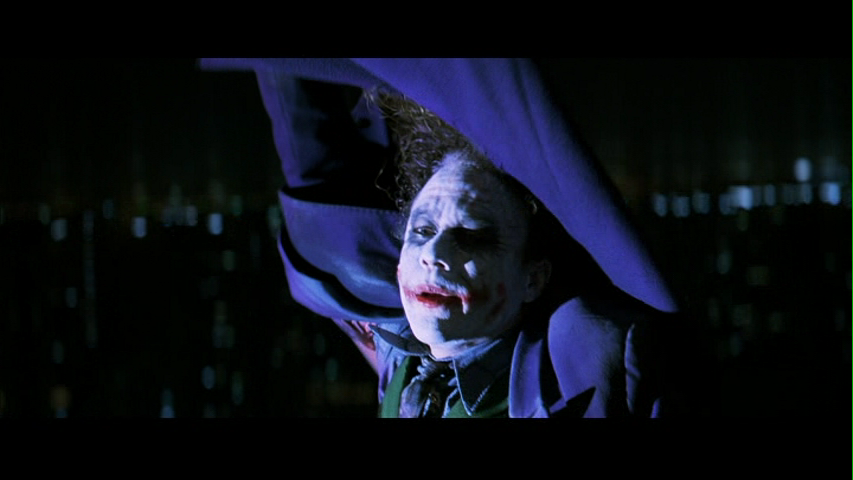
When an unstoppable force
meets an immovable object
Now, I have a slight problem with that.  For starters, The Dark Knight Rises isn't even out yet.  Not only is it not even out, but they haven't even begun principle photography!  Why is Warner Bros. giving up on Nolan's vision of the caped crusader already?  Could Batman be that potential of a cash cow that they think people will pour in to see the character no matter what creative team or actor is on board?  One can attribute the financial success of 2008's The Dark Knight to many things: the high quality of the film, the high-grossing superhero genre, and the recent passing (and brilliant performance) of Heath Ledger.  One of those elements returns, with a second one hopeful for The Dark Knight Rises.

I think what is most notable with the prematurely announced reboot (that is, a reboot before the franchise is even done booting) is that Warner Bros. is doing it less out of greed and more out of necessity.  Why reboot a blockbuster franchise staring an Oscar-winner unless you absolutely have to?  Perhaps the immovable object of creative integrity isn't as immovable as we'd hoped: it's being trampled, in fact.  I'm thinking, momentarily at least (and probably reading too much into this announcement), that Nolan is killing off our watchful protector.  A dead hero means you'll have to reboot.  Maybe I'm just being a little too...serious.


.

I Am a Fugitive From a Chain Gang

Tuesday, July 28, 2009


Long after crap like “Public Enemies” is gathering dust in the $5 bin in Wal-Mart, audiences will continue to be enthralled by “I Am a Fugitive From a Chain Gang” (1932), one of the most potent and gut-wrenching social dramas of the Depression era. Based on a non-fiction best selling book, the film is raw, violent, and blatantly sexual, and was an enormous hit in 1932. It's power still resonates.

James Allen (an Oscar-nominated Paul Muni) returns from World War I with a severe case of wanderlust. He doesn’t want the safe job offered him upon his return. Rather, he wants to try his hand at engineering. He goes off and finds it hard to land a job. One night he gets invited out for a hamburger by a fellow drifter (Preston Foster). When Foster attempts to rob the diner, Allen is thought to be an accomplice and sentenced to 10 years on a chain gang.

The scenes of brutality and inhuman conditions on the chain gang are hard to stomach. They’re pretty raw and outraged so many people that it is said the film helped lead to reforms in chain gangs throughout the South. I don’t know if that is true or not.

However, the film was one of the first and best in the long tradition of social dramas produced by Warner Bros. As I’ve said before, the studio was the most street-smart and socially conscious of the major studios. After all, would any other studio have ended their musical “Gold Diggers of 1933” with its unforgettable Busby Berkeley ode to neglected WWI war heroes, “Remember My Forgotten Man?” Not hardly.

Chain gang food consists of nothing but fried grease, Allen is punished for merely wiping sweat from his brow, permission is asked to use the nearby bushes for bathroom breaks, and brutal punishment is meted out for the merest infraction by the chain gang’s cruel taskmasters.

Allen concocts a plan of escape and succeeds. This is an exciting sequence, beautifully shot and edited as Allen is chased through the swamp by blood hounds held by shotgun-wielding guards.

Allen starts a new life for himself as a laborer and works his way to becoming a noted engineer. His past catches up to him thanks to ungrateful wife Marie (the great Glenda Farrell). The harpy-like Marie practically forces Allen to marry her to keep his secret and when he wants a divorce, look out.

He works out a plea bargain to return to the chain gang for a year as a clerical employee. Once down there, the state reneges on its deal and he’s sentenced to a decade on the chain gang. Allen isn’t going to take it anymore and escapes via a very exciting chase sequence involving a truck loaded with dynamite that for thrills could hardly be bested today.

The film ends with an unforgettable final scene – and final line – making this not only one of the greatest films of 1932, or the 1930s, but of all time. Society is rudely slapped in the face with “Chain Gang’s” final two words.

Really, it’s a remarkable film. Director Mervyn LeRoy gets a lot of snickering today mainly for his later M-G-M days, such as “Madame Curie” (1943) and “Quo Vadis” (1951). But an artist should be judged by his best work, not his worst, and there’s no denying his ferocity and talent in his early Warner Bros. films.

“Five Star Final” (1931) and “Two Seconds” (1932), both starring Edward G. Robinson, are crackerjack entertainment (and why, oh why aren’t these on DVD?) and “Three on a Match” (1932), the story of three childhood friends who grow up to lead very different lives, is one of the great Pre-Code movies. Many of LeRoy’s compositions in “Chain Gang” are striking, especially of the men working in the hot sun, silhouetted against the white granite rock.

Muni is great. It’s one of his best performances, more natural and nuanced than some of his later portrayals. I’m not knocking those later portrayals, like Emile Zola or Louis Pasteur. He’s enormously entertaining to watch in those. But the early Muni is what I prefer. That same year he attained even further cinematic immortality in “Scarface”, one of the greatest, and most gloriously bombastic, of the 1930s gangster movies.

A funny thing happened while I was watching “I Am a Fugitive from a Chain Gang.” I started watching it and after what I thought was a few minutes happened to glance at the time counter on the DVD player. I was stunned to see that more than 40 minutes had passed. The movie clocks in at 92 minutes, races like a bullet and not a second of footage is wasted.

I really appreciated this as the day before I had sat through the enjoyable though bloated “Harry Potter and the Half-Blood Prince” and wished Harry had been a good 20-25 minutes shorter. That’s never a problem with Warner Bros. 1930’s dramas and “I Am a Fugitive from a Chain Gang” stands as a shining beacon. Show it to someone who thinks old black and white movies are boring and watch that prejudice slip away.

Picture Snatcher

Monday, January 26, 2009


I would imagine that most 1933 audiences found themselves mightily entertained by “Picture Snatcher.” It holds up very well today, as most 1930s James Cagney pictures do.

A lot of the credit goes to Cagney of course, that most dynamic of actors. But much of it has to with the Warner Bros. house style. It doesn’t let up for a minute and one scene leads logically to the next. Reliable director Lloyd Bacon sure knew how to keep things hopping.

Back in the 1930s when big cities like New York and Chicago had five, six or more daily papers the competition was fierce, and “Picture Snatcher” captures those days well. A flurry of bodies moving to and fro, the noise of the typesetters, editors barking into phones and drinking from bottles in the bottom desk drawer. If this wasn’t how newspapers were back then, it’s how they should have been.

In “Picture Snatcher”, Cagney plays Danny Kean, recently released from prison. He’s met by his old gang, but is determined this time to go straight. He goes to the Graphic News, the daily rag with the worst reputation in the city, to get a job. City Editor McLean (Ralph Bellamy) would like to give him a job, but can’t. Cagney decides to make them give him a job by getting a picture of a fireman who is holding off the cops, and the press, at bay in a burned out apartment building after the fireman found his wife and her lover in bed together. He torched the place and won’t come out.

Cagney succeeds in getting the interview in a very funny scene by pretending to be an insurance adjustor and getting an estimate on the damage. He gets the story and the picture, which nabs him a job on the Graphic News as a photographer, aka picture snatcher.

There’s really no plot, but a series of sequences where Cagney gets photos that the other news photographers can’t. One sequence, based on fact, has him sneaking a camera into an execution chamber and getting a photo just as the juice is turned on.

This being a 1930s Cagney picture, there has to be a doll to trade insults and kisses with and this time its not Joan Blondell, but Patricia Ellis, playing a college cutie who wants a job in journalism. She’s also the daughter of a cop who put Danny away years ago. The cop is played by Robert Emmett O’Connor, who played the befuddled cop in the Marx Bros. classic “A Night at the Opera” (1935) and he’s still befuddled here, thought less so. He likes Danny Kean and wants to see him go straight, but not with his daughter.

Alice White plays Bellamy’s girl who is not above batting her eyes at Danny. There’s a couple scenes where he slaps her around in the best Cagney style. Has any actor ever gotten away with smacking women around without losing sympathy as Cagney did? I don’t think so.

The film concludes with a mass gunfight when the police are out to get Jerry the Mug, an old comrade of Danny’s. (I like that name, Jerry the Mug. So gloriously Warner Brothers). Of course, he knows where Danny’s is holed up, and if Danny can sneak in, he can maybe get some photos of Jerry the Mug’s final minutes. The cops fire enough bullets into Jerry the Mug’s apartment for a small war. I’m not sure “The Longest Day” (1962) fired as many bullets as the cops do here.

I wonder if contemporary audiences would find the Danny Kean character unlikeable? He’ll do anything, or trick anyone, to get that front page photo. However, it’s likely Depression-era audiences, not knowing when the next bomb was going to drop, was cheering him on the whole way.

Rating for “Picture Snatcher”: Three stars.


Blogger news

Blogroll

Most Reading